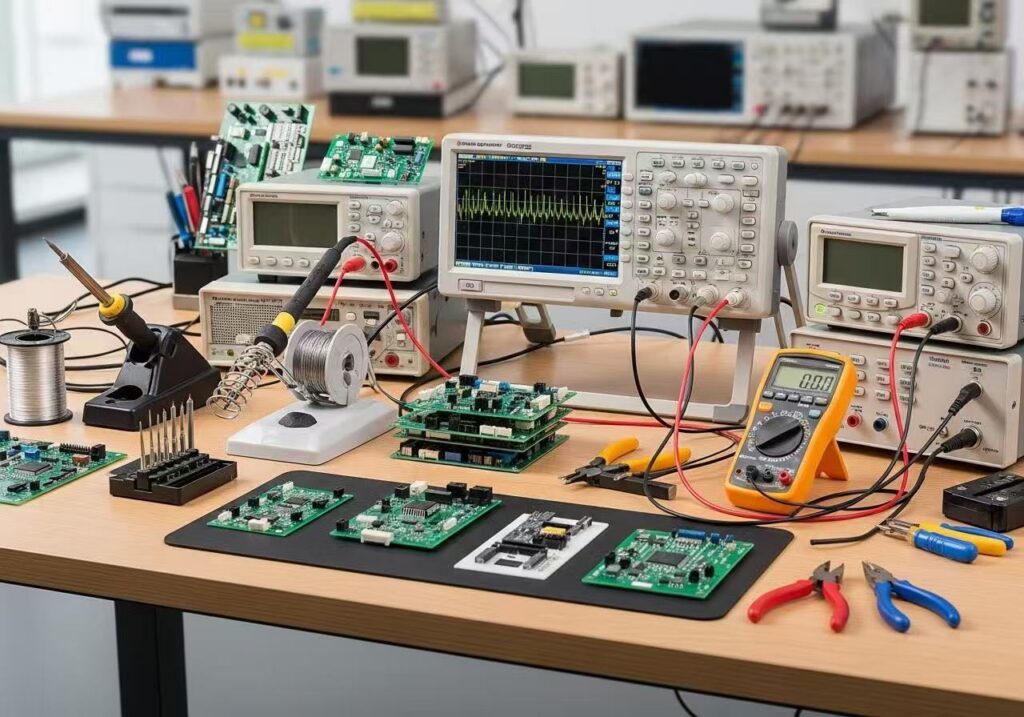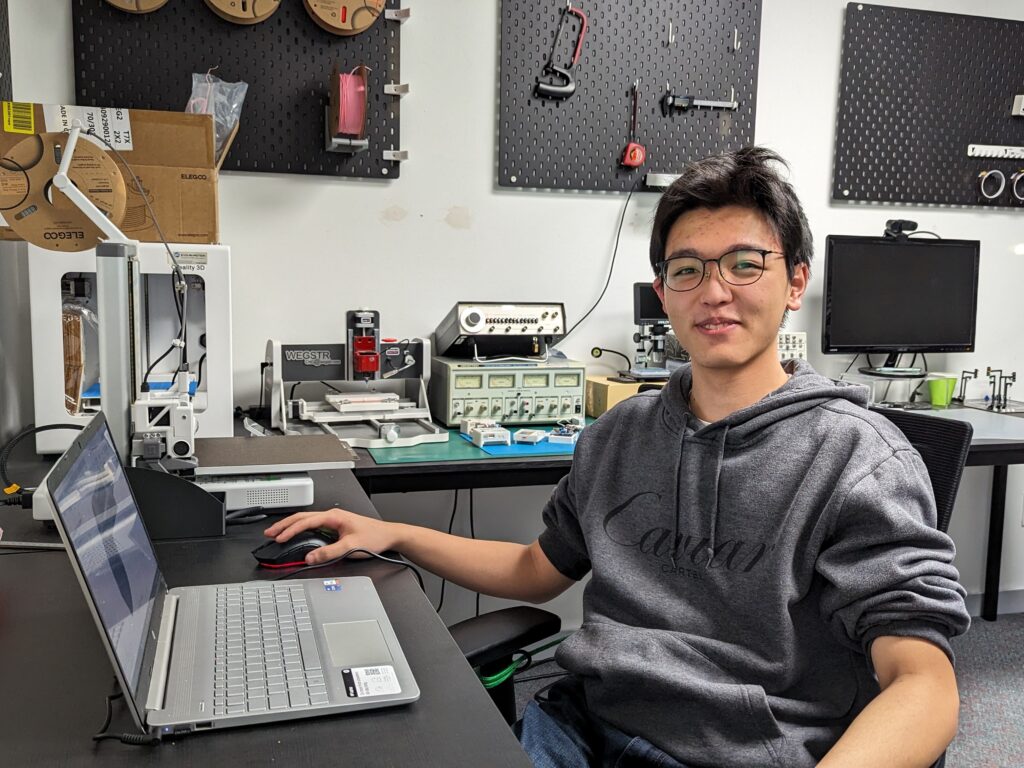
How to choose an electronics learning kit that builds practical engineering skills, not just another project you finish in an afternoon.
The best electronics starter kit for an adult depends on the goal. For an inexpensive introduction and a few weekend projects, a conventional Arduino or breadboard kit can be an excellent choice. For building real engineering skills, choose a system that combines coherent fundamentals, real hardware experiments, measurement and troubleshooting, and a path toward independent projects.
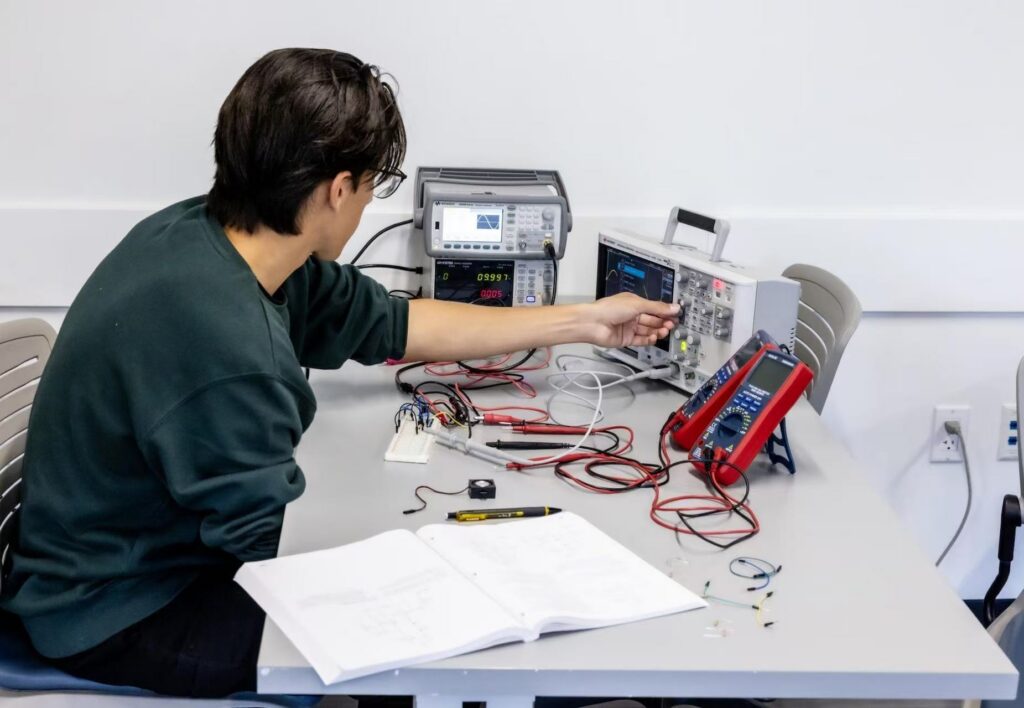
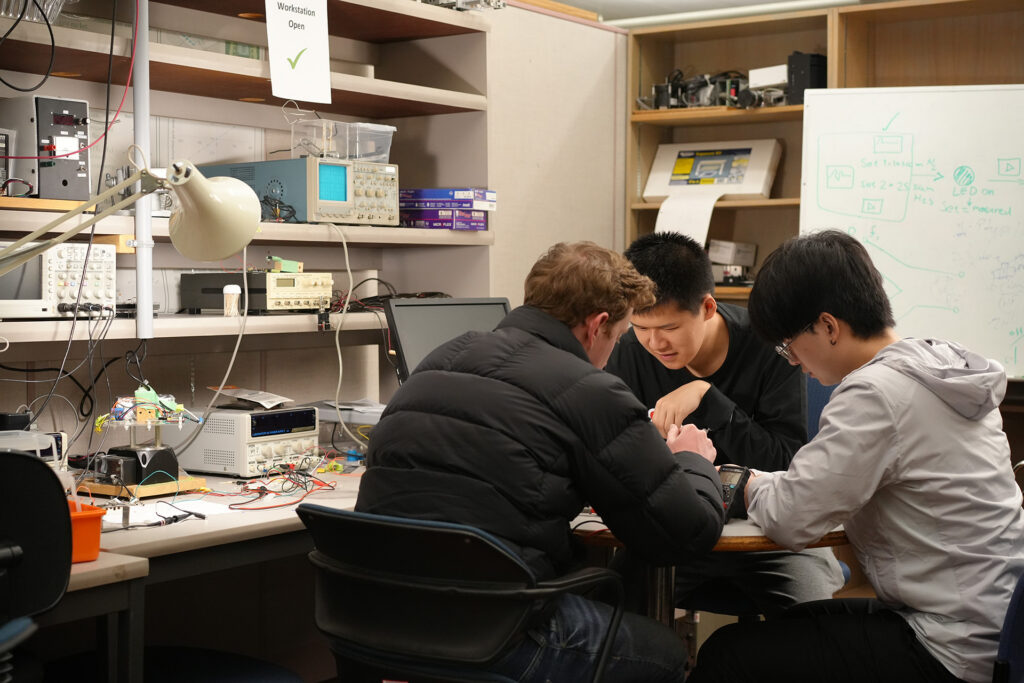
Figure 1. Hands-on electronics laboratory practice.
There are many reasons to start learning electronics as an adult. You might be a software developer looking to expand into hardware, an engineer or researcher who increasingly works with electronic systems, or someone considering a career transition into electronics and computer engineering. Whatever your background, if your goal is to develop practical engineering skills rather than simply complete a few entertaining projects, choosing the right electronics starter kit becomes an important decision. Arduino kits, breadboard collections, and robotics platforms can be excellent introductions, but they are not necessarily designed to provide a systematic understanding of electronics.
For serious learners, I believe the more important question is not how many components a kit includes or how quickly you can complete your first project, but whether it helps you understand the underlying principles, troubleshoot unexpected results, and eventually design something independently. A successful project can be a great starting point, but lasting engineering competence requires more than following instructions. It requires a structured combination of theory, experimentation, measurement, and continuous improvement. That distinction should guide how you choose your first electronics learning system.
1. What Should Adults Look for in an Electronics Starter Kit?
The first consideration is your learning objective. If you want to explore electronics casually, build a few weekend projects, or introduce yourself to microcontroller programming, a conventional Arduino starter kit may be all you need. There is no reason to purchase a more elaborate learning system if you only want to experiment occasionally. However, if you are learning electronics to expand your professional capabilities, prepare for engineering coursework, or pursue a serious technical interest, I would evaluate a starter kit using a different set of criteria.
| What to evaluate | Typical beginner project kit | Structured electronics learning system |
|---|---|---|
| Main objective | Complete predefined projects | Develop transferable engineering knowledge |
| Theory | Often limited to each activity | Systematic concepts connected to experiments |
| Hardware experience | Often uses ready-made modules | Circuits, measurement, and integration |
| Troubleshooting | Match the expected output | Measure, diagnose, compare predictions |
| Progression | Unrelated tutorials or new kits | Build toward advanced engineering topics |
This is not a criticism of beginner project kits. They serve a legitimate purpose, and many people develop a lasting interest in electronics through them. The distinction is between a kit designed primarily for accessible activities and a system intended to support sustained technical learning. Adults often have limited time alongside work and family commitments, so the structure of learning becomes especially important. A collection of disconnected projects may teach individual techniques without building the ability to explain why an amplifier distorts, how to select a power supply, or what to measure when a circuit behaves unexpectedly. A good learning system helps connect these experiences into a coherent understanding of electronics.
2. Why University-Level Fundamentals Still Matter
One common misconception about learning engineering independently is that university-style theory is unnecessary now that tutorials, development boards, and AI assistants are widely available. I disagree. The foundations taught in electronics and computer engineering programs remain extremely valuable. Circuit analysis, semiconductor fundamentals, analog electronics, digital logic, signals, and computer architecture provide the conceptual framework needed to understand increasingly complex systems. You do not need an entire engineering degree before building your first circuit, but if your long-term goal is serious engineering competence, you cannot indefinitely avoid the underlying principles.
Consider a transistor amplifier. Following a wiring diagram might produce a working circuit, and an online tutorial could explain which components to connect. But if you want to modify the design, understand its limitations, or diagnose unexpected distortion, you need a deeper understanding of transistor operation, biasing, gain, and signal behavior. The same principle applies to embedded systems: reading a sensor with code is useful, but understanding how the analog signal reaches the microcontroller, how an ADC represents it, and what limits accuracy gives you much greater control over the result.
University programs provide much more than a syllabus: laboratories, professors, peer collaboration, design teams, and access to advanced equipment. A home learning kit is not an equivalent replacement. Yet adults who cannot commit to another degree can still use a structured system to study foundational concepts while gaining real hardware experience. I think of theory as the foundation of a building: essential, but not the finished structure. Engineering ability develops when you apply principles to real problems, observe what happens, and learn to explain the difference between your expectations and results. That is where project-based learning becomes particularly valuable.
3. Project-Based Learning Should Be More Than Following Instructions
Project-based learning has become a popular term in engineering education, but not every activity described as a project develops the same depth of understanding. Imagine building an audio signal display using a microphone, microcontroller, and small screen. A conventional tutorial might tell you what to connect, which program to upload, and what output to expect. This is an enjoyable introduction, but the learning can stop at reproduction. A deeper approach asks how the microphone produces an electrical signal, why the input needs conditioning, how analog-to-digital conversion works, what determines sampling rate, and why the observed waveform may differ from the expected one.
These questions transform a demonstration into an engineering investigation. You begin with a theoretical model, build a physical circuit, measure its behavior, and compare the result with your prediction. If something does not work, you investigate rather than simply copying a completed example. Then you modify a component value, adjust sampling, or improve part of the signal path and measure again. This repeated cycle develops skills that transfer beyond the original project: reading schematics, selecting components, making measurements, interpreting signals, debugging hardware, and understanding subsystem relationships.
Beginners still benefit from guided experiments, diagrams, and sample code. The issue is not whether instructions are provided, but whether the materials explain the reasoning and gradually encourage independent decisions. The objective should be to move from following instructions toward understanding, modifying, and eventually designing. For an adult learner, increasing independence is a much better measure of progress than the number of projects completed.
4. A Structured Path from Electronics Fundamentals to Complete Systems
This is the approach we are developing at EIM Technology. We do not aim to replace university engineering education or claim that a hardware kit can provide every experience available in a degree program. Instead, our objective is to make a systematic, university-informed electronics learning pathway more accessible to independent learners. The starting point is Fundamental EE Starter (FE11), which brings together real hardware, instructional materials, guided experiments, and project-based learning. The central idea is continuity: circuits, programming, measurement, and projects should reinforce one another rather than appear as unrelated subjects.
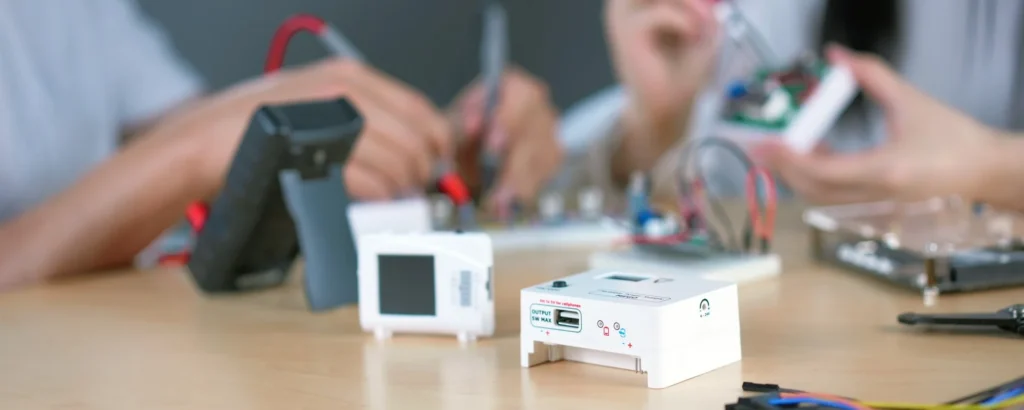
For example, a project involving a microphone, microcontroller, and display can connect analog sensing, digital acquisition, software, and visualization. The objective is not merely to produce an attractive screen but to understand the role of each stage and learn how to investigate the behavior of the whole system. FE11 can also be complemented by Lab-on-the-Go, a portable set of measurement and prototyping tools. An oscilloscope, function generator, multimeter, and suitable power supply make it possible to compare circuit behavior with the predictions made during study. The instruments are useful not simply because they are available, but because the learning materials give students reasons to use them.
FE11 is a starting point, not the end of the journey. Our broader learning roadmap moves from fundamentals toward digital and embedded design, then toward more advanced electronics systems. The stages are designed to build on one another without requiring learners to master every field at once.
| Stage | Learning focus | Status |
|---|---|---|
| Fundamental EE Starter (FE11) | Circuits, analog signals, measurement, microcontrollers, and introductory projects | Available now |
| Digital & Embedded | Digital logic, FPGA, HDL, microcontrollers, interfaces, and hardware/software integration | Coming soon |
| EE Systems | Advanced analog/digital topics and system-level engineering | Coming soon |
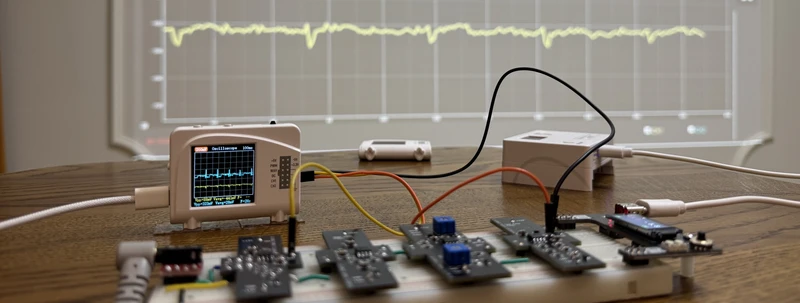
The progression is intentional. First, learners study how circuits behave and how to measure them. Next, they can move deeper into digital hardware, embedded computing, and the relationship between software and physical electronics. The advanced systems stage is intended to bring these capabilities together in more sophisticated designs. A beginner may initially use an oscilloscope to observe a waveform; later, after learning about sampling, digital logic, memory, and embedded processing, the same learner can explore how a simplified waveform acquisition and display system might be built. Understanding the architecture beneath a tool provides a stronger basis for selecting equipment, recognizing limitations, and developing independent solutions.
5. Which Electronics Starter Kit Is Right for You?
If you want an inexpensive introduction to electronics and a few entertaining weekend projects, a conventional Arduino or breadboard kit can be an excellent purchase. If you already have a strong electronics background and need a specialized FPGA board, microcontroller, or measurement instrument for a specific application, a general starter kit may not be the right choice. But if you want a systematic understanding of electronics engineering, prioritize four things: coherent fundamentals, real hardware experiments, opportunities to measure and troubleshoot, and a path toward increasingly independent projects.
This is particularly relevant for software developers entering embedded systems, engineers expanding into electronics, researchers building custom hardware, and self-directed learners planning a long-term transition. The investment is not just the price of the kit; it is also the time you spend learning. A cheaper kit that you abandon after a few projects may offer less long-term value than a structured system you continue using for months. Equally, an expensive system is not worthwhile if its content is poorly matched to your interests or commitment. The best electronics starter kit is not the one that helps you finish your first project the fastest. It is the one that prepares you to build your next project with less help.
Frequently Asked Questions
What is the best electronics starter kit for adults?
It depends on your goal. Arduino and breadboard kits suit casual projects; a structured learning system is better aligned with sustained study of circuits, measurement, troubleshooting, and engineering principles.
Can adults learn electronics engineering without a degree?
Adults can learn many foundational topics independently through textbooks, online courses, labs, and projects. Self-study does not automatically replace the depth, accreditation, or opportunities associated with a university engineering degree.
Should I learn Arduino or electronics fundamentals first?
Either can be an entry point. Arduino makes embedded projects approachable, but learners seeking deeper hardware competence should also study circuit behavior, analog signals, component selection, and debugging.
Do I need an oscilloscope to learn electronics?
Not immediately. A multimeter supports many introductory DC experiments. An oscilloscope becomes increasingly useful for time-varying signals, timing, analog circuits, and embedded hardware.
How long does it take to learn electronics as an adult?
Basic projects may become approachable within weeks, but broad engineering competence requires sustained study and increasingly complex projects. A starter kit is the beginning, not a substitute for a qualification.

EIM TECHNOLOGY
Founder & Engineering Education Innovator
Daniel Cao is the Founder of EIM Technology and holds a Master of Applied Science in Engineering. With experience in engineering research, product development, PCB design, and technical education, he is the author of several books on electronics engineering. His work focuses on developing practical learning systems that integrate engineering hardware, lab instruments, curriculum, and project-based learning. Through EIM Technology, Daniel aims to make electronics and computer engineering more accessible and engaging, helping students build real experience in designing, measuring, testing, and troubleshooting electronic systems.