In my view, an engineering degree is still largely worth the cost, with one important condition: the student has to actually use what the tuition is paying for. A strong engineering university offers laboratories, professors, research groups, design teams, co-op programs, and recruiting networks that are difficult to reproduce independently. Students who arrive prepared to use those resources can get far more value from the same degree.
The real question is not simply whether university is expensive. It is whether an engineering student is prepared to use the laboratories, professors, projects, recruiting infrastructure, and technical ecosystem that the tuition is paying for.
For many families in the United States and Canada, going to university is no longer an automatic financial decision. Tuition is only part of the cost. Once housing, food, transportation, textbooks, and several years of lost full-time income are included, the total investment can become substantial, particularly for students attending university away from home. It is therefore reasonable for parents and students to ask a question that would have sounded almost unnecessary a generation ago: Is a university degree still worth the money?
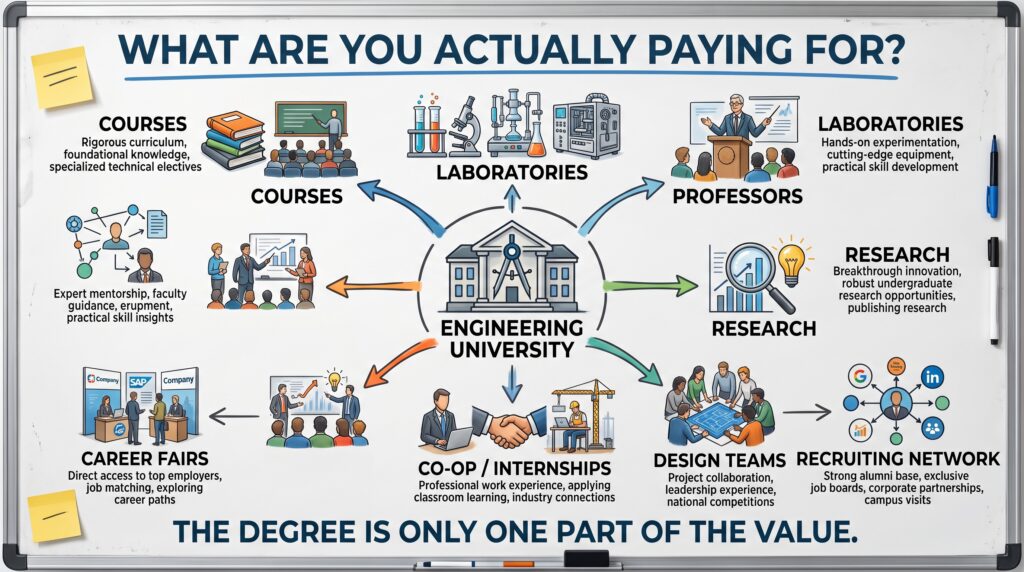
For engineering, my answer is still largely yes, but with an important condition. A strong engineering university can provide access to laboratories, professors, specialized equipment, technical courses, research groups, engineering teams, internships, co-op programs, career fairs, and recruiting networks that would be extremely difficult for an individual student to reproduce independently. If a student actually uses these resources well, university remains an extraordinarily powerful environment for becoming an engineer. The problem is that paying for access and actually extracting value from that access are two very different things.
Is Engineering School More Than a Collection of Courses?
One mistake in evaluating the cost of an engineering degree is to compare university only with the price of information. If the question is simply, “Can I learn calculus, programming, circuits, electronics, or digital logic without paying university tuition?”, the answer today is obviously yes. There are excellent textbooks, online courses, technical documentation, simulation tools, open-source projects, and increasingly capable AI tutors. Pure information has become dramatically cheaper and more accessible.
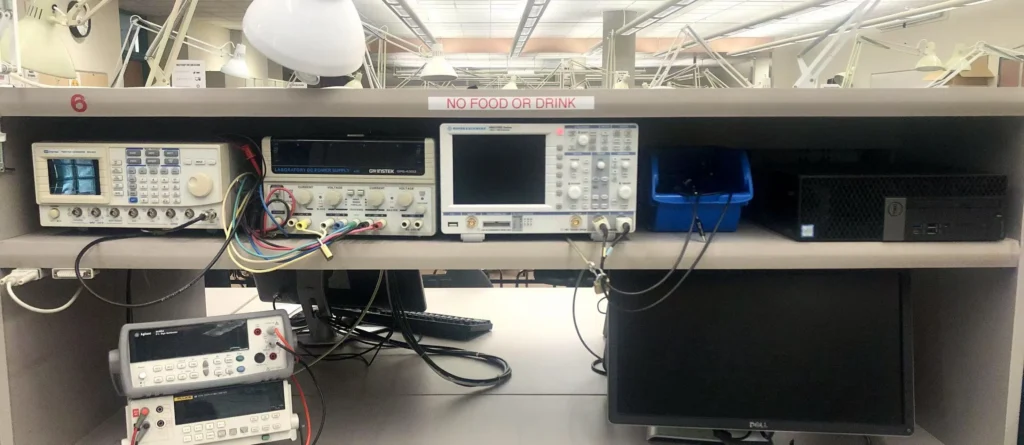
But that is not the strongest reason to attend a good engineering school. Walk into a well-equipped university engineering building and consider what surrounds you: oscilloscopes, power supplies, spectrum analyzers, semiconductor equipment, mechanical facilities, robotics platforms, fabrication tools, computing infrastructure, specialized software, and laboratories designed for different disciplines. Depending on the institution and research area, some individual laboratories represent hundreds of thousands or even millions of dollars in equipment and infrastructure. A student is not buying that laboratory personally; university tuition buys entry into an ecosystem in which those resources already exist.
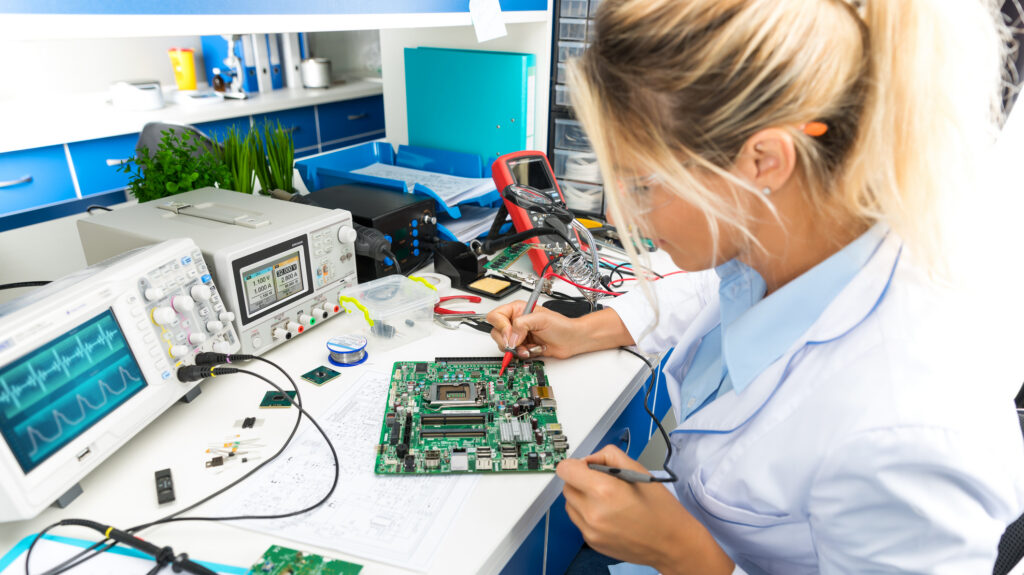
Then there are the people. Professors and researchers may have spent decades working in semiconductor devices, communications, embedded systems, robotics, signal processing, control, computer architecture, or other specialized areas. Universities also create opportunities to join research projects, design teams, engineering competitions, capstone projects, and interdisciplinary collaborations. A motivated undergraduate can therefore gain access not simply to knowledge, but to an environment that would be extraordinarily expensive to recreate alone.
The career infrastructure matters as well. Established engineering schools often have relationships with employers through co-op programs, internship pipelines, industry-sponsored projects, career fairs, alumni networks, and recruiting events. None of these guarantees a student a job, and university reputation should never be treated as an automatic employment ticket. But access to a strong recruiting ecosystem can substantially reduce the distance between a student and the companies that hire engineers.
So when families ask whether an engineering degree is worth the investment, I would not evaluate it simply as tuition in exchange for lectures and a diploma. At its best, engineering school is access to an entire technical ecosystem. Viewed from that perspective, a good university can still offer enormous value. The question is how much of that ecosystem the student actually uses.
Why Do Most Students Not Fully Use What They Are Paying For?
The uncomfortable part is that having access to these resources does not mean students automatically benefit from them. In practice, the structure of undergraduate engineering education creates several obstacles. Students may spend four years inside an excellent engineering institution while using only a fraction of what was available to them. That is where the return on the university investment can begin to deteriorate.
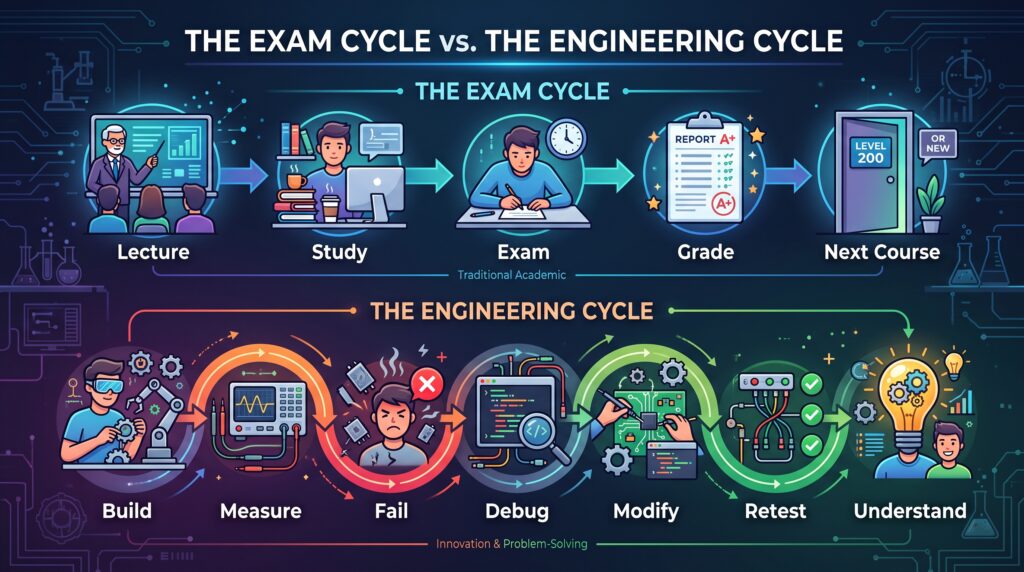
The first problem is the dominance of the course-exam cycle. Engineering programs are demanding, and students naturally organize their lives around the next assignment, midterm, lab report, and final exam. There is nothing inherently wrong with examinations; engineers need strong theoretical foundations, and structured assessment is part of building them. But when the objective quietly shifts from understanding engineering to surviving the next exam, students can become very good at temporarily learning material without integrating it into a durable engineering framework.
A student may study a topic intensively for two weeks, perform well on the exam, and then move immediately to the next course. Several months later, much of that material has faded because it was never repeatedly used in meaningful projects. In the AI era, this weakness becomes even more obvious. If the educational outcome is primarily the ability to reproduce standard solutions to well-defined textbook problems, modern AI systems are already extraordinarily capable at exactly that type of task.
The value of engineering education therefore cannot stop at knowing how to answer the question. Students need opportunities to decide what question should be asked, select components, interpret imperfect measurements, debug unexpected behavior, evaluate trade-offs, and integrate several areas of knowledge into something that actually works. Those are much closer to the situations encountered in real engineering. They are also much harder to develop through exam preparation alone.
Is Access to a Laboratory the Same as Owning the Learning Process?
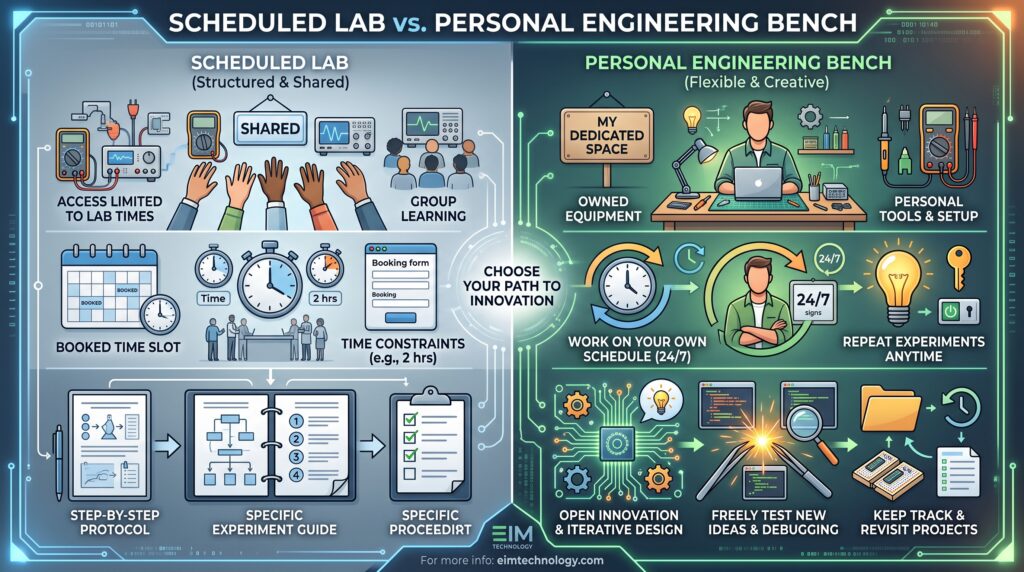
The second limitation is laboratory access. Universities may possess extraordinary equipment, but undergraduate access to that equipment is necessarily shared and structured. A department may serve hundreds or thousands of students, while laboratory space, equipment, teaching assistants, technicians, and opening hours remain finite. Universities therefore have to design labs around schedules, course requirements, safety procedures, and manageable experiments.
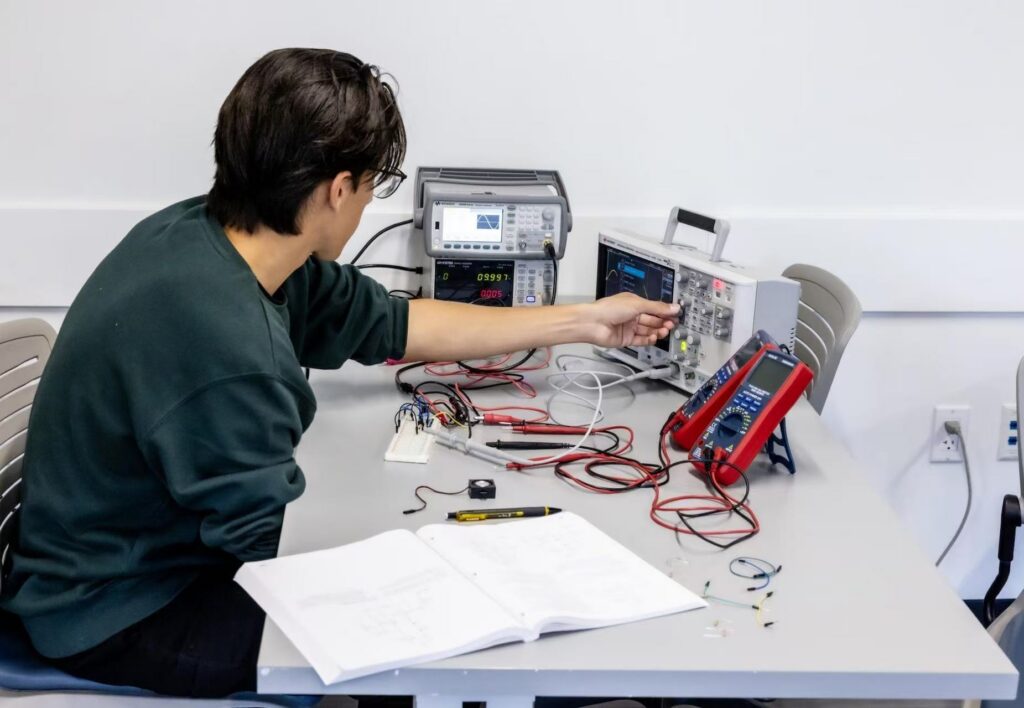
That structure is understandable, but it changes how students interact with engineering hardware. A scheduled three-hour laboratory session is very different from having a circuit on your own desk and being able to return to it tonight, tomorrow morning, or three days later when a new idea occurs to you. In a course laboratory, completing the required procedure is often the immediate objective. In independent engineering work, the objective can become understanding why something failed and continuing until you can explain it.
This distinction matters more than it initially appears. Engineering intuition develops through repetition: measuring signals, making wiring mistakes, selecting the wrong component, reading datasheets, seeing noise on an oscilloscope, debugging communication interfaces, modifying code, and gradually learning what “normal” and “wrong” look like. These experiences are difficult to compress into a small number of scheduled laboratory sessions. A university can provide excellent equipment, but students still need enough time and independence to turn access into experience.
The Third Problem Is Timing
There is another issue that receives much less attention: many students begin serious engineering exploration too late. They arrive at university with strong mathematics and science grades, but relatively little understanding of what engineers actually do. During first year, they are immediately occupied with calculus, physics, programming, foundational engineering courses, assignments, and examinations. By the time they begin encountering more specialized engineering subjects, the pressure to think about internships and co-op positions may already be approaching.
That creates a reactive learning pattern. Students first encounter a technical area because a course requires it, then try to understand it quickly enough to complete the assignment, and only afterward begin asking whether it is something they actually enjoy. Their first exposure to oscilloscopes, embedded systems, digital logic, FPGA development, signal processing, or more substantial electronics may therefore occur at exactly the same time that academic workload is highest. Exploration and performance are happening simultaneously.
For students who begin earlier, the experience can be very different. If a student has already built circuits, used basic test equipment, programmed a microcontroller, debugged hardware, or completed several integrated projects before university, first-year and second-year engineering courses no longer represent the first encounter with everything. The equations may still be difficult and the university work may still be demanding, but there is already a physical and conceptual framework underneath them. New theory has somewhere to attach.
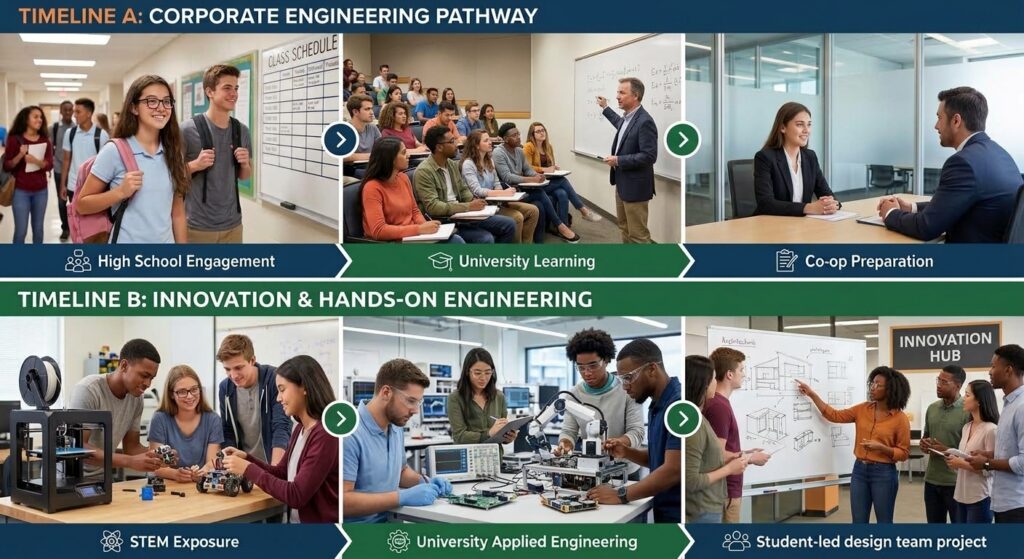
The Better Strategy: Prepare to Use University, Not Replace It
This leads to a very different way of thinking about pre-university engineering education. The goal should not be to reproduce a four-year engineering degree in high school, and it certainly should not be to convince students that university is unnecessary. A teenager does not need to complete university-level electromagnetics, semiconductor physics, or advanced signal processing before arriving on campus. Trying to compress an engineering degree into high school would largely recreate the same problem at an even younger age.
The better objective is to build engineering readiness. Before university, students can become comfortable with circuits, components, measurement, oscilloscopes, programming, microcontrollers, digital logic, basic FPGA work, communication interfaces, and progressively more integrated projects. They do not need mastery of every topic. They need enough experience that these concepts are no longer completely abstract when they encounter them formally.
That changes the role of university dramatically. Instead of arriving on campus and spending the first two years simply discovering what engineering is, the student can begin asking better questions much earlier. Laboratory sessions become opportunities to investigate rather than merely follow instructions. Professors become people whose expertise can be approached with meaningful questions. Design teams, research opportunities, technical clubs, and independent projects become accessible earlier because the student already has enough vocabulary and practical confidence to participate.
This is where the return on university investment can increase substantially. The university has already built the expensive infrastructure; the student’s job is to arrive prepared enough to use it. You do not need to own the million-dollar laboratory. You need to develop enough engineering ability that, when the laboratory becomes available to you, you know what to do with it.
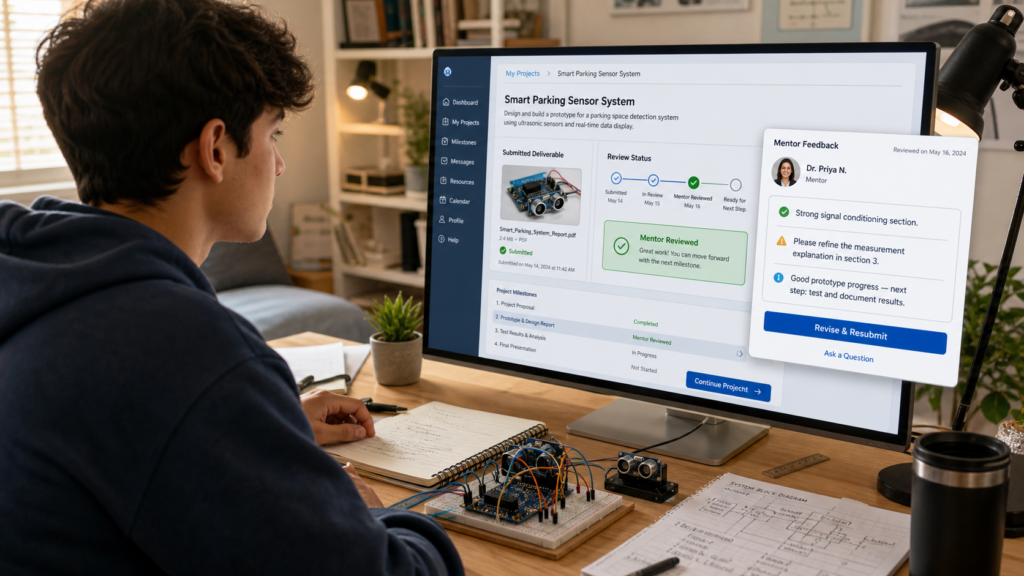
A Different Way to Think About Engineering Preparation
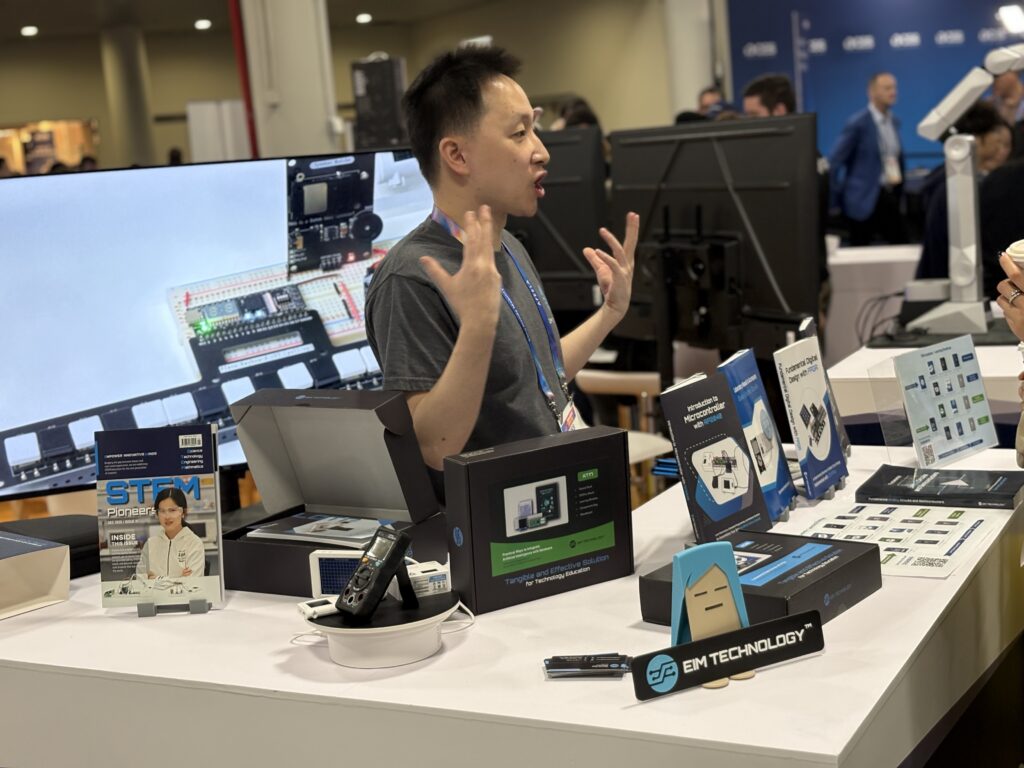
This is also the philosophy behind the engineering learning pathway we have been developing at EIM Technology. We are not trying to replace university engineering education. In fact, our objective is almost the opposite: we want students to be better prepared to extract value from it.
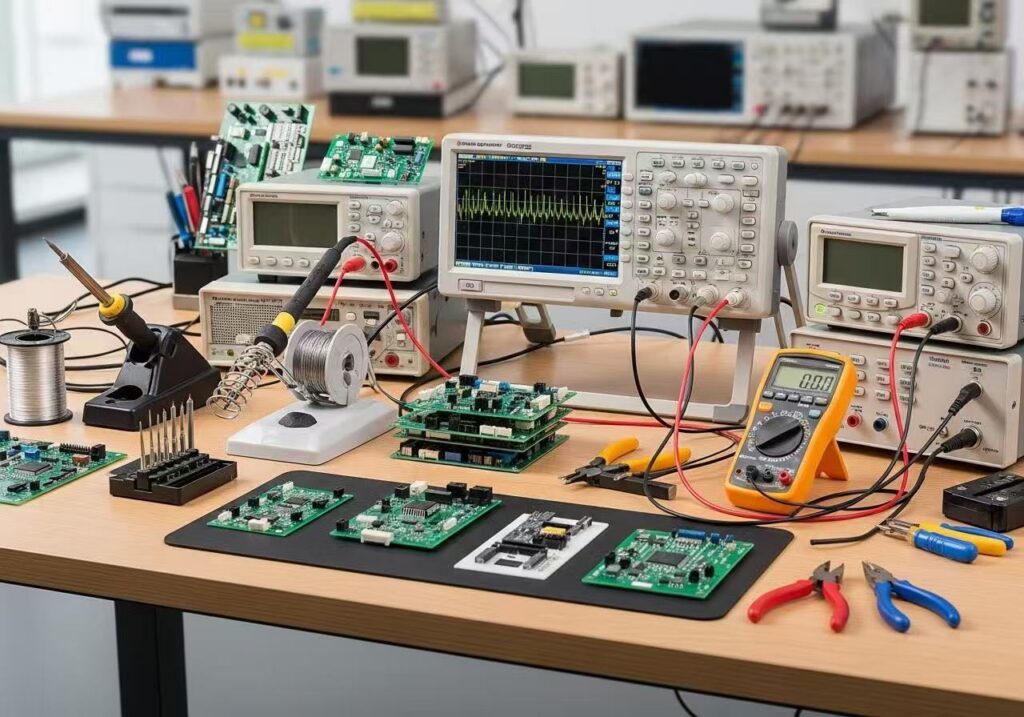
Our pathway begins with the part that high school students can realistically build before university: circuits, components, measurement, test equipment, programming, electronics, microcontrollers, FPGA and digital logic, and progressively more complete engineering projects. Students work with their own hardware and instruments rather than experiencing engineering only through occasional demonstrations. As the projects become more complex, they begin combining software, digital hardware, electronics, communication, measurement, and debugging into complete systems.
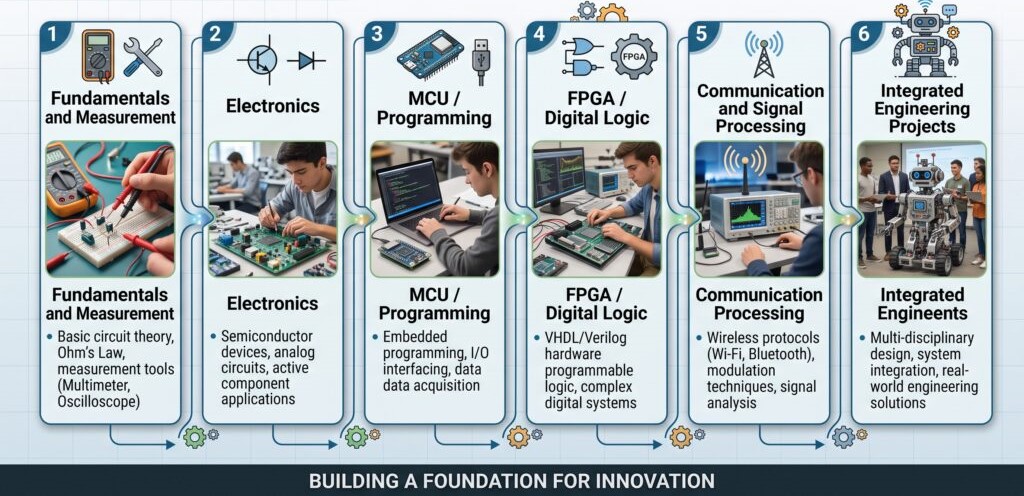
There is an important reason for structuring the learning this way. A student who has already spent time debugging a circuit will understand a university electronics laboratory differently. A student who has already implemented digital logic on an FPGA will approach computer architecture differently. A student who has already integrated an MCU, display, sensor, storage device, or FPGA into a working system will understand embedded systems differently. The university course is no longer introducing an isolated concept into an empty space; it is providing deeper theory for something the student has already touched.
For students in Vancouver, this can be done through our in-person engineering training, where students work through projects with guidance and access to the complete learning environment. Students who are more independent, including those outside Vancouver, can begin with our engineering learning systems at home, where the hardware, instruments, components, learning materials, and projects are organized into a progressive pathway. The purpose in either case is the same: not to rush through university material, but to build the practical foundation that makes later university resources more valuable.
Fundamental EE Starter, FE11
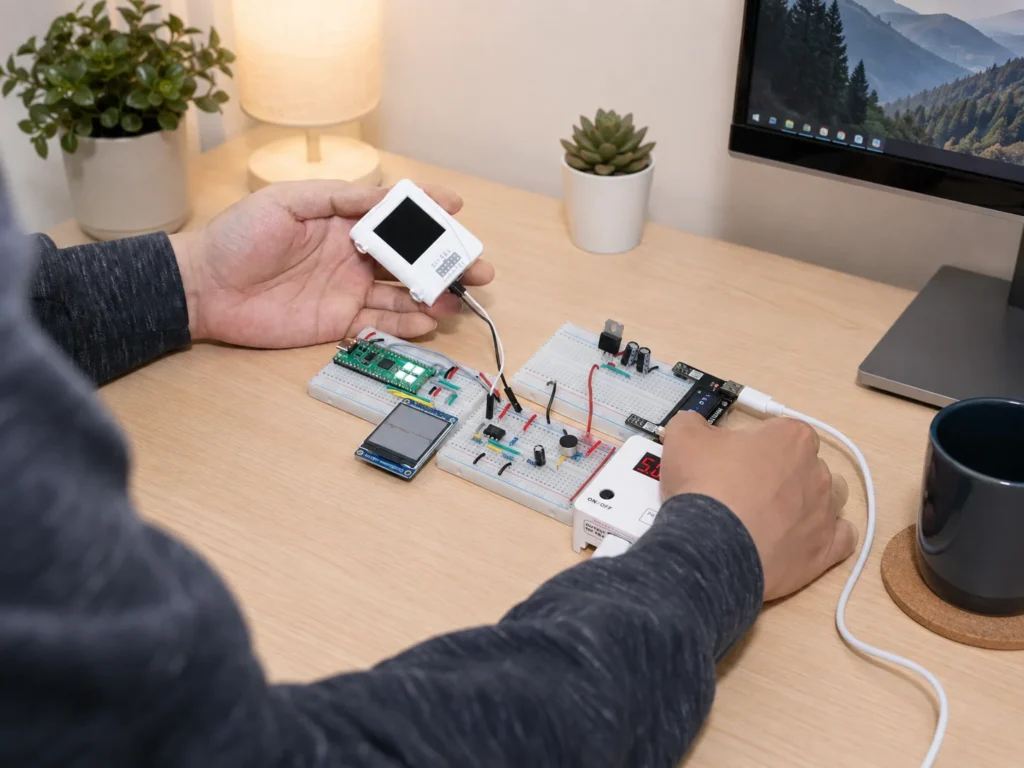
For learners who want a structured way to build that habit, the Fundamental EE Starter kit (FE11) follows one connected path through circuits, analog design, microcontrollers, PCBs, and guided projects, with an online learning platform alongside the hardware. AI can explain each concept along the way, while the kit keeps the learning grounded in real circuits.
So, Is an Engineering Degree Still Worth It?
For the right student at the right institution, I believe the answer remains yes. A strong engineering university concentrates an extraordinary amount of technical infrastructure, expertise, academic knowledge, research activity, and industry access in one place. Properly used, those four years can provide opportunities that would be difficult and expensive to reproduce independently. That is why I would hesitate to judge engineering education simply by comparing tuition with the cost of online courses.
But there is an equally important second half to the answer. University is valuable partly because of what is available, not merely because of what is automatically delivered. A student who attends lectures, prepares for examinations, completes the minimum required labs, and graduates may receive a degree while leaving a surprising amount of that value unused. Another student at the same university may join technical teams, build projects, use laboratories, develop relationships with professors, pursue research, prepare early for co-op, and turn the same institution into a completely different experience.
That is why the question families should ask may not be simply, “Is university worth the money?” A more useful question is: “Will my child be prepared to use what we are paying for?” For engineering students, preparing earlier does not reduce the value of university. Done correctly, it does exactly the opposite: it gives students a better chance of turning an expensive four-year education into the technical environment, professional network, and engineering experience that families believed they were investing in from the beginning.
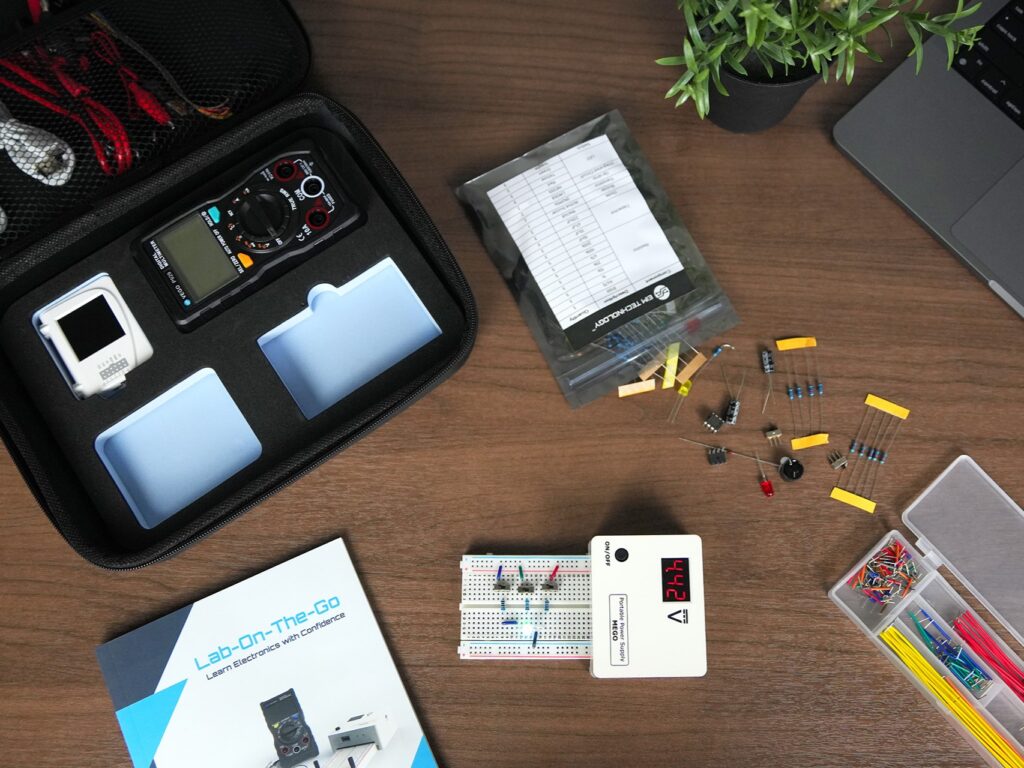
Lab-On-The-Go Electronics Tool Kit
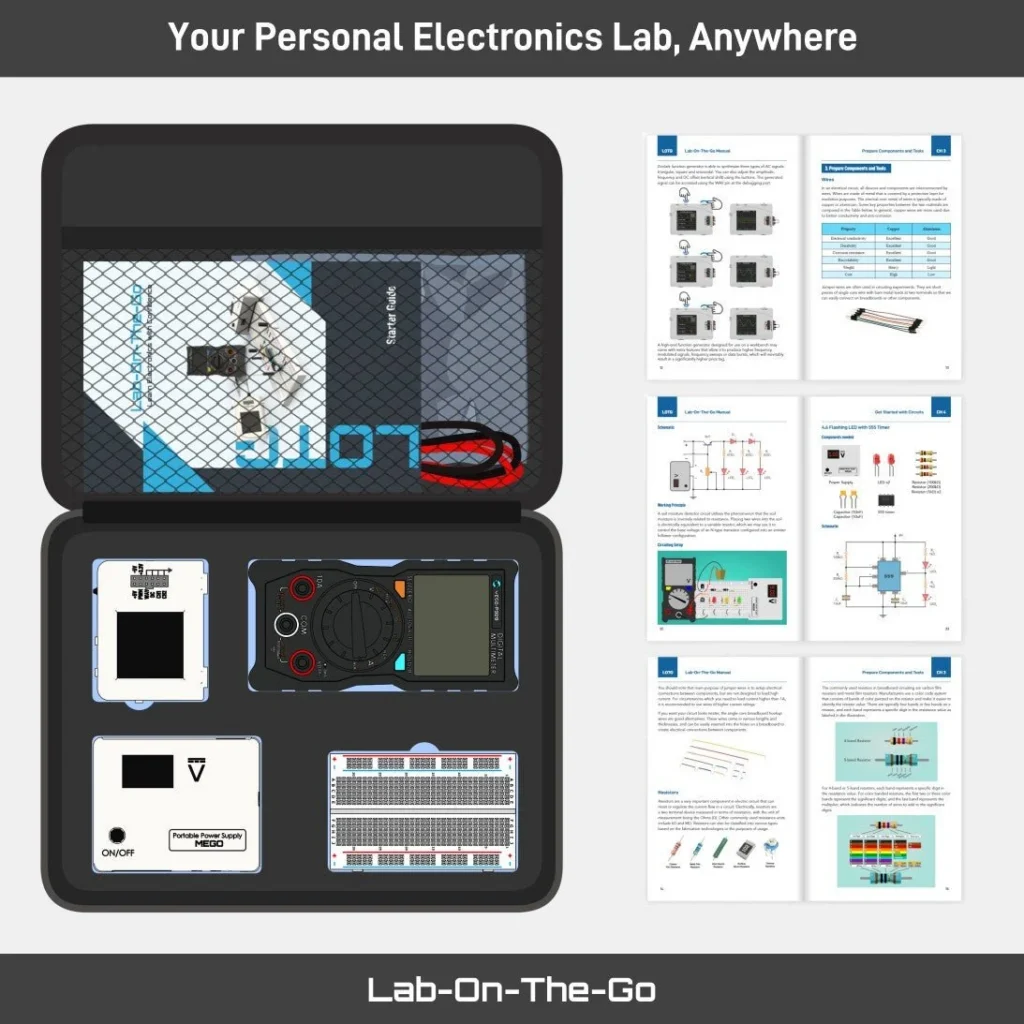
The measuring step is where many learners get stuck, because it depends on instruments that are not always accessible outside a lab. A portable kit such as the Lab-On-The-Go puts a rechargeable power supply, a digital multimeter, and an oscilloscope with a function generator in one case, so a student can capture that unexpected waveform at their own desk and work through the loop at their own pace

EIM TECHNOLOGY
Founder & Engineering Education Innovator
Daniel Cao is the Founder of EIM Technology and holds a Master of Applied Science in Engineering. With experience in engineering research, product development, PCB design, and technical education, he is the author of several books on electronics engineering. His work focuses on developing practical learning systems that integrate engineering hardware, lab instruments, curriculum, and project-based learning. Through EIM Technology, Daniel aims to make electronics and computer engineering more accessible and engaging, helping students build real experience in designing, measuring, testing, and troubleshooting electronic systems.