Departments can prepare first-year ECE students for advanced labs by adding a small, structured layer of hands-on practice early, using reusable portable instruments, guided experiments, and a department-owned kit lending model. It complements existing laboratories rather than replacing them, and it should be tested through a measured pilot before any wider rollout.
Universities invest heavily in electronics laboratories, sophisticated measurement instruments, development boards, and teaching facilities. These resources are essential for advanced undergraduate learning, particularly in upper-year electronics, embedded systems, signal processing, and capstone design.
Yet an important question often comes earlier in the student journey: how prepared are first-year students to benefit from these resources when they finally encounter them?
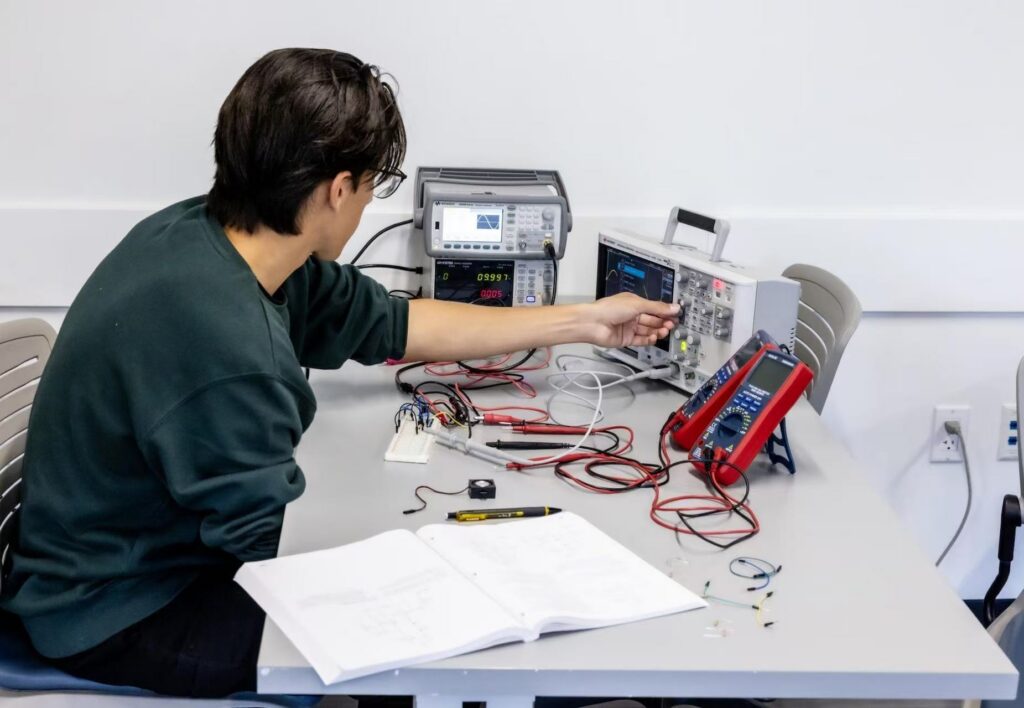
For many incoming engineering students, the first encounter with a breadboard, power supply, oscilloscope, or unfamiliar circuit can be overwhelming. They may understand introductory mathematics and physics but lack an intuitive picture of what electrical and computer engineers actually build, measure, and troubleshoot. Later courses introduce the theory, but students may not yet understand how the pieces will fit together.
This is not an argument for replacing advanced laboratories or changing the structure of a university ECE degree. It is an argument for adding a small, structured layer of practical preparation early enough that students can make better use of the education already available to them.
Why Is There a Gap Between Entering Engineering and Using Lab Resources?
First-year engineering curricula must cover essential foundations. Mathematics, physics, programming, and introductory design provide the language students will need later. However, an early student may have little practical context for interpreting a waveform, understanding why a signal needs filtering, or connecting an embedded program to physical hardware.
This can create two problems. First, students approach later laboratory sessions without the confidence to use instruments independently. Second, foundational theory may feel disconnected from the engineering systems that motivated them to enter the program.
Consider a student who has already used a signal generator to excite a simple RC circuit, observed the response on an oscilloscope, and investigated what changes when component values are adjusted. When that student later encounters frequency response, analog electronics, or signal processing, the material is no longer entirely abstract. The earlier experiment does not replace the theory; it gives the theory a concrete reference point.
The goal is not to teach an entire ECE degree in the first semester. It is to give students a practical map of the field before they begin navigating its individual courses.
Does a First-Year Readiness Program Replace the Advanced Lab?
No. It is a foundation before the advanced lab, not a replacement for it. Established platforms from Digilent, Keysight, Analog Devices, and NI have important roles in university engineering education. Digilent Analog Discovery and Analog Devices ADALM2000 provide portable measurement capabilities and educational ecosystems. Keysight supports professional bench instrumentation and teaching solutions. NI ELVIS has served integrated teaching laboratories, although institutions should review current lifecycle and migration guidance.
These systems address genuine teaching requirements. A student eventually needs access to specialized instruments, rigorous measurement procedures, and complex hardware. For upper-year courses and capstone projects, those resources may become even more valuable.
The opportunity for a first-year readiness program is different: provide a consistent introduction to measurement, circuits, troubleshooting, and engineering thinking before students depend on more advanced facilities. In that model, foundational learning increases the potential educational value of the university’s existing investment.
How Does the EIM Approach Work: Lab-on-the-Go Plus the Fundamental EE Starter?
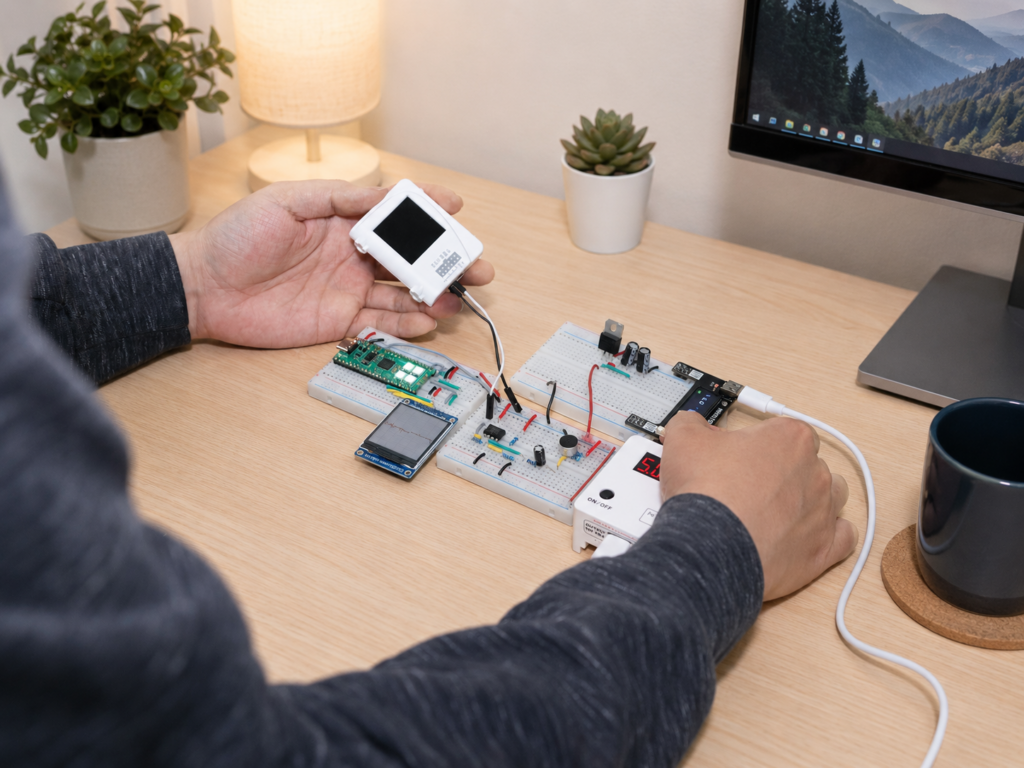
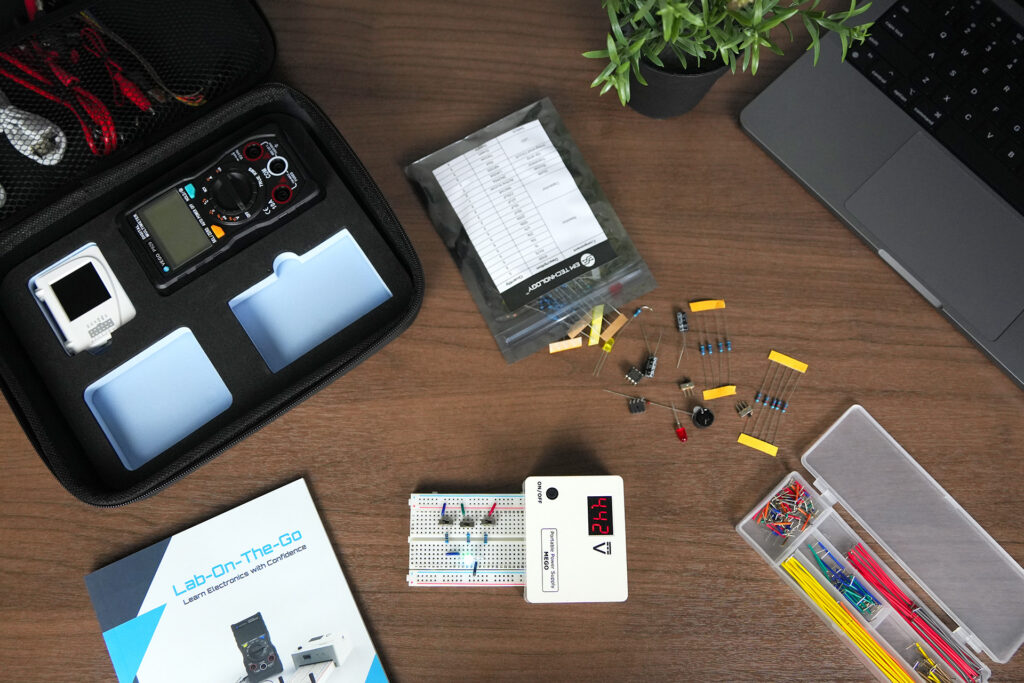
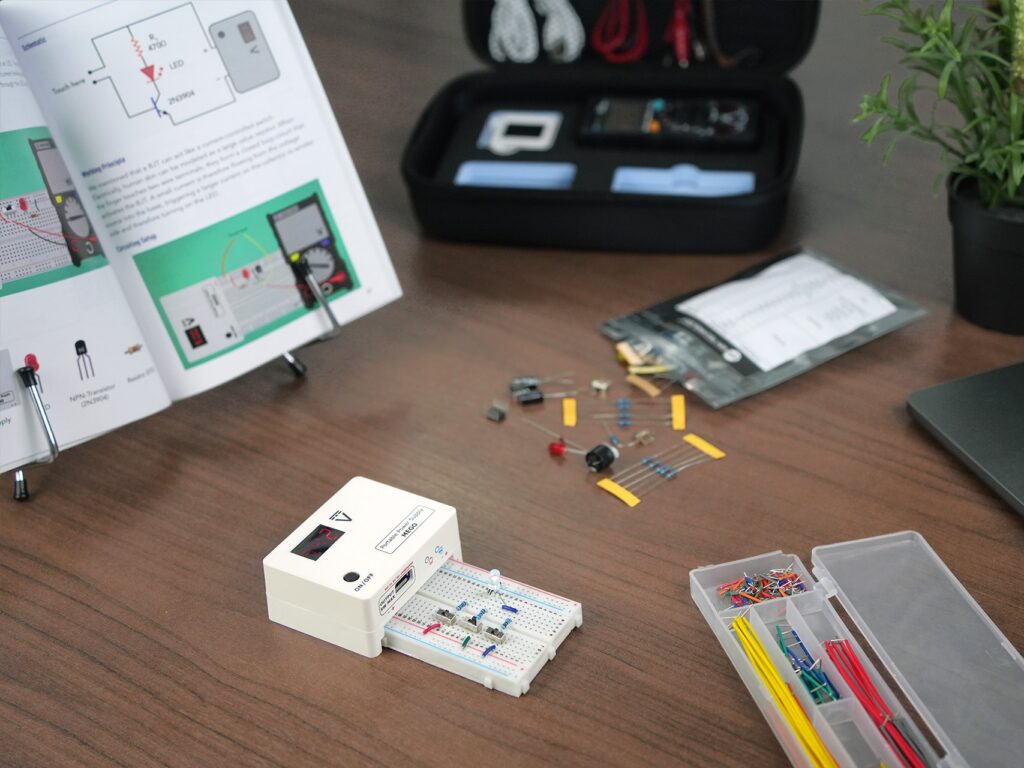
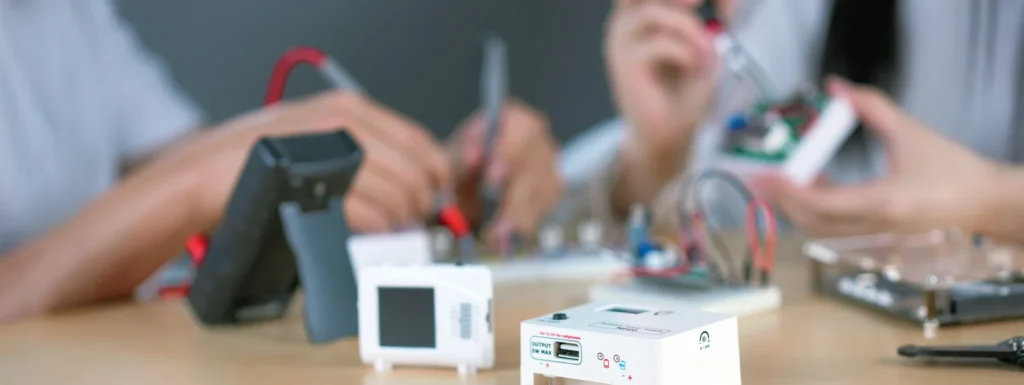
EIM Technology combines portable engineering instruments with structured, hands-on learning materials. Its Lab-on-the-Go system provides tools for foundational electrical measurement, waveform observation, and signal generation. Its Fundamental EE Starter (FE11) provides structured experiments and physical hardware for introductory electronics learning.
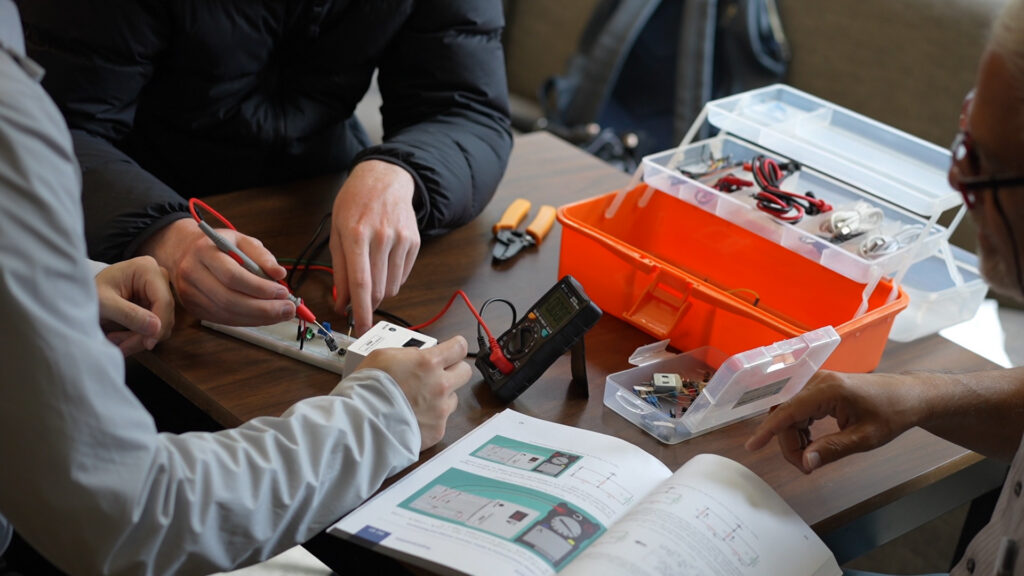
Together, these products can be evaluated as a compact first-year ECE readiness package. Instead of beginning with advanced specifications or complex projects, students can learn to operate instruments, construct and test circuits, interpret results, and diagnose common problems through a planned progression of experiments.
A foundational sequence might begin with voltage and current measurements, move to simple RC circuits and waveform observations, and then introduce the behavior of active components and the relationship between physical circuits and their mathematical models. The purpose is not breadth for its own sake. It is to make later engineering courses more intelligible and less intimidating.
For the student side of this topic, see How to Get More from University Electronics Labs.
Fundamental EE Starter, FE11
For learners who want a structured way to build that habit, the Fundamental EE Starter kit (FE11) follows one connected path through circuits, analog design, microcontrollers, PCBs, and guided projects, with an online learning platform alongside the hardware. AI can explain each concept along the way, while the kit keeps the learning grounded in real circuits.
How Can a Department Deploy Kits to Students?
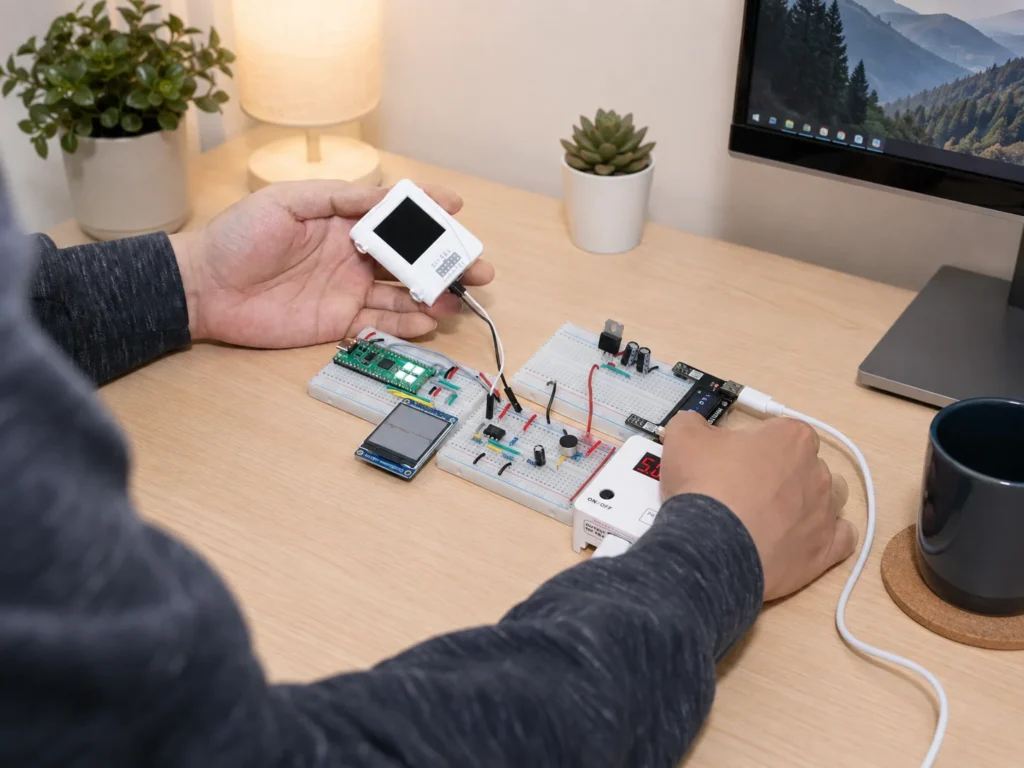
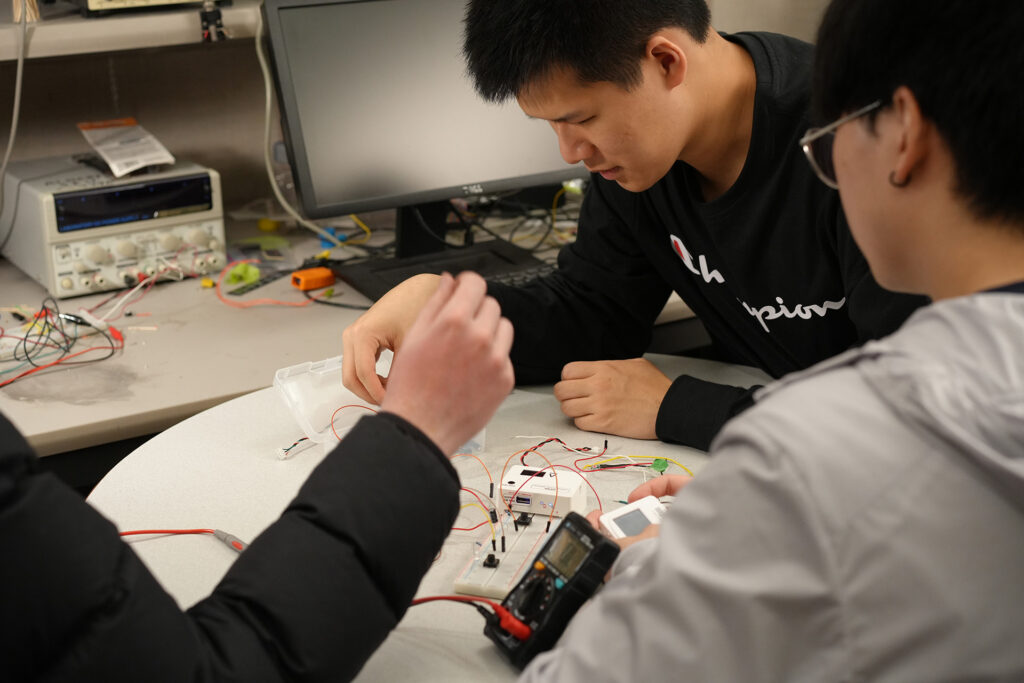
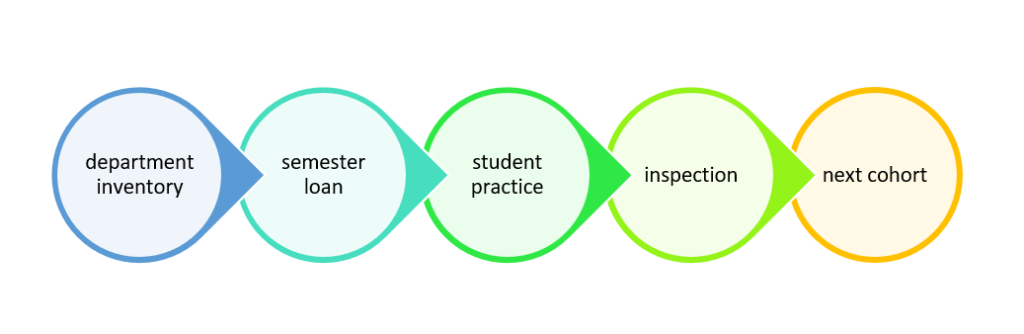
A first-year lab-readiness program does not have to require every student to purchase permanent equipment. One practical option is a department-owned lending or semester-rental model. The institution purchases a pool of kits, distributes them to enrolled students for a defined period, and collects, checks, and reissues them for subsequent cohorts.
This allows students to practice during scheduled instruction, at home where permitted, and during independent study without requiring a seat in a specialized teaching laboratory for every foundational exercise. It also gives the department a consistent baseline of tools and learning activities across a cohort.
A typical implementation could include:
- A short first-year module or introductory engineering course
- A kit-loan agreement and inventory process
- Access to the relevant instructional materials
- Selected graded or formative experiments
- A return-and-inspection workflow before the next term
The approach is scalable in principle, but it is not administration-free. Institutions should budget for kit loss, damage, consumables, sanitation where appropriate, battery handling, student support, and inspection. Any claim of lower total cost should be validated against local staffing and laboratory costs.
Could This Be a More Efficient First Investment?
A new physical teaching laboratory can involve instruments, benches, room allocation, supervision, scheduling, maintenance, and significant up-front spending. A reusable foundational kit program has a different cost structure: equipment is distributed across students and cohorts, and basic practice need not be limited to scheduled bench access.
That does not mean portable kits can replace advanced laboratories. Rather, they can reduce the need to use expensive shared resources for every introductory task while preparing students to use those facilities more effectively when they reach them.
For procurement teams, the relevant metric is not simply the price of a kit. It is the cost per student served over the useful life of the equipment, including replacement parts, administrative effort, teaching preparation, and reuse rate.
For example, a department can model a three-year reuse cycle with its own enrollment and damage assumptions, then compare the result with expanding introductory bench capacity. Such a model should be built from actual institutional costs, not generic claims that one solution is always cheaper.
How Can a Curriculum Committee Run a Lightweight Pilot?
A department does not need to redesign its entire ECE curriculum to test this approach. A manageable pilot might run within an existing first-year engineering course, an introductory ECE module, or an optional pre-lab readiness program.
- Before the pilot: Select a small set of measurable outcomes, such as instrument identification, correct basic measurements, safe circuit setup, waveform interpretation, and independent troubleshooting. Document current student performance where possible.
- During the pilot: Issue kits to a defined student cohort, provide the structured activities, and track completion, instructor support requests, equipment issues, and student use outside scheduled sessions.
- After the pilot: Compare practical readiness with an appropriate baseline. Ask whether students can complete introductory lab tasks with less assistance, demonstrate better understanding of later laboratory procedures, or engage more confidently with ECE coursework.
Longer-term questions, including retention in ECE and use of upper-year laboratory resources, are worth studying but should not be presented as proven outcomes without institutional evidence. Student satisfaction alone is not a substitute for direct measures of practical skill.
What Should Faculty and Department Chairs Evaluate?
- Curriculum fit: Does the foundational sequence complement existing first-year learning outcomes without displacing essential theory?
- Instructional workload: Are manuals and experiments sufficiently clear for students to work independently? What instructor onboarding, grading, and support are still required?
- Accessibility: Can all students obtain equipment on equitable terms? Are there reasonable alternatives for students who cannot use a kit at home?
- Technical suitability: Do instrument specifications, electrical safety requirements, and experiment difficulty match the intended cohort?
- Lifecycle economics: What are the realistic costs of purchasing, lending, maintaining, and reusing the kits across multiple cohorts?
Frequently Asked Questions
Can a university lend electronics lab kits to first-year students?
Yes, a department can evaluate a lending or rental model using institution-owned kits, subject to its own procurement, inventory, safety, accessibility, and student-loan policies. The educational materials and hardware should be reviewed for the proposed unsupervised activities.
Can portable lab kits replace a university electronics laboratory?
Not comprehensively. Portable systems are most useful for selected foundational activities and practice outside scheduled labs. Advanced experiments, specialized instruments, and supervised work still require appropriate institutional facilities.
How is a first-year readiness kit different from Digilent Analog Discovery or ADALM2000?
Digilent and Analog Devices provide established portable instrumentation and teaching resources. EIM’s proposed first-year package emphasizes combining instruments with a structured introductory learning sequence. Departments should compare full ecosystems and technical requirements, not assume direct specification equivalence.
Will a first-year lab-readiness program improve student retention?
It may be a reasonable hypothesis, but improved retention is not established merely by introducing kits. Departments should test immediate practical readiness first and examine longer-term academic outcomes with appropriate comparison groups.
What is the simplest way to pilot a foundational ECE kit program?
Start with one course or cohort, a limited number of experiments, a clear kit checkout process, and a few measurable skill outcomes. Evaluate teaching workload and student performance before expanding.
Conclusion: Help Students Arrive Ready
The objective is not to replace the laboratory resources that universities have already built. It is to help students arrive ready to use them. A compact, reusable introductory learning system can give first-year students early exposure to real instruments, physical circuits, and engineering problem-solving, while preserving the depth and specialization of later ECE courses.
For department chairs and curriculum leaders, the opportunity is a relatively lightweight addition with a potentially broad reach: one structured foundation that can serve an entire cohort, support learning inside and outside class, and be reused by future students.
Interested in evaluating a first-year ECE lab-readiness pilot? EIM Technology welcomes discussions with faculty and academic departments about course alignment, kit deployment, instructional materials, and institutional purchasing options. Contact EIM through eimtechnology.com.

EIM TECHNOLOGY
Founder & Engineering Education Innovator
Daniel Cao is the Founder of EIM Technology and holds a Master of Applied Science in Engineering. With experience in engineering research, product development, PCB design, and technical education, he is the author of several books on electronics engineering. His work focuses on developing practical learning systems that integrate engineering hardware, lab instruments, curriculum, and project-based learning. Through EIM Technology, Daniel aims to make electronics and computer engineering more accessible and engaging, helping students build real experience in designing, measuring, testing, and troubleshooting electronic systems.