University laboratories give electronics and computer engineering students access to strong equipment, but scheduled hours rarely leave enough time to build real operating skill through repetition. The gap is readiness, not access. A small, portable practice environment lets students build basic circuit, measurement, and troubleshooting habits before formal lab courses begin, so scheduled laboratory time produces learning instead of friction.
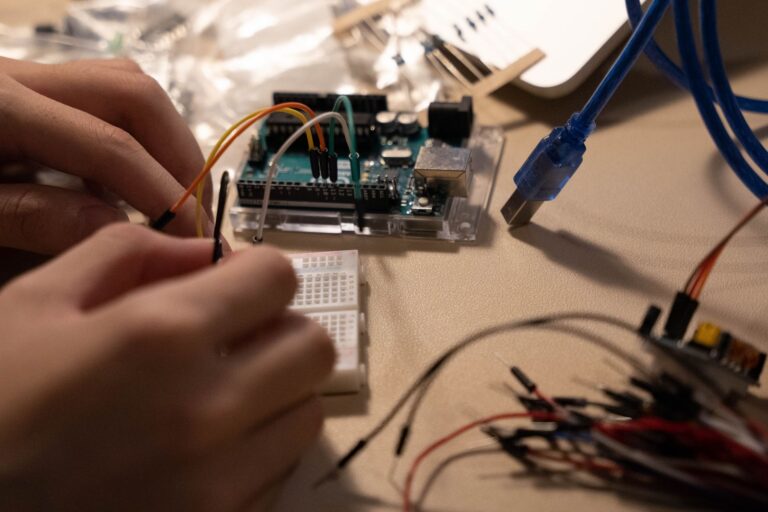
Most electronics and computer engineering students already understand that practical experience matters. The harder problem is getting enough of the right kind of practice before internships, capstone projects, or a first engineering job make that experience essential.
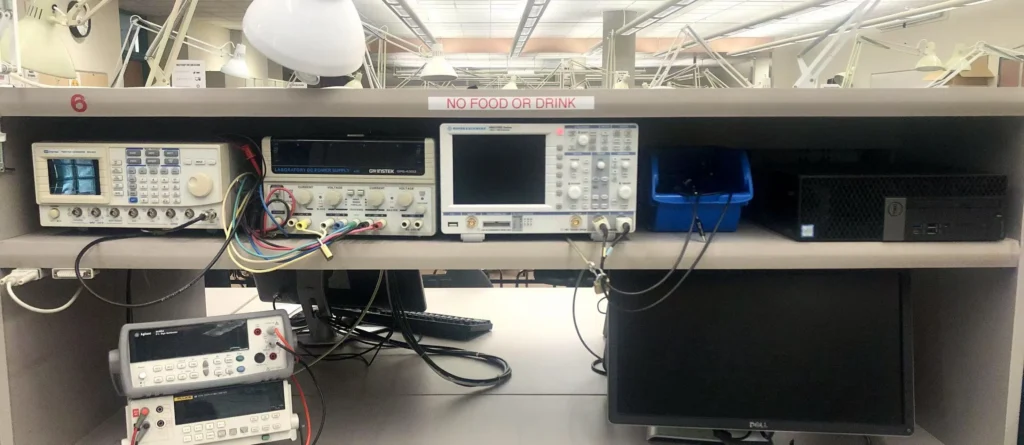
University laboratories can contain excellent oscilloscopes, signal generators, power supplies, and development platforms. But access to those resources is usually tied to scheduled courses, fixed procedures, shared workstations, and limited hours. Students are expected to learn the experiment, operate unfamiliar equipment, troubleshoot their circuits, and collect acceptable results within the same short session.
The result is not a lack of equipment. It is a gap between access and readiness. A student may stand in front of a professional instrument and still be unable to use the laboratory time effectively.
What Is the Real Bottleneck in University Electronics Labs?
In many engineering programs, laboratory work represents only a modest share of total course time, well behind lectures, mathematics, analysis, assignments, and examinations. Those foundations are important, but they leave little room for repetition.
Practical fluency is built through repeated actions: connecting a circuit, selecting an appropriate voltage scale, identifying a noisy measurement, adjusting a waveform, reading a datasheet, correcting a wiring mistake, and trying again. A tightly scheduled laboratory exercise rarely allows enough time for that cycle to become natural.
This is why even capable students can reach later courses with only a narrow working knowledge of the equipment available to them. They may have used an oscilloscope several times without becoming comfortable choosing trigger settings, comparing signals, or investigating an unexpected result. They have completed labs, but they have not yet developed laboratory fluency.
The goal is not to replace the university laboratory. It is to make every hour inside it more valuable.
Why Does Better Equipment Not Automatically Produce Better Skills?
Professional laboratory equipment is designed to support demanding engineering work. It is not always designed to give a beginner the shortest path to understanding. More bandwidth, more modes, and more menus create capability, but they also create a steeper starting point.
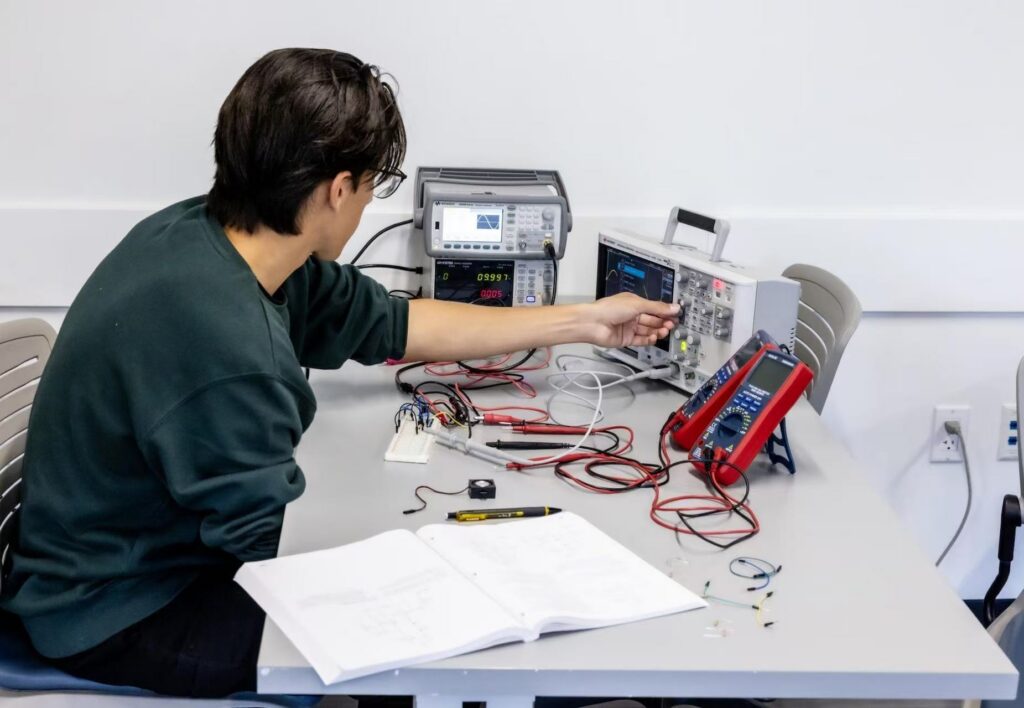
During a scheduled lab, beginners are often solving two problems at once. First, they must understand the circuit or system under study. Second, they must learn how to operate the tools used to observe it. When both are unfamiliar, cognitive overload replaces exploration. Students follow the worksheet, reproduce the required screenshot, and move on without building a reliable mental model.
Universities cannot simply provide unlimited supervised lab access. Equipment cost is only one constraint. Space, staffing, safety, maintenance, scheduling, and class size all matter. The realistic solution is therefore not to demand that formal laboratories do everything. It is to prepare students before those expensive resources are needed.
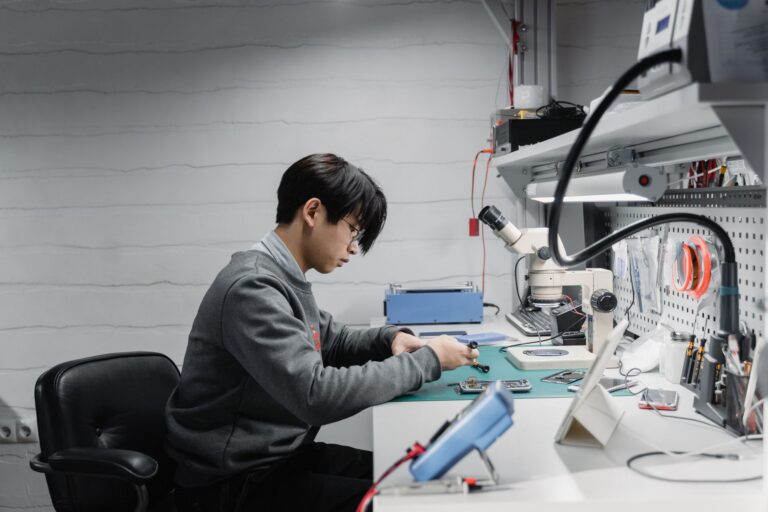
How Can Students Build a First Layer Before the Professional Lab?
Consider two students entering the same electronics laboratory. One is seeing the oscilloscope, signal generator, breadboard circuit, and test procedure as a single unfamiliar system. The other has already generated basic waveforms, measured voltage and frequency, observed RC behavior, compared an input with an output, and corrected simple connection errors independently.
The second student does not necessarily know more advanced theory. The difference is that basic operation no longer consumes all of their attention. They can use the formal lab to investigate the engineering question instead of spending most of the session learning where to begin.
This is the missing step in many learning paths: a small, accessible environment in which beginners can acquire foundational laboratory habits before they face professional equipment, graded deadlines, and complex projects.
How Does Lab-on-the-Go Bridge That Gap?
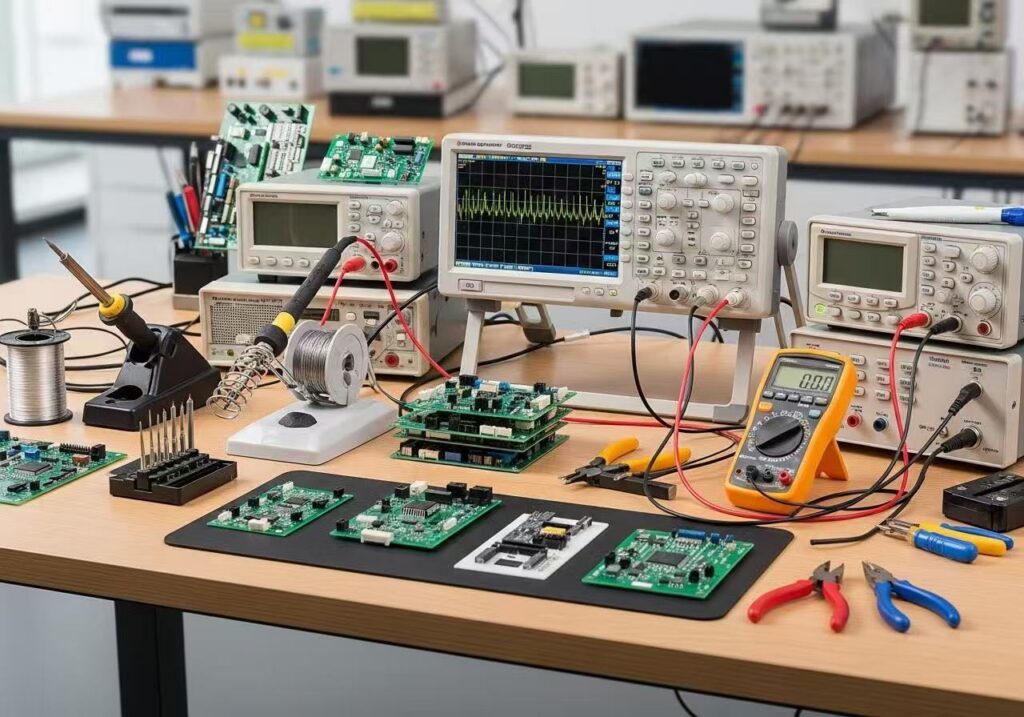
Lab-on-the-Go was designed to provide that step. It combines the essential functions a beginner repeatedly needs, waveform observation and generation, voltage measurement, portable power, and breadboard-based circuit building, in a compact system that can be used at home, at school, or wherever a student has time to practice.
It is not positioned as a replacement for a university oscilloscope or a fully equipped engineering laboratory. That comparison would ignore its real advantage. Lab-on-the-Go lowers the operational barrier enough for a learner to start building, measuring, changing, and repeating without waiting for a scheduled lab session.
A student can spend twenty minutes testing a simple circuit, return to it the next day, make a mistake, and work through the cause. That freedom matters. Engineering intuition grows through many small feedback loops, not through one perfect experiment.
Scheduled University Lab vs. Lab-on-the-Go: What Is the Difference?
| Question a student should ask | Scheduled university lab | Lab-on-the-Go |
|---|---|---|
| Available on the student's own schedule? | No, fixed session times only | Yes, available whenever the student wants to practice |
| Can a circuit stay set up between sessions? | Generally not, shared workstations are set up for the next student or group | Yes, it can be left assembled and revisited |
| How much repetition does a typical session allow? | Limited, one pass through a fixed procedure | As much as the student chooses to run |
| Who diagnoses a mistake? | Depends on who is available to help during that session | The student, building independent troubleshooting skill |
Why Does Equipment Need a Learning Path Around It?
Portable equipment alone does not solve the problem. A beginner can own an oscilloscope and still have no idea what to measure. The bridge must include both accessible tools and a structured sequence of learning experiences.
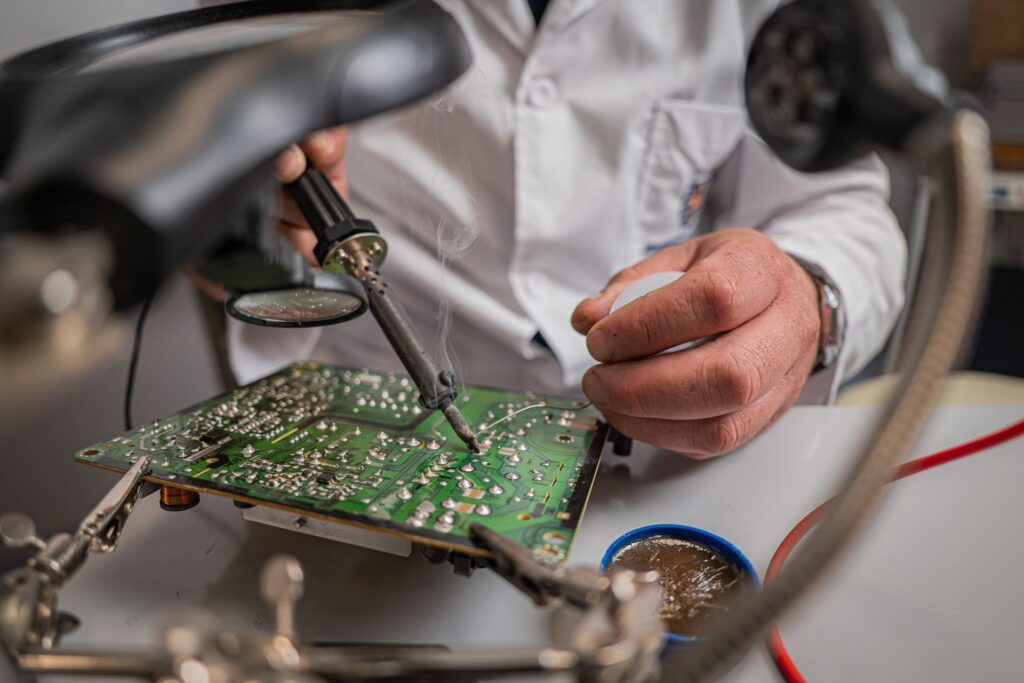
That is why Lab-on-the-Go connects with EIM Technology’s broader electronics engineering learning system. Students begin with circuits, measurements, and observable behavior. They can then progress toward analog electronics, digital systems, microcontrollers, FPGAs, signal processing, and integrated engineering projects.
Each stage gives the equipment a purpose. Instead of collecting disconnected demonstrations, the student repeats the same lab-readiness loop introduced earlier, now applied at a larger scale: build a system, predict its behavior, measure the result, compare the two, and debug the difference.
This structure also makes later university resources more useful. Once students understand the basic relationship between a circuit, a signal, and a measurement, professional equipment becomes an extension of what they already know rather than an entirely new obstacle.
What Mistakes Do Students Make When Trying to Build Lab Skills Early?
- Assuming more time in the university lab is the fix. Scheduled lab time is limited by design; the gap closes through independent repetition outside it, not by requesting more sessions.
- Buying an instrument without a learning sequence to use it in. A beginner can own an oscilloscope and still have no idea what to measure or why.
- Treating one successful measurement as fluency. Comfort with an instrument comes from repeated use across many small, varied problems, not from reproducing a single required result.
- Waiting until first year to start. Basic circuit and measurement habits are just as learnable in high school, and starting earlier means less friction when formal courses begin.
- Skipping the mistake-and-retry step. A circuit that works on the first try teaches less than one that fails, gets diagnosed, and is corrected.
Who Is This Better Starting Point For?
For high school students preparing for electronics engineering, computer engineering, or ECE, this pathway creates a practical foundation before university. For first-year students still completing mathematics and introductory theory courses, it provides a way to begin developing engineering ability without waiting for advanced laboratory access.
The objective is not to accelerate through an entire engineering degree at home. It is to remove the avoidable friction at the beginning. Students arrive at formal courses already comfortable with signals, circuits, measurement, and basic debugging. They can ask better questions, complete experiments more efficiently, and use professional laboratories for the deeper work those facilities are meant to support.
What Questions Do Students Ask About Getting More From Electronics Labs?
Why do students struggle to get value from university electronics labs?
Because scheduled lab time is limited and rarely allows enough repetition for basic operation to become automatic, so students spend much of the session learning the equipment rather than the engineering question.
Does Lab-on-the-Go replace a university lab or oscilloscope?
No. It lowers the barrier to starting, so a beginner can build, measure, and repeat outside a scheduled session. The formal laboratory still provides the depth, equipment, and supervised work a personal setup cannot.
When should a student start building lab skills, before or during university?
Either works, but starting in high school or over a summer removes friction earlier. First-year students who have not started yet can still begin immediately alongside their coursework.
How much time does it take to build basic laboratory fluency?
There is no fixed number, but short, repeated sessions build more fluency than occasional long ones, because the skill comes from repetition. Even twenty minutes with a simple circuit, repeated across several sessions, adds up faster than one long attempt.
Do I need advanced circuit knowledge before I start?
No. Basic operation, waveform generation, voltage measurement, and simple circuit building come first. Theory and advanced concepts become easier to place once that foundation exists.
How Should Students Prepare for University Electronics Labs?
A university laboratory is a major educational resource, but its value depends on what the student is ready to do when the session begins. Lab-on-the-Go, supported by a structured learning path, gives students the missing first step, so they can turn limited laboratory access into lasting engineering capability.
Start building laboratory confidence before the lab course begins. Explore Lab-on-the-Go and the EIM electronics engineering learning path.

EIM TECHNOLOGY
Founder & Engineering Education Innovator
Daniel Cao is the Founder of EIM Technology and holds a Master of Applied Science in Engineering. With experience in engineering research, product development, PCB design, and technical education, he is the author of several books on electronics engineering. His work focuses on developing practical learning systems that integrate engineering hardware, lab instruments, curriculum, and project-based learning. Through EIM Technology, Daniel aims to make electronics and computer engineering more accessible and engaging, helping students build real experience in designing, measuring, testing, and troubleshooting electronic systems.