
AI can already write firmware, suggest circuits, and generate PCB layouts, so it is fair to ask whether learning electronics engineering is still worth it in 2026. It is, but for a different reason than before. As individual tasks get automated, the enduring value shifts to understanding physical reality, connecting complete systems, and taking responsibility for decisions that enter the real world.
Today, AI can explain circuits, analyze requirements, select components, write firmware and HDL, assist with debugging, generate test procedures, and increasingly participate in schematic and PCB design. Tasks that once required hours of searching through datasheets, comparing alternatives, or repeatedly modifying a design can now be completed much faster. As these tools continue to improve, there is little reason to assume that hardware engineering will remain protected from automation.
For students, this creates a legitimate question. If AI can eventually generate a good schematic, produce a PCB layout, write much of the firmware, and help diagnose the resulting system, why spend years learning electronics the traditional way?
Electronics engineering remains extremely valuable to learn, but the reason for learning it is changing. As the execution of individual engineering tasks becomes cheaper, the value of an engineer increasingly comes from something above those tasks: understanding physical reality, connecting different parts of a complete system, and taking responsibility for engineering decisions in the real world.
AI Works With Representations. Engineers Work With Reality
Most AI systems interact with engineering through representations of the physical world. A schematic is a representation. A PCB layout is a representation. A simulation, datasheet, photograph, measurement table, specification, or prompt is also a representation. These representations can contain enormous amounts of useful information, but they remain abstractions of a physical system.
Working with real hardware creates a different kind of understanding. Consider something as simple as a voltage regulator getting warm. A schematic can explain the topology, a simulation can estimate power dissipation, and an AI system can suggest why the device may be heating. However, when you actually work with the circuit, you begin to notice things that are difficult to appreciate from the schematic alone: how quickly the temperature rises, whether the heating is concentrated in one location, whether the behavior changes after ten minutes, whether a connector feels mechanically unreliable, whether a display flickers only when a motor starts, or whether a circuit that appears perfectly reasonable behaves differently when connected through a long cable.
The important point is not that these phenomena are impossible for AI to analyze. If enough measurements and context are provided, many of them can be analyzed very well. The deeper problem is that someone first has to recognize what is worth observing and measuring.
The physical world contains far more information than is normally captured. Whenever reality is converted into text, measurements, photographs, or models, choices are made about what information to preserve, and something is inevitably omitted. An experienced engineer therefore does not only ask what the available data says; the engineer also learns to ask what may be missing from the data entirely.
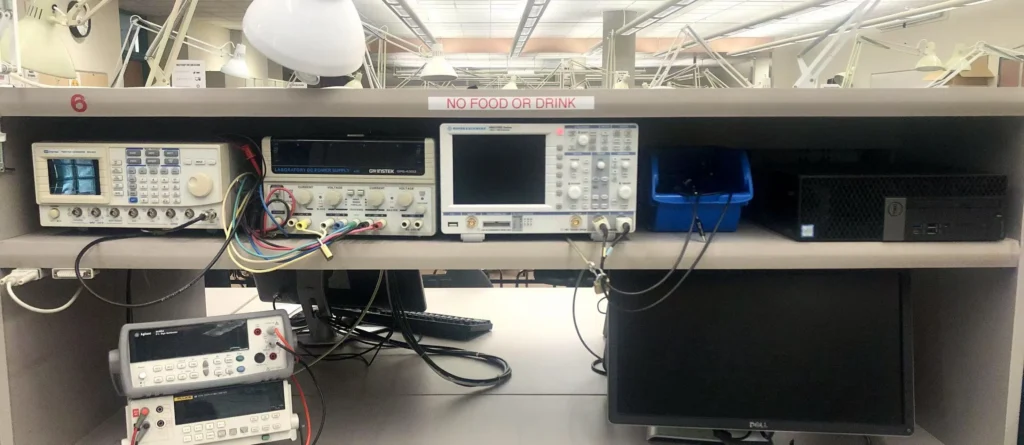
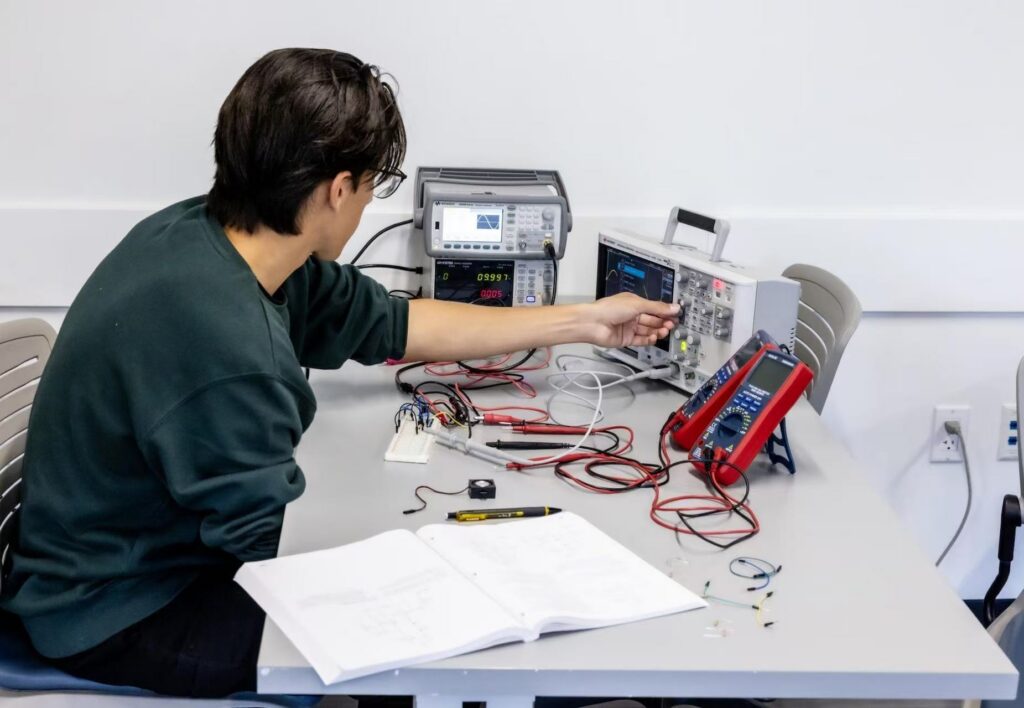
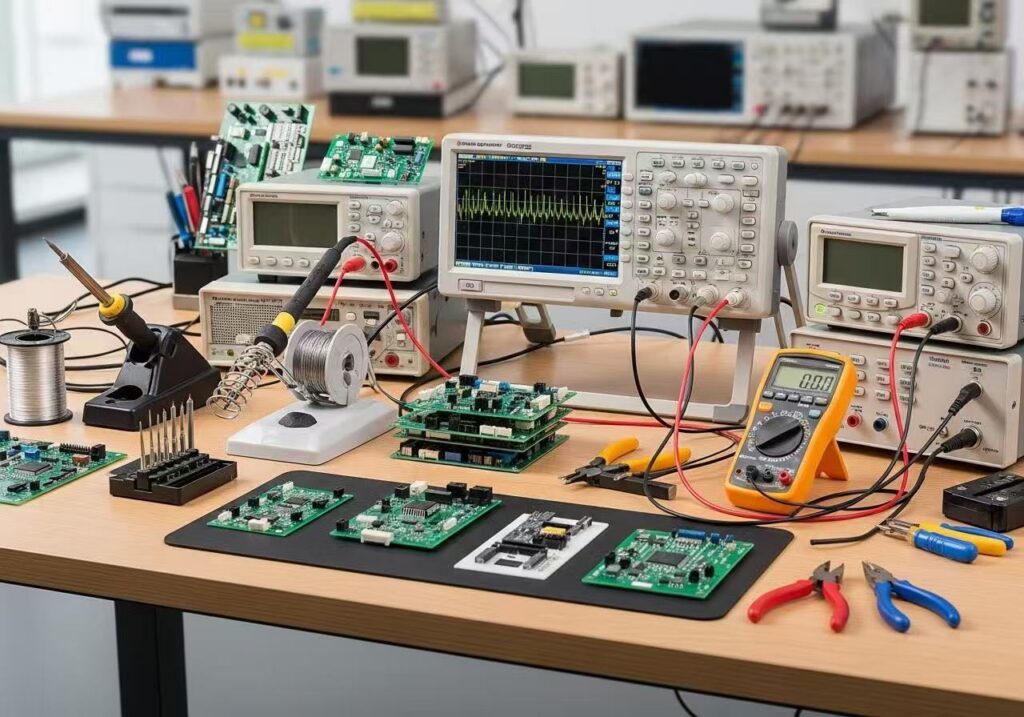
This kind of intuition is difficult to develop without repeated contact with physical systems. For this reason, laboratories, instrumentation, prototyping, measurement, and hands-on experimentation may actually become more important in engineering education as AI becomes more capable, not less.
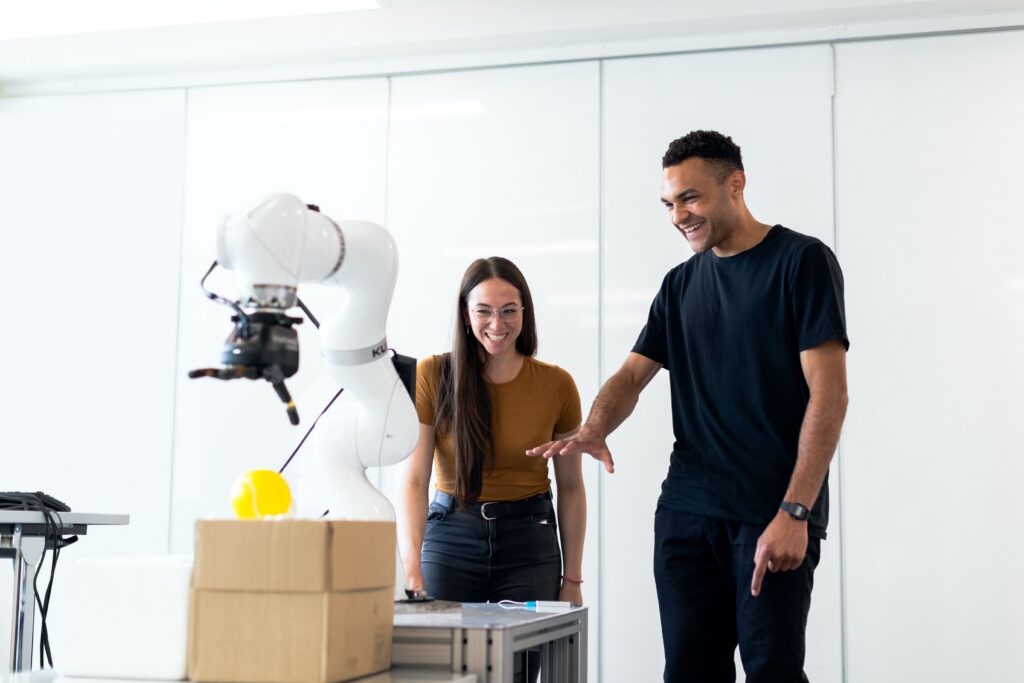
Is Automating PCB Design the Same as Automating Engineering?
No. Producing a PCB is only one stage in developing an electronic product, and confusing the automation of one task with the automation of engineering itself is a common mistake. AI-assisted tools will almost certainly make the path from requirements to schematics and layouts dramatically faster, but the surrounding decisions still require a human engineer.
Before the board exists, someone must determine what problem is actually being solved, what level of performance is necessary, what cost is acceptable, how much power the system can consume, which interfaces should be exposed, and what trade-offs are reasonable. The architecture itself may require decisions between analog circuitry, a microcontroller, an FPGA, dedicated ICs, or some combination of them, and none of these decisions exists independently. Changing one part of the system often changes constraints somewhere else.
Then come component selection, availability, substitutions, manufacturing constraints, assembly, testing, and supply chain considerations. After the first prototype arrives, the work changes again: the board must be powered carefully, signals measured, unexpected behavior diagnosed, firmware and hardware problems separated, components replaced, specifications reconsidered, and documentation updated. In a real company, this process also involves communication among hardware engineers, software engineers, manufacturers, suppliers, purchasing teams, and ultimately customers.
AI can assist with nearly every individual task in this chain, and it may increasingly coordinate several of them. However, the existence of powerful agents does not eliminate the need to understand the complete chain. As the cost of executing each individual task falls, the ability to define, supervise, connect, and evaluate those tasks becomes more valuable, not less.
Why Is Moving Across Abstraction Layers the Real Skill?
Traditionally, students spend a large amount of time learning how to execute individual procedures: calculate this circuit, write this program, configure this peripheral, design this filter, or route this board. Those skills still matter because they build understanding, but performing the procedure manually is increasingly less likely to be an engineer’s long-term competitive advantage.
A real engineering project constantly moves between abstraction layers. Consider developing a sensor product. At one moment the focus may be the physics of the sensor itself; then the problem becomes an analog front end, followed by ADC resolution and sampling, firmware, communication protocols, power consumption, PCB layout, manufacturing cost, and finally the experience of the person using the product. A decision made at one layer can easily create a problem several layers away.
A capable engineer does not need to be the world’s leading specialist in every layer but needs enough structured knowledge to understand how they interact. This is why broad engineering fundamentals become surprisingly valuable in the age of AI. If AI gives an engineer ten times more execution capability, then knowing where to apply that capability, how to evaluate its output, and how different decisions affect the rest of the system becomes correspondingly more important.
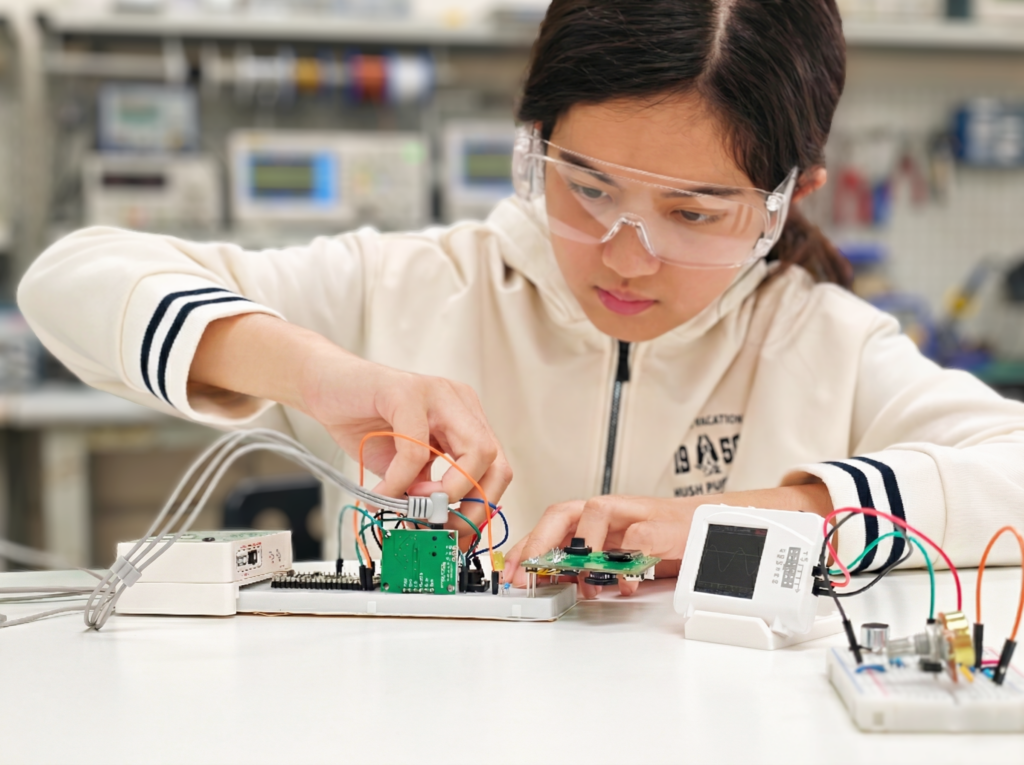
AI Makes Structured Fundamentals More Important, Not Less
There is a tempting argument that because AI can retrieve technical knowledge almost instantly, students no longer need to learn very much themselves. This confuses memorizing information with building knowledge.
There is certainly less value in memorizing isolated facts. An engineer does not need to remember every specification of every ADC or hundreds of op-amp part numbers. The engineer should, however, understand sampling, resolution, noise, bandwidth, feedback, stability, interfaces, memory, timing, grounding, power distribution, and the other concepts that determine how systems behave.
These concepts form a mental structure. Without that structure, AI can provide an enormous number of answers, but the user has limited ability to judge which answer matters, which assumption is questionable, or which direction deserves further investigation. With that structure, the same AI becomes leverage.
For this reason, engineering education should not become less technical. Instead, it should become less focused on isolated procedures and more focused on connecting fundamentals into systems. Students may eventually memorize fewer details, but they will need a broader understanding of electronics, embedded systems, digital logic, instrumentation, manufacturing, and system design if they want to take full advantage of increasingly powerful engineering tools.
Real Engineering Also Means Real Consequences
There is another dimension of hardware engineering that is easy to underestimate when most learning happens on a screen: real hardware has consequences. When a simulation fails, the result may simply be an error message. When a physical system fails, a resistor may burn, a capacitor may rupture, a battery may overheat, a power supply may be damaged, or an entire batch of manufactured boards may become unusable. In safety-critical applications, the consequences can be far more serious.
This changes the way an engineer thinks. When you physically build something, there eventually comes a moment when you have to decide whether you trust the design enough to turn it on. You check polarity, reconsider current limits, inspect connections, question assumptions, and think about failure modes differently because the outcome is no longer abstract.
That experience is part of engineering education because engineering is not simply about producing technically plausible answers; it is about making decisions that eventually enter the physical world. AI can recommend, calculate, generate, simulate, and identify risks, sometimes better than a human engineer, but responsibility still belongs to the people and organizations that decide whether a system is safe enough, reliable enough, and ready to be built or deployed. As engineering tools become more powerful, this responsibility does not disappear. It becomes more important.
What Should an Electronics Student Learn in 2026?
An electronics education designed today should not train students exactly the same way as ten or twenty years ago. There is less reason to spend enormous amounts of time repeatedly performing procedures that software can execute reliably, but the technical foundation should not weaken. It should be reorganized around a different objective: building enough fundamental knowledge to understand and control complete systems.
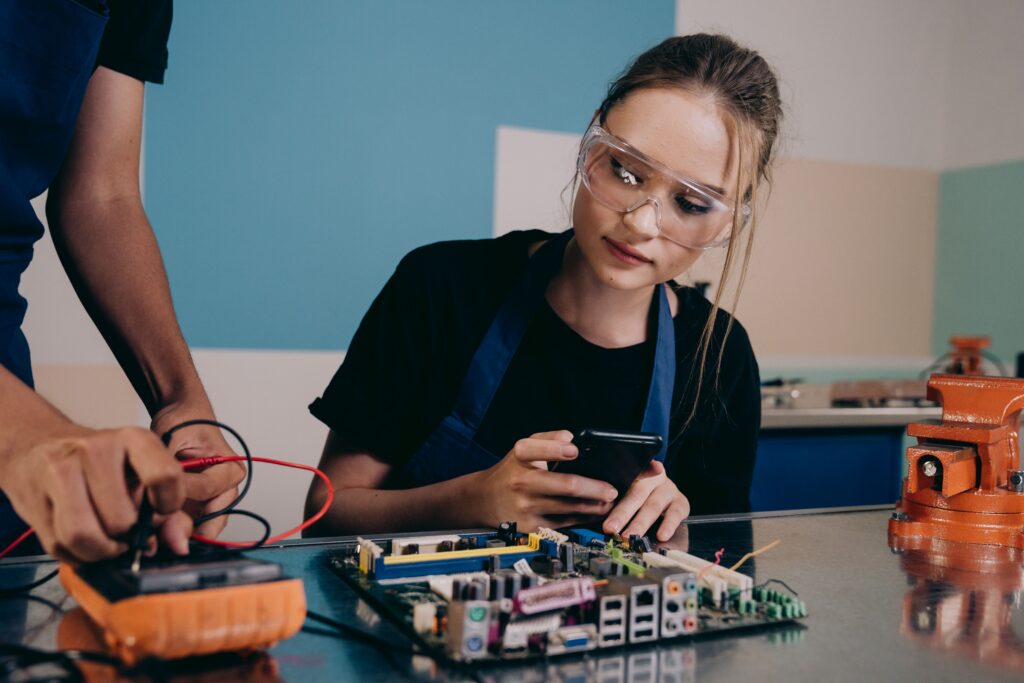
That means learning circuits, analog electronics, digital logic, microcontrollers, FPGAs, sensors, signal processing, measurement, and debugging, not as disconnected academic subjects, but as parts of a larger engineering system. More importantly, these concepts should regularly leave the screen. Students should build circuits, measure signals, change components, encounter failures, debug them, connect analog circuitry to ADCs, connect processors to programmable logic, and combine several individually understandable technologies into something that works as a complete system.
This is the point at which information begins to become engineering capability. AI can accelerate that process tremendously, and students should learn to use it, but accelerating the acquisition of information is not the same thing as acquiring engineering experience.

What AI Handles Well vs. What Still Requires an Engineer
| Task or judgment | AI today | Human engineer |
|---|---|---|
| Explaining circuit theory, generating firmware or HDL drafts | Strong and improving quickly | Reviews and validates output |
| Comparing components against a datasheet | Strong | Confirms fit against real constraints |
| Noticing a connector is mechanically unreliable, or a display only flickers when a motor starts | Limited, needs the observation reported to it first | Learned through direct hardware contact |
| Recognizing what a dataset or measurement omits | Limited | Core engineering judgment |
| Deciding whether a system is safe enough to build or deploy | Cannot take on this responsibility | Always belongs to a person or organization |
Common Misconceptions About AI and Electronics Engineering
- Assuming that automating one task automates the whole job. Generating a schematic or a PCB layout is one stage of building an electronic product; problem definition, trade-off decisions, component sourcing, prototype debugging, and cross-team communication remain separate work.
- Assuming memorization no longer matters, therefore nothing needs to be learned. Less value sits in memorizing isolated facts such as part numbers, but understanding sampling, noise, feedback, timing, and grounding is what lets an engineer judge whether an AI-generated answer is trustworthy.
- Assuming a simulation is equivalent to physical testing. A simulation can estimate behavior, but only physical hardware reveals mechanical reliability issues, thermal behavior over time, and failure modes that were never modelled.
- Treating engineering education as a checklist to finish rather than judgment to build. The goal is not completing another course; it is developing enough technical structure and hands-on experience to make engineering decisions independently.
Electronics Engineering Is Still Worth Learning, for a Different Reason
AI will remove some engineering work. It will automate repetitive design tasks, accelerate documentation, generate increasing amounts of firmware, propose circuits and layouts, search component databases, and become progressively better at debugging. Trying to preserve the value of an engineer by insisting that humans must continue performing every one of these tasks manually is unlikely to work.
The better response is not to become less technical, but to operate at a higher level of technical understanding. An engineer whose value comes entirely from executing one narrow procedure may become easier to replace. An engineer who understands physical behaviour, can move between abstraction layers, can integrate multiple disciplines, can recognize when important information is missing, and can take responsibility for the resulting system is much harder to replace.
That is the case for learning electronics engineering in 2026, not because AI will fail to become an excellent engineering tool, but because it almost certainly will. As individual engineering tasks become cheaper, engineering judgment becomes more valuable, and that judgment is built from fundamentals, physical experience, experimentation, mistakes, and system-level thinking.
This philosophy is also behind how EIM Technology approaches engineering education. Students are not protected from AI, nor are they required to perform every task manually simply because previous generations did. Modern engineers should use modern tools, and they also need direct experience building, measuring, debugging, and integrating real electronic systems. EIM’s learning systems connect electronics fundamentals with physical experimentation and project-based learning, progressing from circuits and measurement toward analog electronics, embedded systems, digital logic, FPGAs, and system-level projects, with the FE11 Fundamental EE Starter built specifically around that progression.
In an age when answers are becoming abundant, the scarce skill is knowing what to build, what to trust, what to measure, and what to do when reality disagrees.
Frequently Asked Questions
Will AI replace electronics engineers?
AI is automating individual engineering tasks such as writing firmware or drafting schematics, but it cannot take on responsibility for whether a physical system is safe and ready to deploy. That responsibility, along with system-level judgment, still belongs to a human engineer.
Is electronics engineering still a good field to study in 2026?
Yes. The reason for studying it has shifted from executing individual procedures toward understanding complete systems, connecting abstraction layers, and building the judgment needed to evaluate AI-generated engineering work.
Do I still need to memorize electronics facts if AI can look them up instantly?
Less than before, but understanding, not memorization, is what matters. Concepts such as sampling, noise, feedback, timing, and grounding form the mental structure needed to judge whether an AI-generated answer is trustworthy.
Why does hands-on hardware experience still matter if I can simulate a circuit?
A simulation only reflects what was included in the model. Physical hardware reveals thermal behaviour, mechanical reliability, and failure modes that a simulation was never built to capture, and that only shows up through direct contact with a real system.
How does EIM Technology apply this philosophy in its learning systems?
EIM’s project-based courses connect fundamentals with physical experimentation, progressing from circuits and measurement through analog electronics, embedded systems, digital logic, and FPGAs, so that AI becomes a tool students use rather than a replacement for hands-on understanding.

EIM TECHNOLOGY
Founder & Engineering Education Innovator
Daniel Cao is the Founder of EIM Technology and holds a Master of Applied Science in Engineering. With experience in engineering research, product development, PCB design, and technical education, he is the author of several books on electronics engineering. His work focuses on developing practical learning systems that integrate engineering hardware, lab instruments, curriculum, and project-based learning. Through EIM Technology, Daniel aims to make electronics and computer engineering more accessible and engaging, helping students build real experience in designing, measuring, testing, and troubleshooting electronic systems.