Good electronics students often struggle with real hardware because university grading rewards theory that can be taught and assessed at scale, while engineering practice is built on open-ended problems, physical measurement, and repeated debugging. The gap is structural, not a lack of talent, and it closes through repeated, independent contact with real circuits and instruments outside the scheduled laboratory.
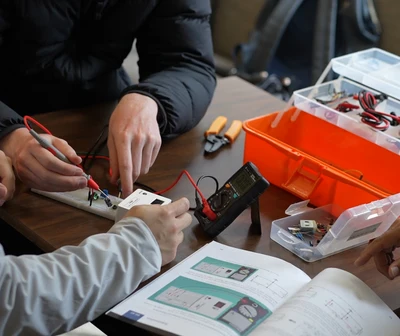
The practice gap, closed: Predict → Build → Measure → Diagnose → Understand.
Universities are built to teach and assess theory at scale. Engineering ability develops through building, measurement, failure, and debugging, activities that are far harder to scale.
A student can earn excellent grades in circuit analysis, analog electronics, digital systems, and embedded programming, and still feel completely lost when a real circuit board does not work.
The student may know how to calculate amplifier gain, derive a filter transfer function, analyze transistor bias, or write correct microcontroller code. But when the waveform looks nothing like the expected result, the power rail collapses under load, the ADC readings drift, or the FPGA refuses to communicate, the problem suddenly feels unfamiliar. Nothing in the exam question looked like this.
This gap is often described as a lack of talent, motivation, or preparation. In reality, much of it is structural. Universities teach and assess large numbers of students through courses, lectures, assignments, quizzes, midterms, and final examinations. Engineering practice is built around open-ended problems, incomplete information, physical measurements, repeated failure, and debugging.
Both forms of learning matter. But they do not develop the same abilities. The central problem is not that universities teach too much theory. It is that the structure of the degree naturally pushes students toward knowledge that can be taught and assessed at scale, while the most difficult engineering abilities require individual access to hardware, instruments, time, and repeated practice.
What Does University Assessment Actually Reward?
Look at the grading structure of a typical electronics or computer engineering course. The exact percentages vary, but the pattern is familiar: assignments, quizzes, one or two midterms, and a cumulative final examination often determine most of the grade.
It is easy to find core courses in which examinations and written problem sets represent the majority of the final mark. Some courses include laboratories or projects, but those components often account for only a modest share. Other theoretically intensive courses have no substantial hardware component at all.
This is not evidence that universities do not care about practical engineering. Accredited programs normally include laboratories, design courses, team projects, co-op opportunities, and a capstone experience. The problem is one of proportion, continuity, and incentives.
If exams and written assignments determine most of a student’s grade, rational students will devote most of their limited time to those activities. They practice the problems most likely to appear on the exam, learn standard solution methods, and optimize for the assessment structure in front of them. That strategy can produce a strong transcript. It does not necessarily produce confidence with a real electronic system.
In an examination, the circuit is normally complete, the component values are known, the diagram is correct, and the problem has a defined answer. In practice, the circuit may be assembled incorrectly, the datasheet misunderstood, the signal contaminated by noise, the power supply unstable, and several explanations plausible at the same time. These are different categories of reasoning.
Why Is a Correct Calculation Not the Same as a Working Circuit?
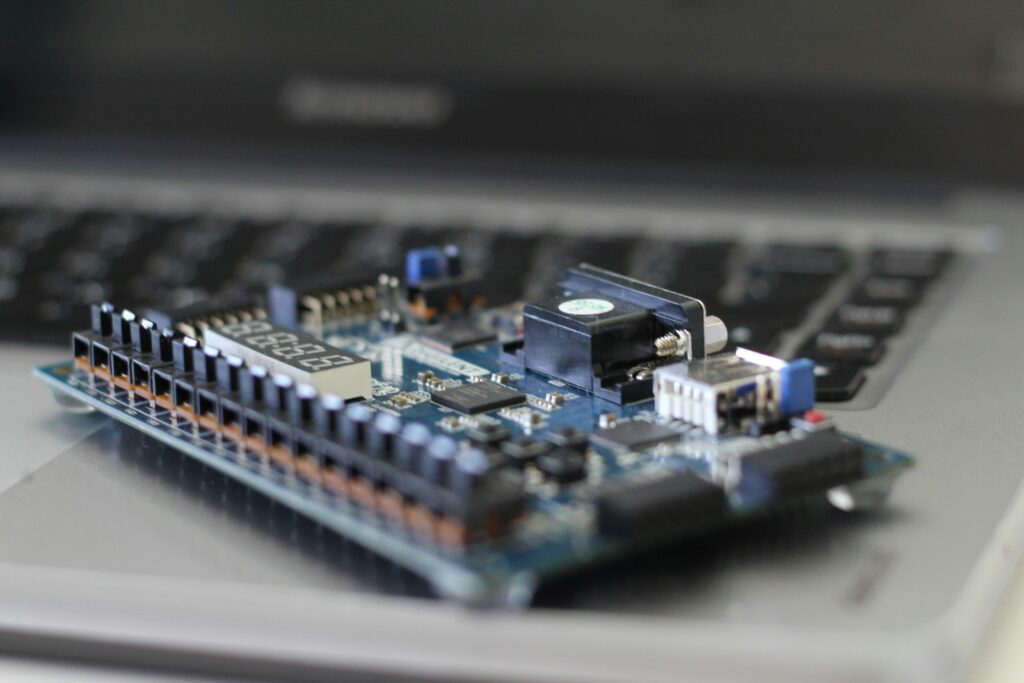
Theoretical analysis usually begins with a model. Practical engineering begins by asking whether the model still describes what is happening.
A student may calculate a filter’s expected cutoff frequency correctly. The measured response can still be wrong because the source has output impedance, the next stage loads the circuit, the capacitor tolerance is large, the op-amp lacks bandwidth, or the oscilloscope probe changes the measurement.
ADC code may be correct while readings remain unstable because the analog source impedance is too high, the reference is noisy, the sample timing is unsuitable, or the ground connection is poor. A digital design may simulate perfectly while failing on hardware because of an asynchronous input, incorrect pin assignment, interface voltage, clocking mistake, or timing behavior the testbench never exercised.
These are not exceptions to engineering. They are engineering.
What Learning Loop Creates Engineering Intuition?
You build something. You predict its behavior. You measure what actually happens. The result disagrees with the prediction. You isolate possible causes, change one condition, and measure again.
Over time, this cycle produces something lectures alone cannot create: engineering intuition.
Why Can Universities Not Turn Every Course Into a Laboratory?
It is tempting to say universities should make every electronics course heavily project-based. The idea is attractive, but it ignores the operational reality of engineering education.
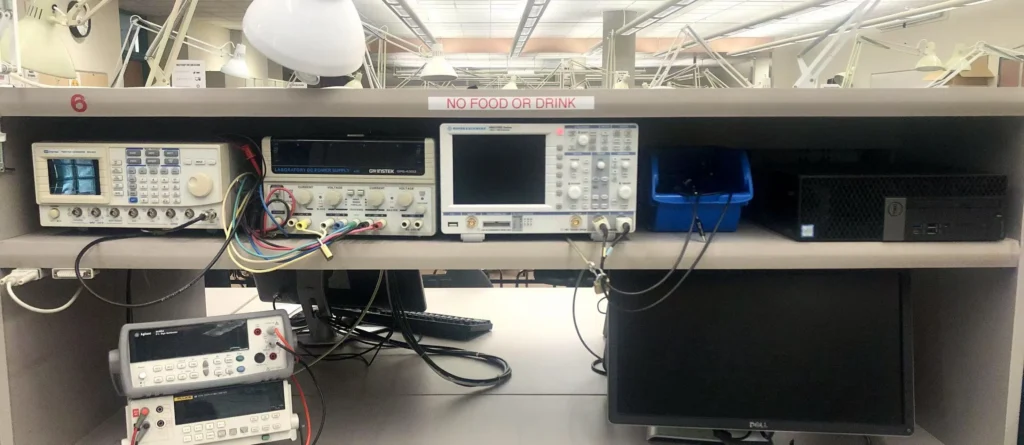
High-quality laboratory instruction is expensive and difficult to scale. A laboratory requires space, benches, power supplies, oscilloscopes, signal generators, multimeters, components, development boards, safety procedures, storage, maintenance, laboratory engineers, teaching assistants, and technical support.
Hardware is less predictable than written work. Components are damaged. Wires are misplaced. Software environments stop working. Students arrive with different experience. One group may finish in forty minutes while another spends three hours chasing a grounding problem.
If a lecture contains 150 students, a professor can give the same explanation to everyone. A debugging session is different. Each student may have created a different failure that requires individual observation and diagnosis.
Universities therefore place laboratories within controlled boundaries. Students attend at a scheduled time, share equipment, follow a predefined circuit and procedure, submit a report, and move on. This structure allows a limited laboratory to serve many students, but it removes part of the learning process.
When the procedure tells students what to connect, what to measure, and approximately what to expect, they are performing an experiment without necessarily learning how to define the experiment. University laboratories provide exposure. They do not always provide ownership.
Scheduled University Lab vs. a Personal Electronics Lab: What Is the Difference?
| Question a student should ask | Scheduled university lab | Personal lab (Lab-on-the-Go) |
|---|---|---|
| Available on the student's own schedule? | No, fixed session times only | Yes, available whenever the student wants to work |
| Can the circuit stay assembled between sessions? | No, typically cleared for the next group | Yes, it can be left set up and revisited |
| Is the procedure and expected result predefined? | Usually, a fixed circuit and expected outcome | No, the student defines what to test next |
| Who diagnoses a failure? | Often a teaching assistant | The student, building independent debugging skill |
Is Completing a Lab the Same as Becoming Independent?
A student can complete many laboratory assignments without becoming independent on the bench. This happens when the objective is to finish the procedure rather than understand the complete system.
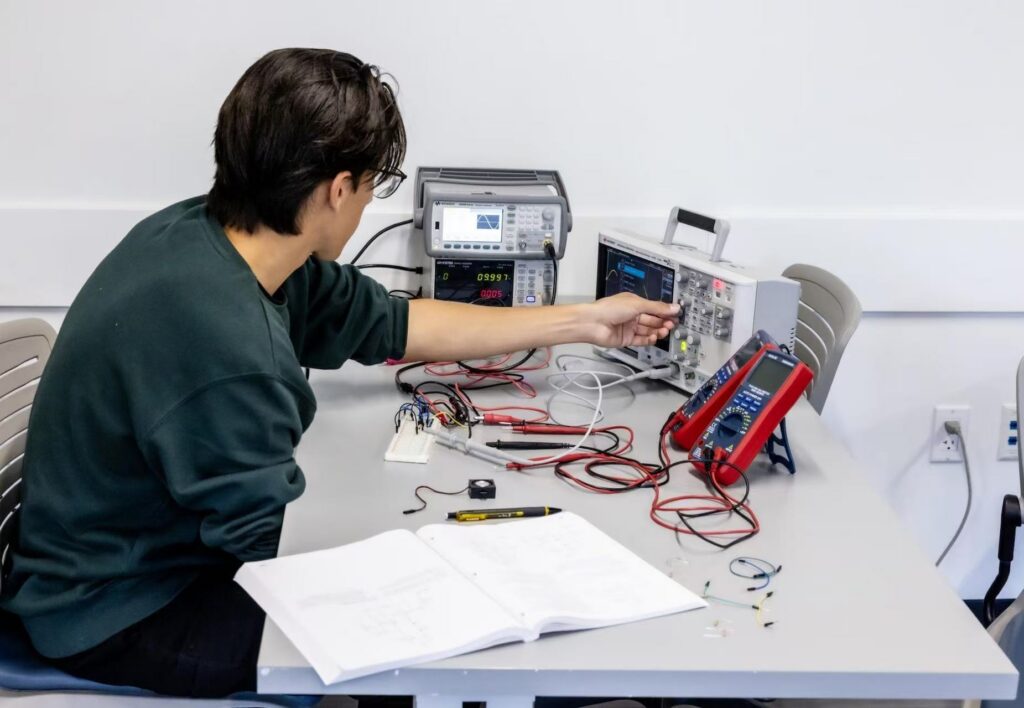
Students may divide work among team members, copy a known-good connection, ask a teaching assistant to locate an error, record the required waveform, and move on. The laboratory has technically been completed. The deeper learning loop may remain unfinished.
Independent engineering requires decisions the lab manual cannot make: What should be measured first? Is the failure in the power path, analog circuit, digital logic, firmware, or test setup? Is the waveform wrong, or is the instrument configured incorrectly? Which assumption is least trustworthy? What evidence would eliminate half of the possible explanations?
These questions are difficult to place on a traditional exam and consume unpredictable laboratory time. Yet this is how engineers spend much of their professional lives.
Why Do Strong Students Still Arrive at Work Unprepared?
When companies hire students or recent graduates, they often discover a split. Some candidates have strong academic records but hesitate when asked to interpret a schematic, select an instrument, trace a signal path, or explain how they would debug a board with the wrong output.
These students are not unintelligent, and their university education has not failed completely. They may possess substantial mathematical and analytical ability. What they lack is enough repeated contact with physical systems to convert knowledge into action.
Employers then face a second learning curve: instruments, unfamiliar schematics, measurement documentation, ambiguous failures, and evidence-based debugging. A transcript measures performance within an academic structure. It does not fully measure how independently a graduate can build, test, and debug a system.
Why Is Electronics Especially Vulnerable to the Practice Gap?
Electronic behavior is often invisible. The important event may be a voltage transient lasting microseconds, noise on a reference rail, or a logic signal changing at the wrong time. Without the correct instrument and setup, the problem cannot even be observed.
Failures also cross abstraction layers. A wrong output can originate in a component, connection, power rail, analog stage, ADC configuration, communication interface, FPGA module, firmware routine, or software assumption. The engineer must understand enough of the full system to decide where to look.
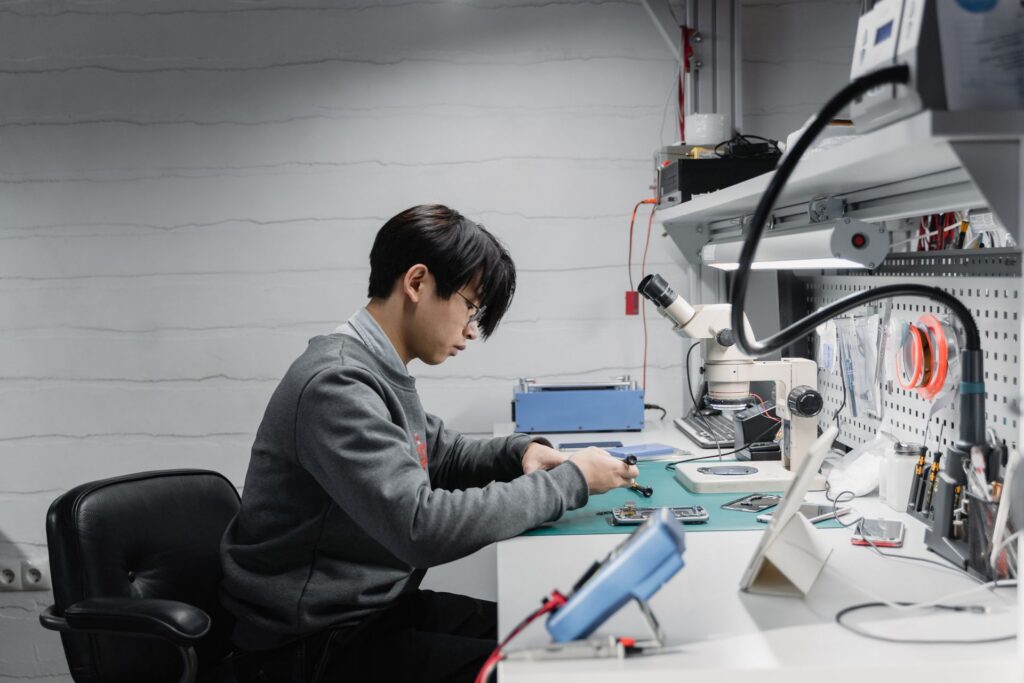
Electronic systems are unforgiving of small mistakes, and meaningful practice requires equipment. A student with a computer can write software almost anywhere. A student working with electronics also needs circuits, components, power, signals, instruments, and a safe place to assemble and test hardware.
Why Is the Missing Ingredient Not Another Isolated Project?
Students often try to solve the practice gap by buying a development board or following an online project tutorial. That can be useful, but it does not automatically create a coherent engineering education.
A student may build an Arduino project by connecting modules and copying working code. The result can look impressive while hiding most of the engineering. The student may not understand the sensor’s electrical output, analog signal path, ADC, protocol, power requirements, or design limitations.
Random projects create random exposure. They do not guarantee progression. A serious hands-on path must connect circuit fundamentals, semiconductor devices, analog electronics, signal conditioning, measurement, digital logic, microcontrollers, FPGAs, embedded programming, and system integration.
Hands-on education becomes powerful when projects are used to organize knowledge rather than decorate it.

Why Do Students Need a Laboratory They Can Own?
The most effective way to close the practice gap is not to replace university education. It is to give students a second environment in which the constraints of the university laboratory no longer apply.
Students need hardware outside a scheduled session. They need to repeat an experiment, leave a circuit assembled, return the next day, change one stage, make a mistake, damage an inexpensive component, and rebuild the system. They need to become comfortable generating a signal, following it through a circuit, measuring the result, and deciding what to test next.
This is different from watching a demonstration or completing a simulation. Simulation is valuable, but the model already knows its own circuit. A real system does not tell the student which wire is loose, which component is damaged, which assumption is wrong, or whether the measurement itself can be trusted.
Owning the learning environment changes the relationship with the problem. The goal is no longer to finish before the session ends. The goal is to make the system work, and to understand why.
What Does a Better Learning Model Look Like?
The strongest electronics education does not choose between theory and practice. It uses each to strengthen the other.
Theory provides the models. System-level understanding shows how topics connect. Projects create meaningful engineering objectives. Measurement provides contact with physical reality.
These elements should form a continuous loop. A student learns a principle, sees where it belongs in the system, applies it in a project, measures the result, encounters a discrepancy, and returns to the theory with a better question.
That is fundamentally different from studying a topic, passing an exam, and leaving it behind at the end of the semester.
How Does EIM's Learning System Address the Gap?
EIM Technology’s learning pathway was designed around the part of engineering education that is hardest to provide at scale: continuous, structured access to real electronic systems.
Fundamental EE Starter FE11 establishes the circuit and measurement foundation. Students work with voltage, current, resistance, signals, components, and practical construction through a guided project-based sequence. The goal is not simply to complete twelve isolated experiments. It is to develop the habit of predicting, building, measuring, and explaining.
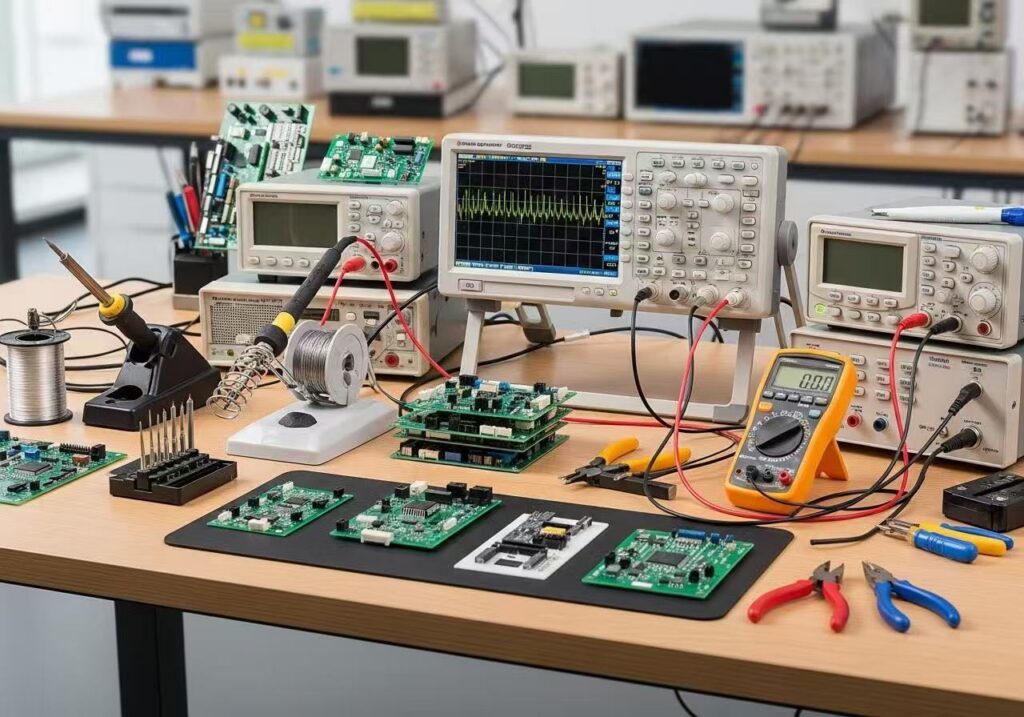
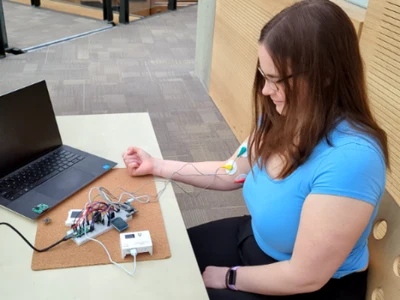
Lab-on-the-Go gives the learner a compact personal electronics bench. Instead of waiting for university laboratory access, students can generate signals, observe waveforms, measure circuits, and debug projects in their own environment.
The broader FE22 pathway extends the structure across semiconductor devices, analog circuits, signal conditioning, microcontrollers, embedded software, digital logic, FPGAs, and integrated system projects.
These stages form one learning path rather than a collection of unrelated products. Practical ability does not emerge from one impressive final project. It develops through repeated contact with smaller problems across multiple layers.
What Is the Real Advantage of Hands-On Practice?
A student may initially use a hands-on system to prepare for a course, improve a lab grade, or build a portfolio project. Those outcomes are useful, but they are not the deepest advantage.
The real advantage is entering each course with an existing mental model. Circuit theory is easier when voltage, loading, and time-domain behavior have already been observed. Analog electronics becomes meaningful after measuring amplification, filtering, distortion, and noise. Embedded programming becomes clearer when code has already been connected to signals and outputs.
The student no longer encounters each subject as a disconnected world. More importantly, failure begins to trigger useful questions: What do I know? What can I measure? Which part of the system remains unverified? That is the beginning of engineering independence.
What Mistakes Keep Students From Closing the Practice Gap?
- Assuming more coursework or a higher GPA will fix the gap. The gap is structural, tied to how hardware practice is scheduled and scaled, not a sign of insufficient study.
- Buying an isolated development board and copying working code. This can look impressive while hiding whether the student understands the sensor’s electrical output, the signal path, or the power requirements underneath it.
- Treating a completed lab assignment as proof of independent understanding. Finishing the procedure is not the same as being able to diagnose a failure without a predefined answer key.
- Skipping the predict, build, measure, diagnose loop. Moving straight to a working demo skips the step where engineering intuition actually forms.
- Assuming simulation alone can substitute for physical measurement. A simulated circuit already matches its own model; a real one will not tell the student which wire is loose or which assumption is wrong.
A related limitation worth stating plainly: a personal lab environment does not replace a university degree’s mathematical depth, faculty, research opportunities, or accreditation. It supplements what a degree alone cannot fully provide.
What Questions Do Students Ask About Pre-University Projects?
Why do good electronics students struggle with real hardware?
Because university grading rewards theory and calculation, which scale well across large classes, while the skills a working circuit demands (measurement, diagnosis, and debugging) require individual, repeated contact with physical hardware that is harder to schedule at scale.
Is struggling with hardware a sign that a student is not cut out for engineering?
No. It usually reflects limited hands-on practice rather than a lack of ability. Students with more repeated contact with real circuits typically close the gap through practice, not innate talent.
Do university labs teach real debugging skills?
Partially. Scheduled labs give exposure to instruments and procedures, but predefined circuits and time limits leave less room for a student to define and diagnose a problem independently.
Can simulation software replace hands-on practice?
No. Simulation is useful for building intuition, but a simulated circuit already matches its own model. A real circuit can fail for reasons a simulation will not show, such as a loose connection or a noisy ground.
How can students build practical engineering skills outside class?
Through a personal, structured lab environment with real components and instruments that the student can revisit on their own schedule, rather than relying only on scheduled university sessions.
What is the fastest way to close the practice gap?
Repeated cycles of building, predicting, measuring, and diagnosing a real circuit, rather than one large or impressive one-off project.
What Do Universities Provide, and What Must Students Build Themselves?
A strong university education remains enormously valuable. It provides mathematical depth, scientific foundations, expert faculty, research opportunities, peers, accreditation, and advanced facilities that cannot be reproduced by a small personal laboratory.
But no institution can give every student unlimited individual bench time. No professor can supervise every debugging decision. No curriculum can ensure that every learner develops practical confidence simply by completing the required courses.
The most prepared graduates are not those who rejected theory. They are students who used theory repeatedly outside the examination structure, through co-op placements, research teams, engineering clubs, personal projects, and independent laboratory work.
They learned to measure before guessing. They learned that debugging is not an emergency activity performed after design. It is part of design.
How Can Students Close the Practice Gap?
The weakness of traditional electronics education is not that students learn too much theory. The weakness is that theory is easier to schedule, scale, and grade than engineering practice.
The solution is not to wait for universities to provide unlimited laboratory access, nor to abandon formal education in favor of random online projects. The solution is to build a parallel, structured practice environment.
Students need a coherent learning path, real circuits, accessible instruments, increasingly complete projects, and enough time to fail without the laboratory session ending around them. They need to connect circuit theory, analog signals, semiconductor devices, digital logic, embedded programming, FPGAs, measurement, and system integration.
That is the purpose of the EIM learning pathway. It does not replace university electronics or computer engineering. It makes the knowledge learned there usable.
A degree can show that a student completed the curriculum. The ability to build, measure, and debug shows that the student is becoming an engineer.
Explore Fundamental EE Starter FE11, Lab-on-the-Go, and the broader EIM pathway.

EIM TECHNOLOGY
Founder & Engineering Education Innovator
Daniel Cao is the Founder of EIM Technology and holds a Master of Applied Science in Engineering. With experience in engineering research, product development, PCB design, and technical education, he is the author of several books on electronics engineering. His work focuses on developing practical learning systems that integrate engineering hardware, lab instruments, curriculum, and project-based learning. Through EIM Technology, Daniel aims to make electronics and computer engineering more accessible and engaging, helping students build real experience in designing, measuring, testing, and troubleshooting electronic systems.