Electronics and computer engineering (ECE) is a strong major choice in 2026 because it spans physical circuits, digital hardware, and software, giving graduates transferable skills across an unusually wide range of industries. It is not the easiest path, and it does not guarantee the highest salary, but its breadth makes it more resistant to shifts in technology and the job market than many narrower engineering disciplines.
Choosing an engineering major has never been easy, and in 2026 it may be harder than ever. Most engineering schools in Canada and the United States offer many possible directions: mechanical, civil, chemical, biomedical, electrical, electronics, and computer engineering, plus increasingly specialized programs built around robotics, mechatronics, and AI.
The usual approach to narrowing that list is to compare salaries, employment rates, and university rankings. Those numbers are useful, but they describe today’s market. A student entering university in 2026 may not begin a full-time engineering career until 2030 or later, and graduate school pushes that horizon out further still. By then, today’s hiring trends, technologies, and even entire categories of engineering work may have changed considerably.
Artificial intelligence adds to that uncertainty. AI can already generate code, assist with circuit design, analyze data, produce documentation, and automate engineering tasks that once required considerable human effort. That raises a real question for anyone choosing a major right now: which engineering foundation gives you the most options when nobody knows exactly what the job market will look like in five or ten years?
From that perspective, the broad field of electronics and computer engineering, often grouped under the label ECE, deserves serious consideration. Not because it guarantees the highest salary, not because every ECE graduate has a great career, and certainly not because it is easy. Its advantage is different: resilience under technological change.
What Does ECE Actually Mean?
The terminology varies by school. Some universities have separate electrical engineering and computer engineering programs. Others place both inside one electrical and computer engineering department. Electronics engineering may appear as its own program, as a specialization, or simply as a major part of an EE curriculum.
For this discussion, ECE is used in the broad sense, as a spectrum. Toward one end sit electrical energy, power electronics, and physical electrical systems. Move toward electronics and you reach semiconductor devices, analog circuits, amplifiers, sensors, instrumentation, and signal processing. Continue toward the digital side and you reach digital logic, FPGAs, microcontrollers, embedded systems, and communication interfaces. Move further toward computer engineering and you reach processors, memory, computer architecture, hardware acceleration, and increasingly software-intensive systems.
Physical world → Electronics → Digital hardware → Computing → Software
These layers are not isolated. A modern technological product usually crosses several of them at once, which is a large part of why the field holds up well over time.
What Makes an Engineering Field Resilient?
Technology changes faster than university degree programs do. A programming framework can become outdated in a few years. A chip architecture can rise and fall. An industry can swing from a hiring boom to layoffs. AI can suddenly make a technical task dramatically easier.
A resilient engineering education should not depend too heavily on one tool, one industry, or one type of job. Ideally, it provides three things: breadth across industries, depth of technical foundations, and career optionality. Electronics and computer engineering perform unusually well on all three, for the reasons below.
Why Is ECE Not Just One Industry?
One of the most common misconceptions about ECE is treating it as a single career path. It is closer to a collection of interconnected technical disciplines: semiconductors, analog electronics, embedded systems, computer hardware, instrumentation, communications, control systems, robotics, power electronics, sensors, FPGAs, and signal processing. Those technologies show up across an unusually wide range of industries.
A medical imaging system needs sensors, signal acquisition, analog electronics, digital processing, power supplies, control electronics, and computing hardware. A modern vehicle contains microcontrollers, sensors, communication networks, power electronics, motor-control systems, and increasingly capable onboard computing. Robots combine sensing, embedded computing, motor control, communications, and software. Aerospace systems depend on instrumentation, control electronics, and highly reliable embedded systems. Data centres rely on processors and accelerators, but also on networking, power conversion, cooling, and electrical infrastructure.
Consumer electronics, semiconductor manufacturing, telecommunications, industrial automation, scientific instrumentation, medical devices, and energy systems all draw on different parts of the same broad engineering foundation. If one particular technology becomes commoditized, the underlying knowledge of circuits, signals, devices, digital systems, and computation stays transferable. That is the first layer of resilience.
Where Does ECE Sit Between the Physical and Digital Worlds?
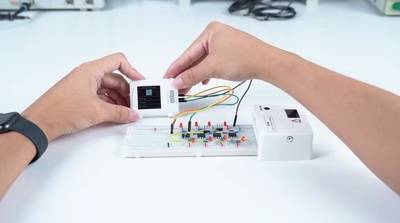
Modern technology exists across several layers. At the bottom is physical reality: voltage, current, electromagnetic fields, heat, motion, sound, light, and other physical phenomena. Electronics provides the interface to that reality through semiconductor devices, sensors, amplifiers, filters, power electronics, and signal conditioning. Digital systems then convert, process, and move information through ADCs, digital logic, FPGAs, microcontrollers, processors, and communication systems. Above that sits software: firmware, operating systems, applications, algorithms, and increasingly artificial intelligence.
ECE sits across the middle of that entire stack, which is an unusually powerful position to study from. It is why an ECE student might encounter an op-amp in one course, an ADC in another, digital logic and hardware description languages later, then microcontrollers, embedded programming, and computer architecture after that. At first, those subjects can feel disconnected. Over time, they become one system, and understanding how they connect is most of the real engineering skill.
Will AI Replace the Need for ECE Engineers?
Some engineering tasks will genuinely be automated. AI systems can already help write firmware, generate hardware description code, analyze circuits, select components, interpret datasheets, produce PCB layouts, troubleshoot code, and accelerate documentation, and these tools should keep improving.
There is an important distinction, though, between automating a task and eliminating the technological system that task helps create. AI exists in software, but it runs on physical hardware. Training and deploying increasingly capable AI systems requires processors, accelerators, memory, high-speed interconnects, networking equipment, power conversion, cooling systems, sensors, and large data-centre infrastructure. That creates a real paradox: the more capable the digital world becomes, the more demanding its physical infrastructure tends to become.
AI can help design a printed circuit board. It does not make the board unnecessary. AI can generate firmware. It does not remove the processor, memory, ADC, sensor, or communication interface that firmware runs on. AI can suggest an amplifier circuit. The physical circuit can still oscillate, saturate, pick up noise, or behave differently from the simulation.
The role of engineers is changing, and routine design work is getting faster. That may raise the value of something deeper: understanding a complete system well enough to judge whether AI-generated engineering actually works, which is a skill AI cannot substitute for on its own.

Why Does ECE Build Such a Broad Technical Stack?
The field pushes students across abstraction levels almost by design. A typical path starts with voltage, current, resistance, and power, then moves to analog circuits, amplifiers, filters, and signals. Those signals connect to ADCs and DACs. Digital logic, FPGAs, and microcontrollers follow, and microcontrollers introduce firmware. Processors lead toward memory, buses, and computer architecture.
Consider a small biomedical measurement device. A sensor produces a physical signal. Analog electronics amplify and filter it. An ADC converts it into digital information. A microcontroller processes the data, firmware interprets it, and a display presents the result. No individual block is the whole product. The real engineering is understanding how the blocks interact, and that system-level thinking becomes more valuable, not less, in an AI-assisted environment. If producing ten lines of code becomes nearly free, knowing which ten lines should exist, what hardware they control, and whether the resulting system behaves correctly is what separates an engineer from a prompt.
What Career Paths Can ECE Lead To?
A degree has value not only for the first job it provides, but for the directions it leaves open later, since few people want the same career at thirty that they imagined at eighteen.
ECE opens a wide set of adjacent paths. Someone drawn to the physical side can move toward electronics, analog design, semiconductor devices, instrumentation, RF, or power electronics. Someone who prefers digital systems can move toward FPGA development, embedded systems, digital design, or computer hardware. Someone increasingly interested in programming can move toward firmware, embedded software, robotics, or other software-heavy roles. Others move toward systems engineering, technical product development, applications engineering, engineering management, technical sales, or entrepreneurship. Electrical and power engineering also remain accessible for students whose programs provide the right coursework and professional pathway.
None of this means every transition is effortless, and specialization still matters. But moving into an adjacent technical field from an ECE foundation is very different from starting again at zero.
How Difficult Is ECE, Really?
Choosing ECE because it sounds future-proof would be a mistake on its own. The field is genuinely difficult. Many of its most important phenomena are invisible: you cannot see voltage or current directly, and you cannot look at a wire and observe frequency response, noise, impedance, or digital timing without instruments. The mathematics becomes demanding too, particularly once students reach signals, communications, control systems, electromagnetics, and semiconductor theory.
University engineering education often introduces abstraction before students have built physical intuition. A student may spend hours calculating a circuit without having built one, or learn transfer functions before seeing what a real filter does. For some students, that makes a first encounter with ECE unnecessarily abstract, and it is a genuine limitation of how the subject is usually taught, not a reason to avoid it.
Can You Build Real Engineering Systems at Home?
A civil engineering student cannot build a highway at home. An aerospace student cannot independently manufacture a commercial aircraft, and many mechanical engineering projects require significant space, machinery, and fabrication resources.
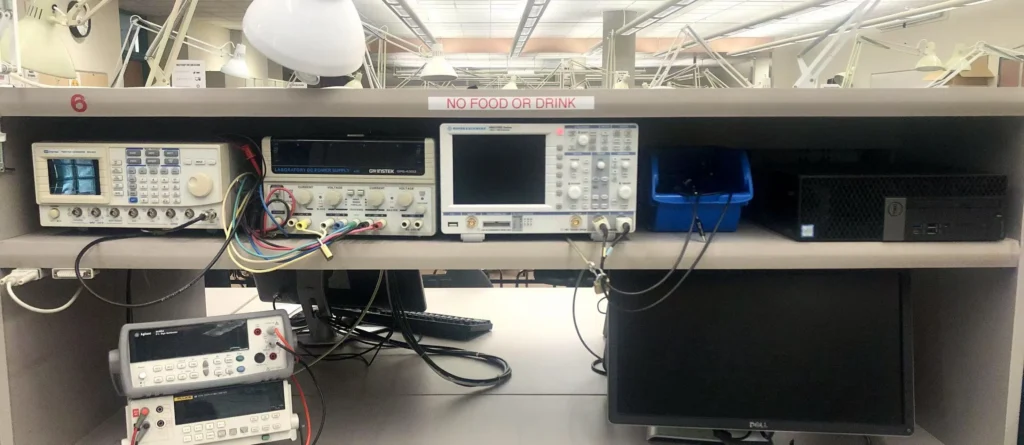
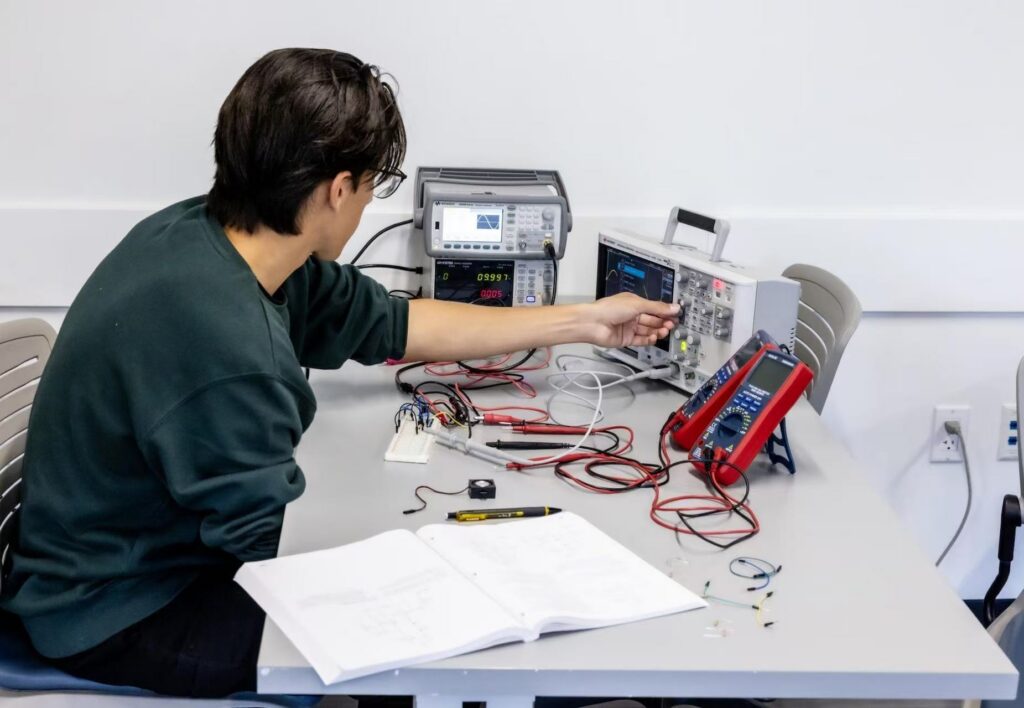
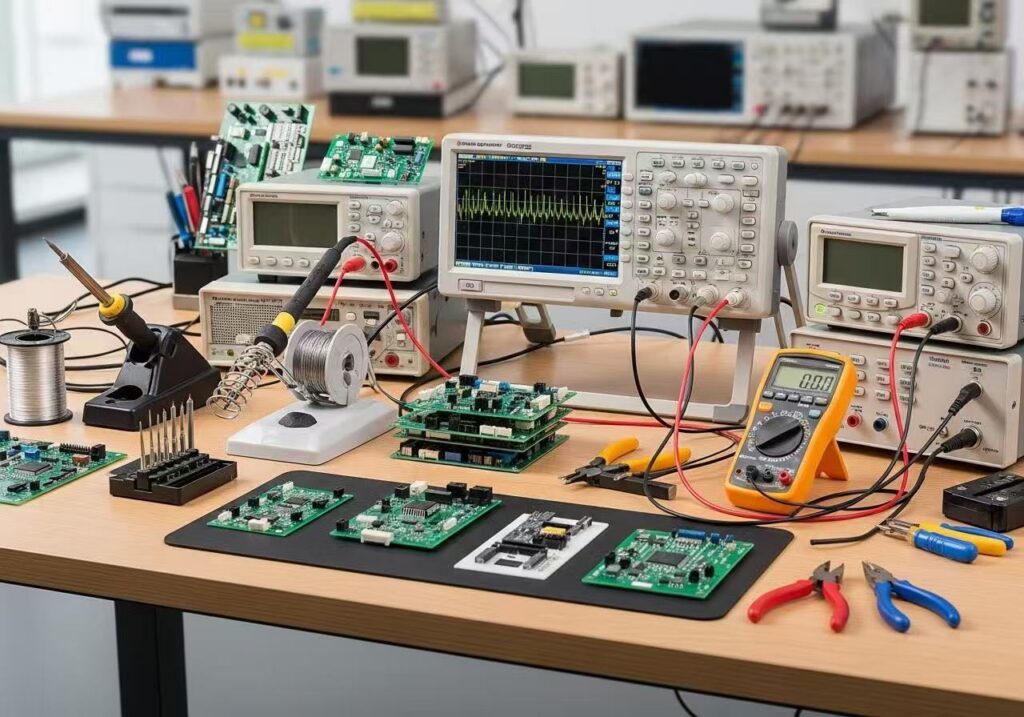
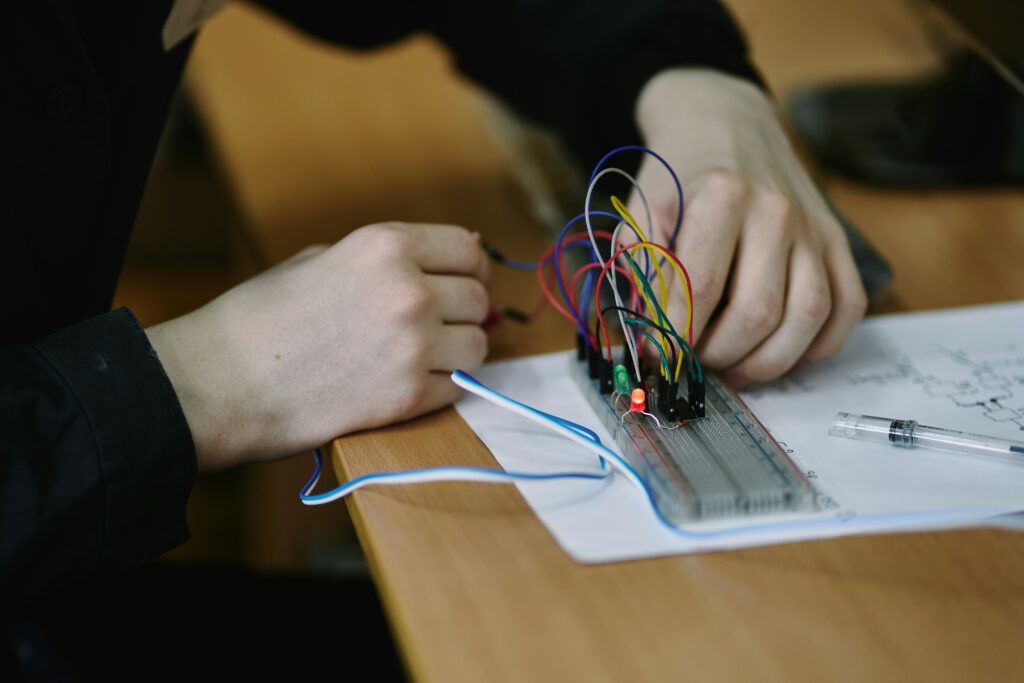
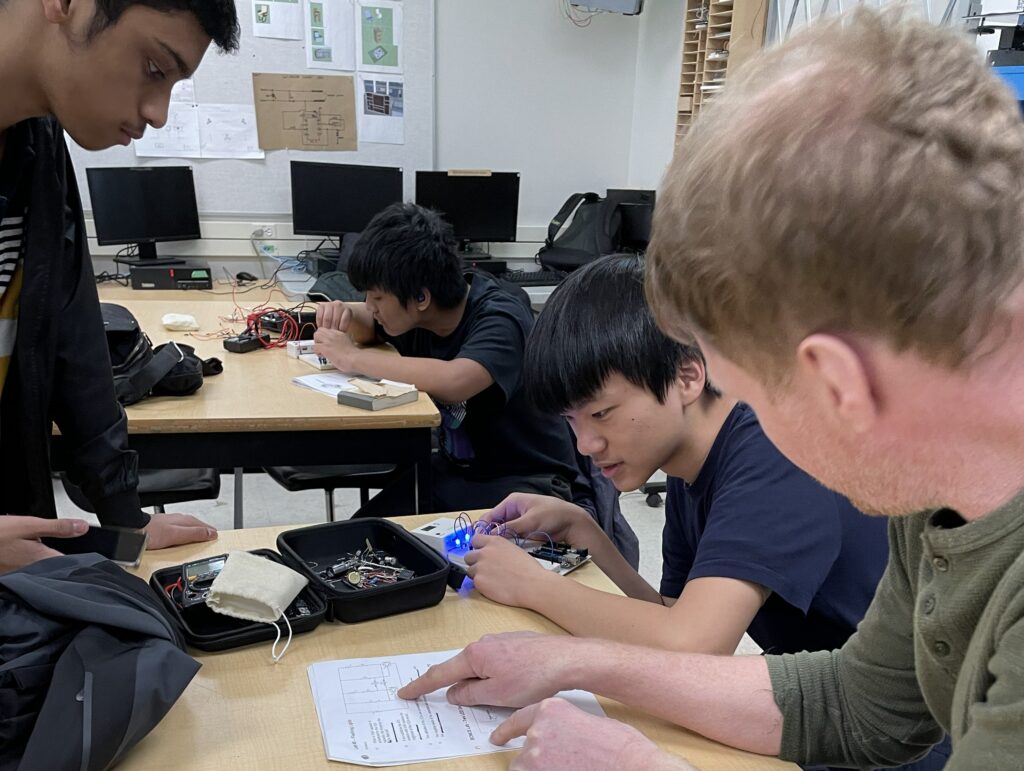
Electronics is different. A reasonably complete engineering environment can fit on a desk. With electronic components, a breadboard, measurement instruments, a microcontroller, and increasingly an FPGA or compact development platform, one person can build sophisticated systems: generating and measuring signals, building amplifiers and filters, acquiring analog data, programming a microcontroller, designing digital logic, and connecting hardware to software.
That creates a practical learning loop: theory, build, measure, fail, debug, understand. A circuit equation means much more after you have measured the circuit. A filter is easier to understand when you can change a component and watch its frequency response shift. An ADC becomes more than a block diagram once you can observe noise, resolution, and source-impedance effects yourself.
How Can You Test Whether You Would Enjoy ECE Before University?
If you are a Grade 10–12 student considering electronics engineering, computer engineering, or a broader ECE program, spending months trying to decide entirely from university websites, salary tables, and career videos is not the most useful approach.
Testing the field directly answers simpler, more reliable questions than any ranking can: Do you enjoy building circuits? Do you enjoy understanding what happens beneath software? Does seeing a waveform on an oscilloscope make you curious? Do you enjoy debugging something when the physical system does not behave as expected? Those questions are difficult to answer by reading about engineering, and much easier to answer by doing it.
Even students who eventually choose a different engineering discipline rarely waste time spent understanding electronics and computing, since sensors, embedded processors, control systems, and computation now appear throughout robotics, mechanical systems, biomedical devices, scientific instruments, and countless other technologies.
This is one of the reasons EIM Technology built Fundamental EE Starter, known as FE11. FE11 is not intended to turn a high school student into an engineer before university. Its purpose is to build the foundation that is often missing when students first encounter ECE, by connecting concepts, circuits, measurement, and projects instead of starting from isolated formulas.
The system combines structured learning materials, electronic components, 12 hands-on laboratory experiments, and an integrated project platform. Students begin with fundamental circuit concepts and gradually build the ability to build, measure, and troubleshoot real electronic systems, working toward a capstone project that connects sensing, signal conditioning, an embedded microcontroller, and a display into one working system.
For students who want a more complete laboratory environment, FE11 can be combined with EIM’s Lab-on-the-Go measurement instruments, which add oscilloscope, signal generator, power supply, and measurement capability so learners can see signals, test circuits, and debug their own work.
FE11 Starter Kit vs. Starter Lab: What Is the Difference?
Both configurations belong to the same Fundamental EE Starter product and lead to the same learning path. Neither replaces the other; Lab-on-the-Go extends the same curriculum rather than starting a separate one.
| Question a buyer should ask | FE11 Starter Kit | FE11 Starter Lab |
|---|---|---|
| Does it teach the RP2040-based build-and-code curriculum with 12 guided labs? | Yes | Yes |
| Can the learner measure real voltages, currents, and waveforms directly? | No, coding and circuit outcomes only | Yes, with oscilloscope, signal generator, and power supply |
| Best fit | Learners focused on building and programming a working system | Learners who also want to observe, measure, and debug signals as they build |
| Typical next step | Add Lab-on-the-Go later if measurement becomes useful | Already includes measurement and debugging capability |
The goal of either configuration is not acceleration for its own sake. It is context: when students later encounter circuit analysis at university, they already know what a real circuit feels like. When they encounter signals, they have already seen a waveform. When they study electronics, embedded systems, or digital hardware, those subjects have somewhere to attach.
Common Mistakes to Avoid When Choosing (or Judging) an Engineering Major
- Optimizing for today’s salary tables. Employment data describes the current market, not the market a first-year student will graduate into four to six years later.
- Assuming AI removes the need to understand hardware. AI can generate code and suggest circuits, but it does not remove the processor, sensor, or physical circuit that code or suggestion depends on.
- Treating ECE as one job. ECE is a spectrum of interconnected disciplines, not a single career; the right entry point depends on which layer of the stack interests a given student most.
- Waiting until first year to find out whether hands-on building is enjoyable. This is answerable earlier, and cheaply, with a basic lab kit rather than a semester of coursework.
- Expecting a starter kit to substitute for a degree. FE11 builds foundation and intuition; it is an entry-level learning system, not a replacement for formal engineering coursework or professional practice.
Frequently Asked Questions
Is electronics and computer engineering a good major in 2026?
Yes, for students who want a technical foundation that holds up across changing technology, because ECE spans physical circuits, digital hardware, and software rather than depending on one narrow skill set. It is not the easiest major, and it is not the right fit for every student.
Will AI make electronics and computer engineering degrees less valuable?
AI is automating specific engineering tasks, such as generating code or suggesting circuit designs, but it still runs on physical hardware that someone has to design, build, and validate. That tends to increase the value of understanding the complete system rather than eliminating it.
Is ECE harder than other engineering majors?
ECE involves demanding mathematics and deals with phenomena that cannot be seen directly, such as voltage, current, and signal timing, which makes it feel abstract early on. Difficulty varies by student, and hands-on practice tends to make the abstraction easier to follow.
What jobs can you get with an ECE degree?
Graduates commonly move into embedded systems, semiconductor devices, FPGA and digital design, firmware and embedded software, robotics, instrumentation, systems engineering, and technical product roles, among others.
Do I need to be good at math to study ECE?
Comfort with math helps, particularly for signals, control systems, and semiconductor theory, but early coursework and hands-on practice build that comfort over time rather than requiring it up front.
How can I find out if I would enjoy ECE before committing to a degree?
Build and test a small electronics project before university, using a basic lab kit such as FE11, rather than relying only on rankings, salary tables, and career videos.
So, Is Electronics and Computer Engineering Worth Studying in 2026?
Nobody can reliably say which engineering specialization will pay the most in 2031, which is exactly why that forecast is a weak basis for a decision this size. A better question is what kind of technical foundation stays useful across different futures.
Electronics and computer engineering answer that unusually well, because the field spans physical systems, semiconductor devices, analog electronics, digital hardware, embedded computing, and software. A student can move downward toward devices and physical systems, upward toward computing and software, specialize deeply in one layer, or become the engineer who understands how several layers work together. As AI makes individual technical tasks easier, that ability to understand the complete system is likely to matter more, not less.
ECE is not easy, and it is not the right choice for everyone. But for students curious about how modern technology actually works, from a transistor and a signal all the way to processors, embedded systems, and intelligent machines, it remains one of the broadest and most resilient engineering foundations available. And for anyone still unsure whether it is the right fit, the more reliable move is not to predict an entire career at seventeen. It is to build something first.

EIM TECHNOLOGY
Founder & Engineering Education Innovator
Daniel Cao is the Founder of EIM Technology and holds a Master of Applied Science in Engineering. With experience in engineering research, product development, PCB design, and technical education, he is the author of several books on electronics engineering. His work focuses on developing practical learning systems that integrate engineering hardware, lab instruments, curriculum, and project-based learning. Through EIM Technology, Daniel aims to make electronics and computer engineering more accessible and engaging, helping students build real experience in designing, measuring, testing, and troubleshooting electronic systems.