Artificial intelligence is changing engineering education faster than most curricula can adapt. A student can now ask an AI model to explain a circuit, generate code for a microcontroller, suggest an FPGA architecture, troubleshoot an error message, or walk through a mathematical derivation in seconds. Simulation tools can test designs before a single component is connected, while tasks that once required hours of searching through textbooks, datasheets, forums, and documentation can often be reduced to minutes. For engineering students, this is an extraordinary opportunity, but it also raises a more important question than whether AI should be used: if getting an answer is becoming easier, what should engineering students actually spend their time learning?
The answer is not to reject AI and return to older ways of learning. AI is likely to become a normal part of engineering work, just as simulation, CAD, and software development tools already have. Instead, it helps to recognize that AI changes where the difficult (and valuable) part of engineering begins. Generating a plausible solution is becoming cheaper; turning that solution into something that works reliably in the physical world is not. That distinction may fundamentally change how engineering should be learned.
AI Is Reducing the Cost of Getting to a First Solution
For much of engineering education, a significant amount of student time has traditionally been spent obtaining information. Students search for formulas, read documentation, look through example circuits, debug syntax, learn software interfaces, and spend hours trying to understand why a particular piece of code will not compile. Some of this effort is valuable, while some of it is simply friction. AI can remove a great deal of the second category and dramatically shorten the distance between an idea and a first implementation.
Imagine a student trying to build a small embedded system. AI can help explain how an ADC works, generate a starting program, interpret a datasheet, suggest component values, or explain an unfamiliar error. A student working with digital logic can ask for an example state machine or Verilog module and then modify it for a particular application. Engineering education does not become better simply because students spend more hours searching documentation or repeatedly fighting with syntax. If AI can compress ten hours of low-value friction into two hours, those eight hours do not need to disappear; they can be moved somewhere more valuable.
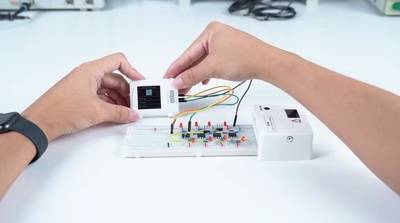
Fundamental EE Starter, FE11
For learners who want a structured way to build that habit, the Fundamental EE Starter kit (FE11) follows one connected path through circuits, analog design, microcontrollers, PCBs, and guided projects, with an online learning platform alongside the hardware. AI can explain each concept along the way, while the kit keeps the learning grounded in real circuits.
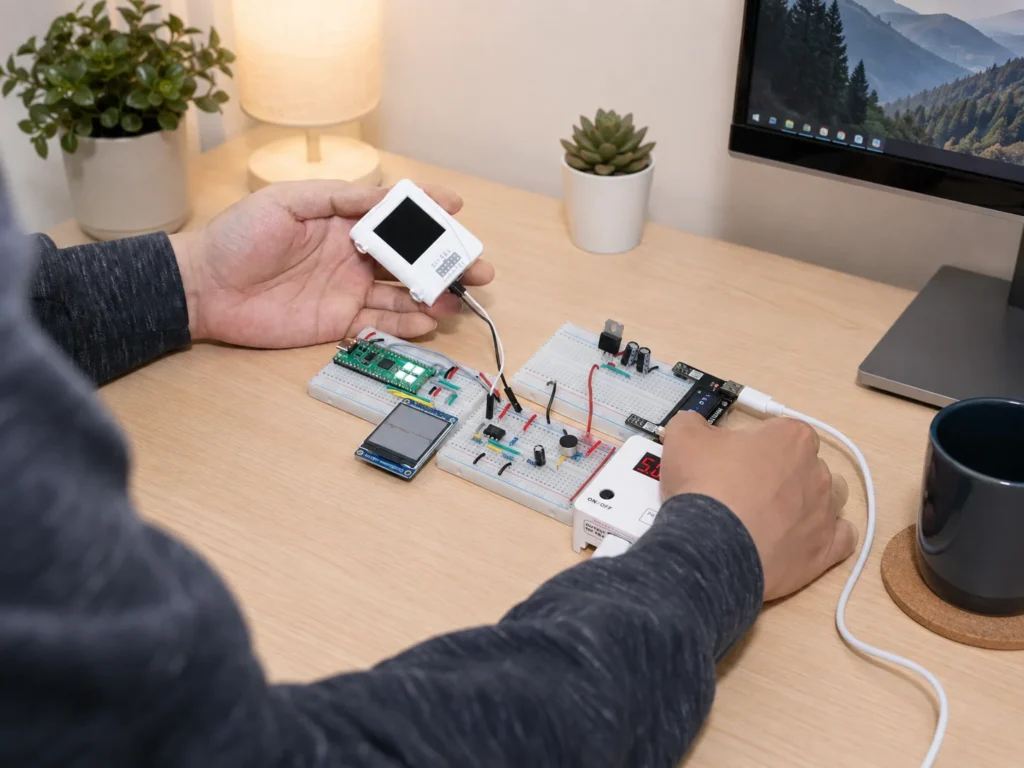
Engineering Begins Where the Generated Answer Meets Reality
A generated circuit can look perfectly reasonable on a screen and still fail when built. A simulation can show a clean waveform while the physical circuit contains noise, loading, parasitics, power-supply limitations, component tolerances, grounding problems, or unexpected interactions between subsystems. Code can compile successfully while the system behaves incorrectly, and a sensor can produce data while producing the wrong data. This gap between a plausible design and a working system is one of the most important places where engineering happens.
Consider something as simple as an RC circuit. The equation for its time constant can be generated instantly, and a simulator can plot the expected exponential response almost perfectly. Building the circuit introduces another layer of questions: is the measured waveform what you expected, is the source impedance affecting the result, does the oscilloscope probe change what you are measuring, and why does the waveform become less clean at higher frequencies? These questions cannot be answered merely by producing another schematic; they require the student to compare a mental or mathematical model with physical evidence. That is the beginning of engineering judgment.
The same pattern appears at every level of complexity. A microcontroller project that works in a code example may behave differently once timing, peripherals, power, and external hardware interact. An FPGA design may be logically correct but fail because of timing constraints or interfaces, while a signal-processing algorithm may work beautifully on stored data and behave very differently once connected to a noisy real-world signal. AI can help investigate every one of these problems, but the engineer still needs to recognize that there is a problem in the first place.
The Most Important Learning Loop Is Prediction, Measurement, and Debugging
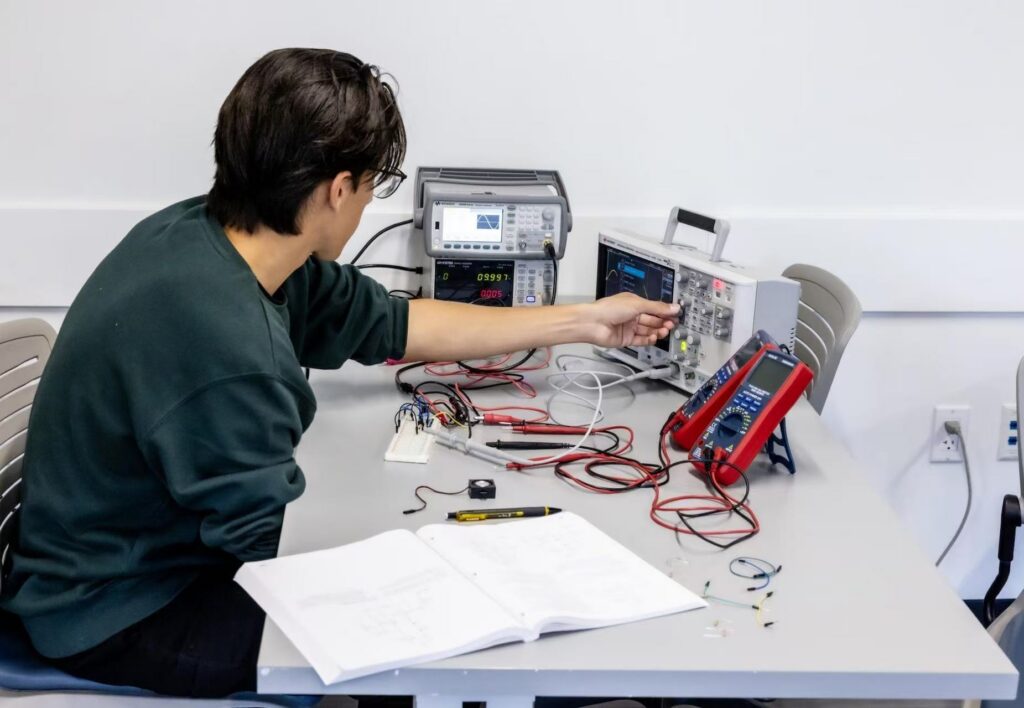
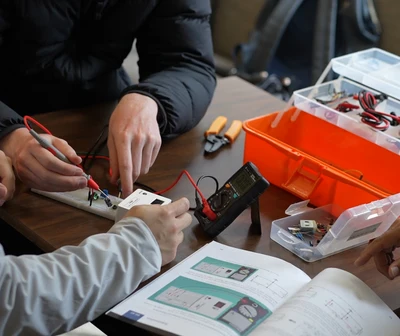
Hands-on engineering is more than simply learning by doing. Its real educational value comes from a feedback loop in which a student develops an expectation, builds a system, observes the result, and compares that result with the original prediction. When the two disagree, the student must measure, diagnose, modify, and try again. Every pass through this loop forces the student to reconcile an internal model with reality, which is precisely where abstract knowledge begins to turn into engineering intuition.
Prediction → Build → Measure → Compare → Debug → Iterate
This process is difficult to reproduce when learning remains entirely inside an abstract environment. If a student asks AI for a solution, receives one, sees that it appears reasonable, and moves on, the final answer may be correct while very little engineering intuition has been developed. The difference becomes especially obvious during debugging: an experienced learner begins breaking a failure into testable possibilities: power, reference, signal path, timing, saturation, communication, or even the measurement itself. Those diagnostic patterns are developed through repeated exposure to systems that did not behave as expected.
Importantly, AI can participate in this loop without replacing it. A student can measure an unexpected waveform, describe it to an AI system, ask for possible explanations, test those hypotheses, collect new evidence, and continue debugging. That is fundamentally different from simply asking AI to produce the final answer. The first approach accelerates engineering; the second risks bypassing the very reasoning the student needs to develop.
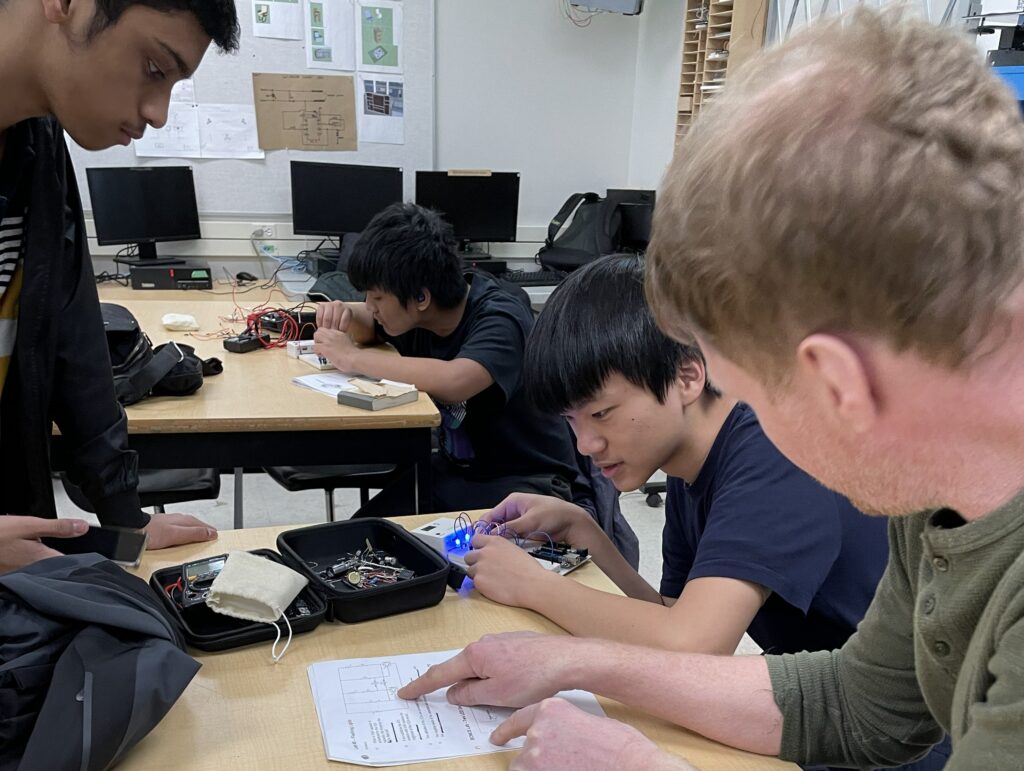
Lab-On-The-Go Electronics Tool Kit
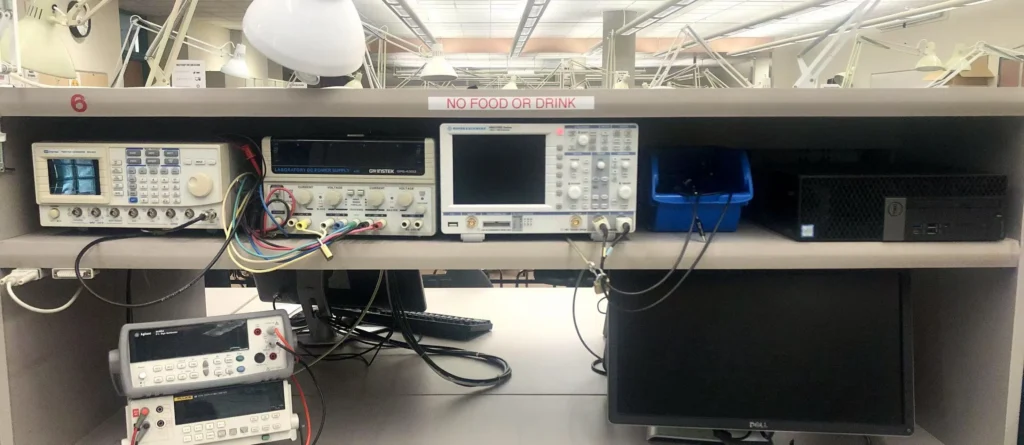
The measuring step is where many learners get stuck, because it depends on instruments that are not always accessible outside a lab. A portable kit such as the Lab-On-The-Go puts a rechargeable power supply, a digital multimeter, and an oscilloscope with a function generator in one case, so a student can capture that unexpected waveform at their own desk and work through the loop at their own pace
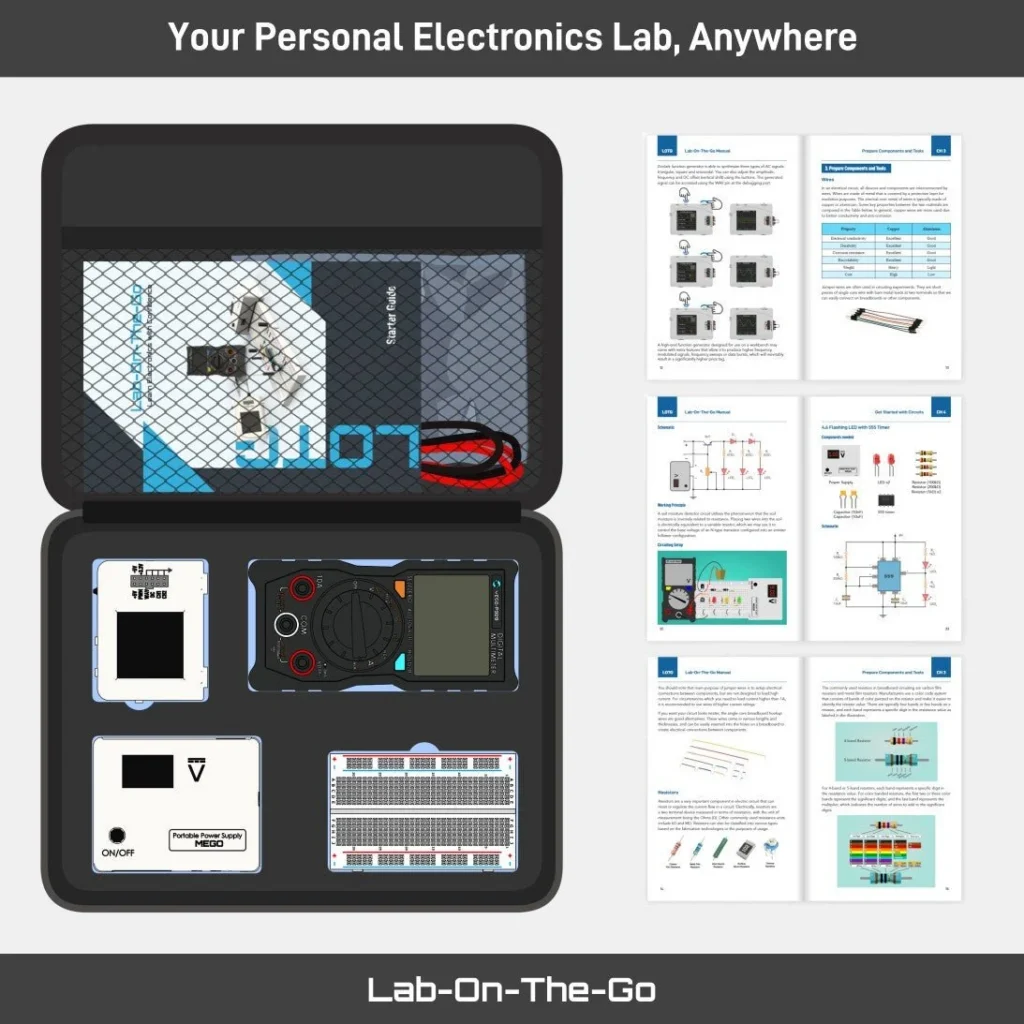
Physical Systems Teach What Ideal Models Leave Out
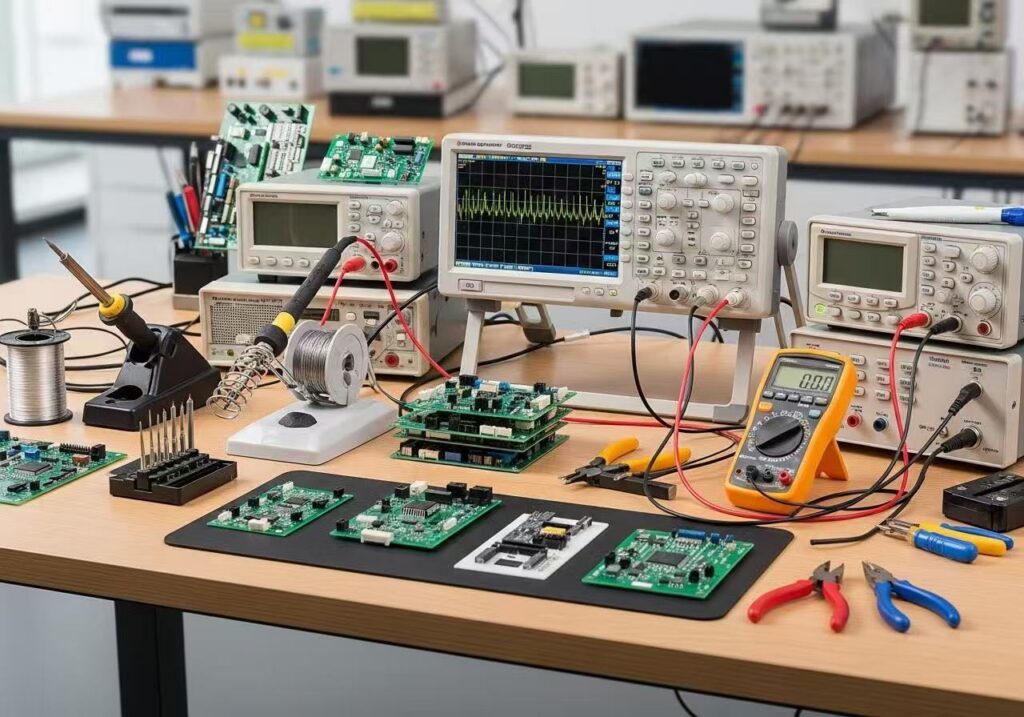
Real hardware introduces something that textbooks and simulations intentionally simplify: consequences. Components have tolerances, power supplies have limits, signals contain noise, connectors become loose, ADCs have finite resolution, digital interfaces have timing constraints, amplifiers saturate, regulators heat up, and measurements themselves can influence the system being measured. These are not exceptions to engineering; they are engineering. Simulation is valuable precisely because it removes much of this complexity and allows us to isolate particular variables, but the simplification that makes simulation useful also means that it cannot be the entire learning environment.
A student who has repeatedly built and measured real circuits begins to develop expectations that are difficult to acquire from equations alone. A noisy signal no longer looks like a mysterious failure; an unexpectedly hot component immediately suggests certain possibilities; a distorted waveform prompts questions about bandwidth, clipping, loading, or power. This accumulation of experience gradually becomes engineering intuition. It is not mystical talent but compressed experience, built through repeated encounters with systems that behave differently from the ideal model.
AI Should Change Hands-On Learning, Not Replace It
There is also a mistake on the opposite side of this debate. Defending hands-on engineering should not mean defending every inefficient part of traditional engineering education, because students do not become better engineers merely because something takes longer. There is little educational value in spending an afternoon searching for a basic syntax error if an AI assistant can identify it in thirty seconds, nor is repeatedly searching documentation necessarily a better learning experience than asking a well-formed question and receiving an explanation immediately. The opportunity is to combine the strengths of both approaches rather than force students to choose between them.
AI can accelerate explanation, research, calculation, code generation, documentation, and initial design. Simulation can allow rapid exploration before hardware is built, while physical experimentation can test those ideas against reality. In this model, AI does not eliminate hands-on engineering; it allows students to reach meaningful hands-on engineering faster. If technology saves a student five hours, the goal should not necessarily be to finish the course five hours earlier: some of that saved time can instead be spent building a more ambitious project, making more measurements, testing another design, investigating a failure more deeply, or integrating several subsystems into something that actually works.
The Skills That Become More Valuable When Answers Become Cheap
When information is scarce, knowing the answer has significant value. When answers become abundant, knowing what to do with them becomes more important. Engineering students therefore need more than the ability to produce technically correct solutions: they need to evaluate whether those solutions make sense, determine how to test them, recognize unexpected behavior, isolate failures, and make decisions when the available information is incomplete. They also need to integrate knowledge across domains, because real projects rarely stay neatly inside the boundaries of a single university course.
A seemingly simple electronic product may involve analog circuits, digital logic, embedded software, signal processing, power, communication interfaces, mechanical constraints, and measurement. AI can help students move across those boundaries more easily, but integration still creates problems that are difficult to see when each subsystem is studied independently. This is why project-based engineering becomes especially valuable in an AI-assisted learning environment: projects force knowledge to collide, make assumptions visible, expose interfaces, and create trade-offs. A project transforms isolated knowledge into a system, and systems are where engineering becomes real.
A Better Way to Learn Engineering in the AI Era
The engineering student of the next decade should probably use more AI, not less, while also building more. Use AI to understand an unfamiliar concept faster, explain code, explore alternatives, interpret documentation, or generate a starting design, and use simulation to test ideas cheaply before committing them to hardware. Then build the system, measure it, and compare the result with what you expected. When prediction and reality disagree, resist the temptation to immediately replace the design with another generated answer; first ask why, form a hypothesis, make another measurement, change one variable, and test again.
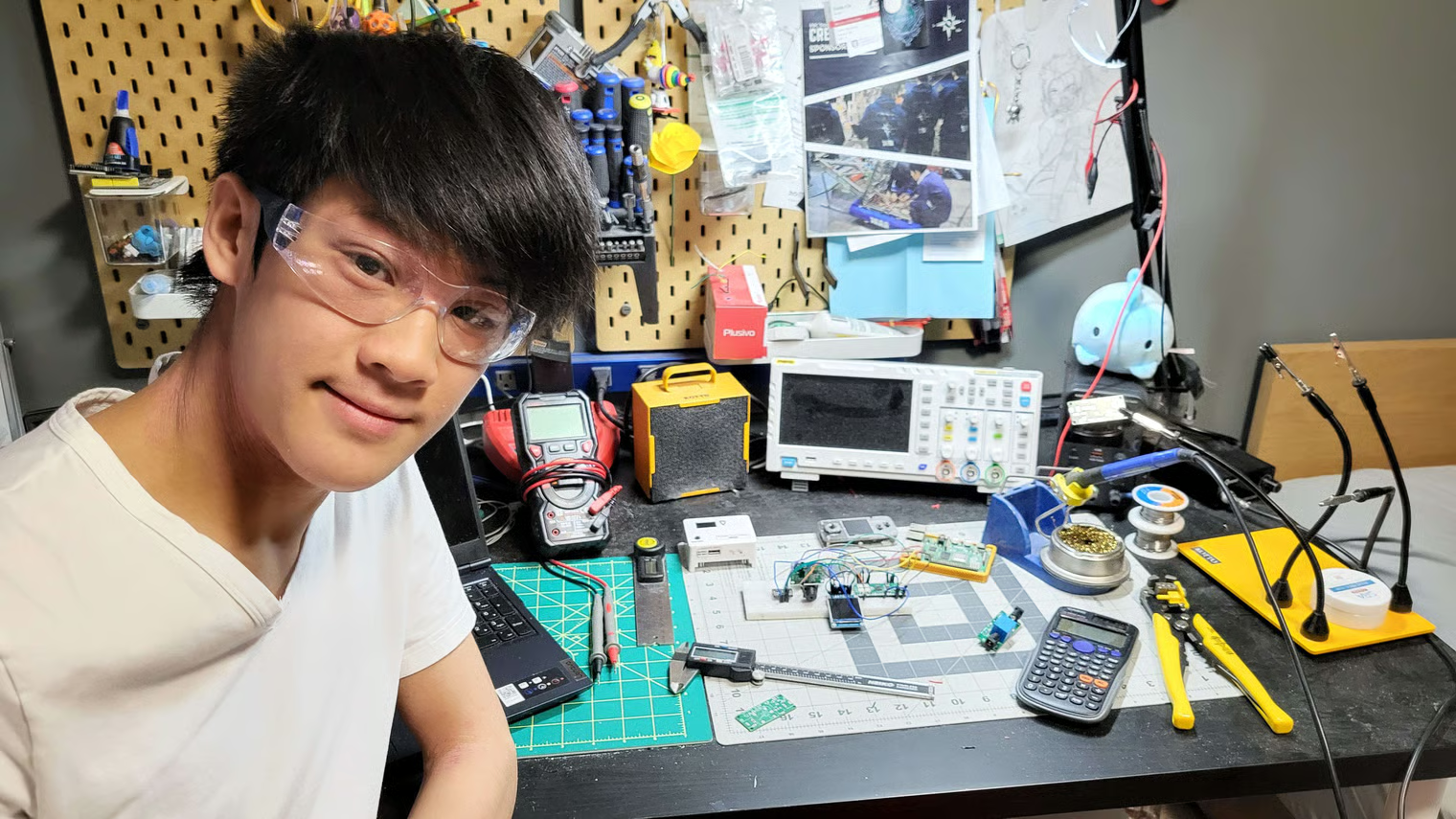
For students preparing for electronics engineering, computer engineering, embedded systems, or related ECE fields, this suggests a different way of thinking about preparation. The objective should not simply be to learn more topics before university or complete more online courses. A better objective is to develop the habit of taking an idea through a complete engineering loop: build something small enough to finish, use real instruments, measure signals, encounter a failure, debug it, improve the design, and document what happened. Then build something slightly harder.
The Future Engineer Will Work Between Models and Reality
AI will continue to improve, engineering software will become more automated, simulations will become faster and more accessible, and generating code, circuits, documentation, and design alternatives will become increasingly inexpensive. That does not make engineering knowledge irrelevant; it changes where engineering value is concentrated. The engineer’s role increasingly moves beyond simply producing a solution toward judging, testing, integrating, and validating solutions. That is why hands-on engineering remains important: not because engineering education should resist AI, but because AI makes it easier to reach the point where genuine engineering begins.
A generated answer is a starting point, a simulation is a prediction, and a schematic is an intention; the physical system is the test. Engineers who learn to move confidently between those worlds can use AI to accelerate ideas while using measurement, experimentation, and judgment to keep those ideas grounded in reality. As the cost of generating an answer continues to fall, the ability to determine whether an answer is correct, robust, and useful becomes more valuable. Ultimately, one of the hardest engineering capabilities to automate is not generating an idea, but making that idea actually work.

EIM TECHNOLOGY
Founder & Engineering Education Innovator
Daniel Cao is the Founder of EIM Technology and holds a Master of Applied Science in Engineering. With experience in engineering research, product development, PCB design, and technical education, he is the author of several books on electronics engineering. His work focuses on developing practical learning systems that integrate engineering hardware, lab instruments, curriculum, and project-based learning. Through EIM Technology, Daniel aims to make electronics and computer engineering more accessible and engaging, helping students build real experience in designing, measuring, testing, and troubleshooting electronic systems.