Fundamental EE Starter · FE11

Understand electronics. Build something real.

A hands-on electronics learning kit that connects circuits, analog design, and microcontrollers—through hardware you build and a structured path you can follow.

  • Real hardware
  • Printed lab manual
  • Online learning resources
CA$249 Fundamental EE Starter kit
  • Secure Payment
  • Low-Cost Shipping
  • After-Sales Support

Want to see your circuits in action? Explore Lab-on-the-Go →

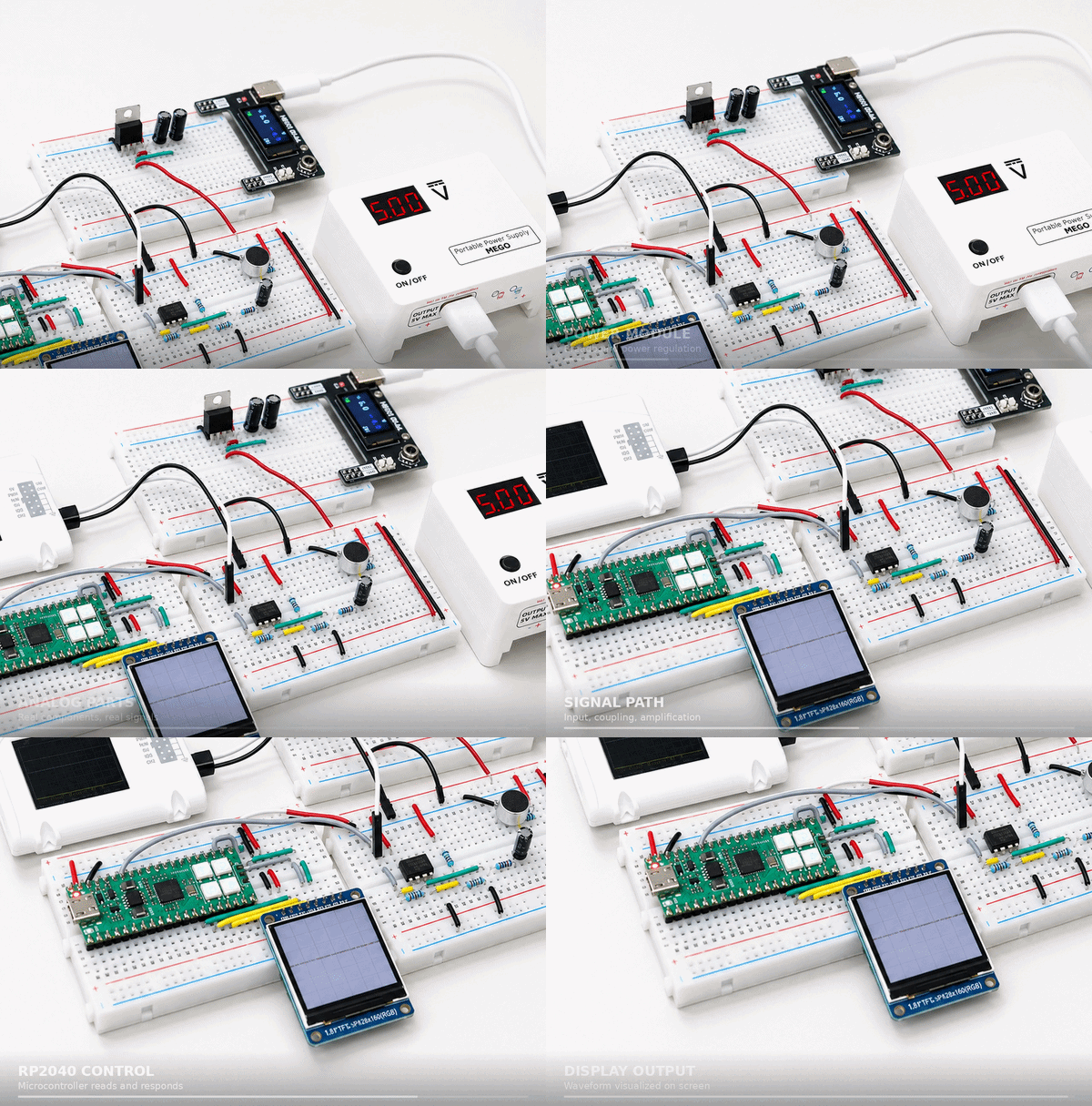
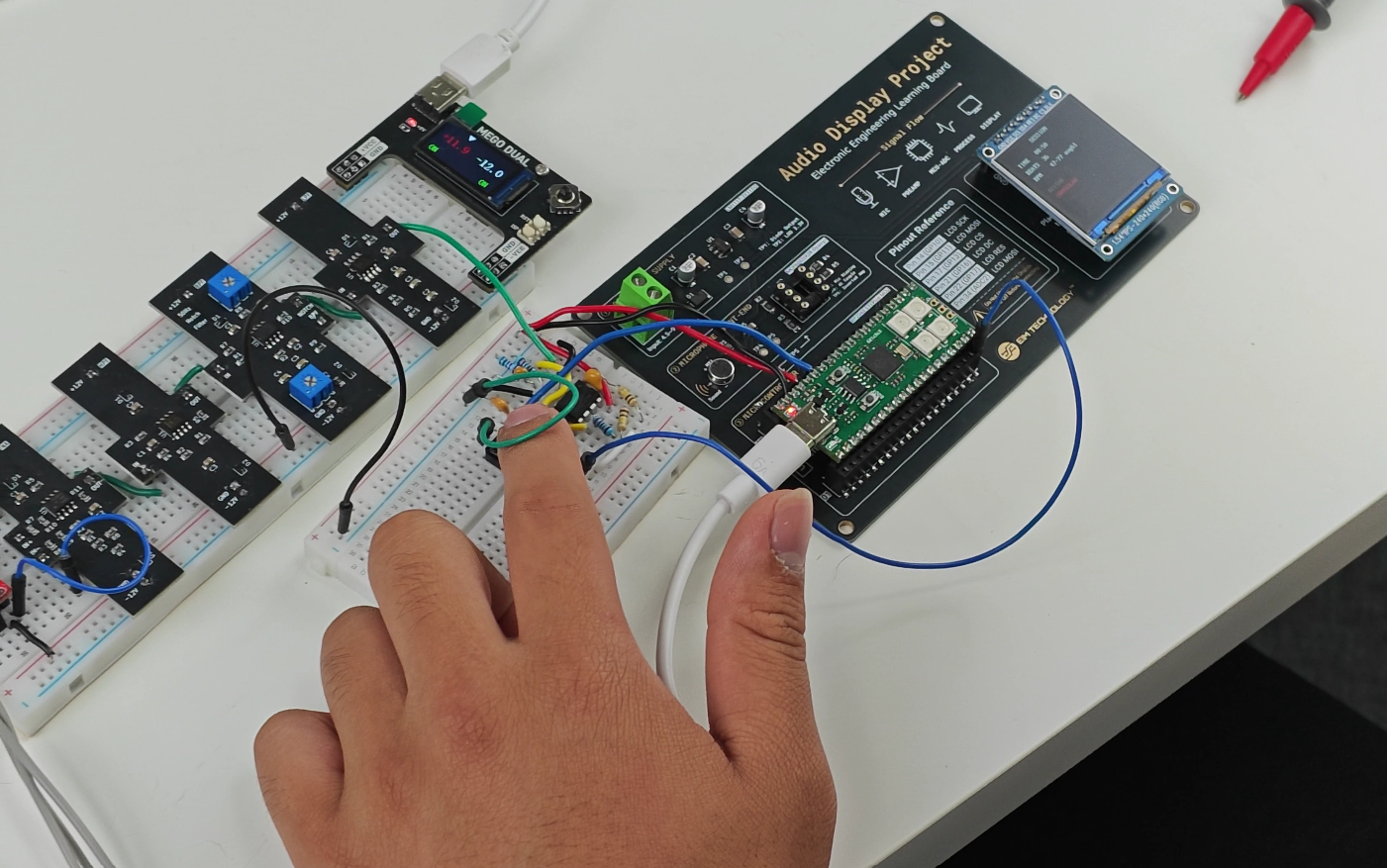
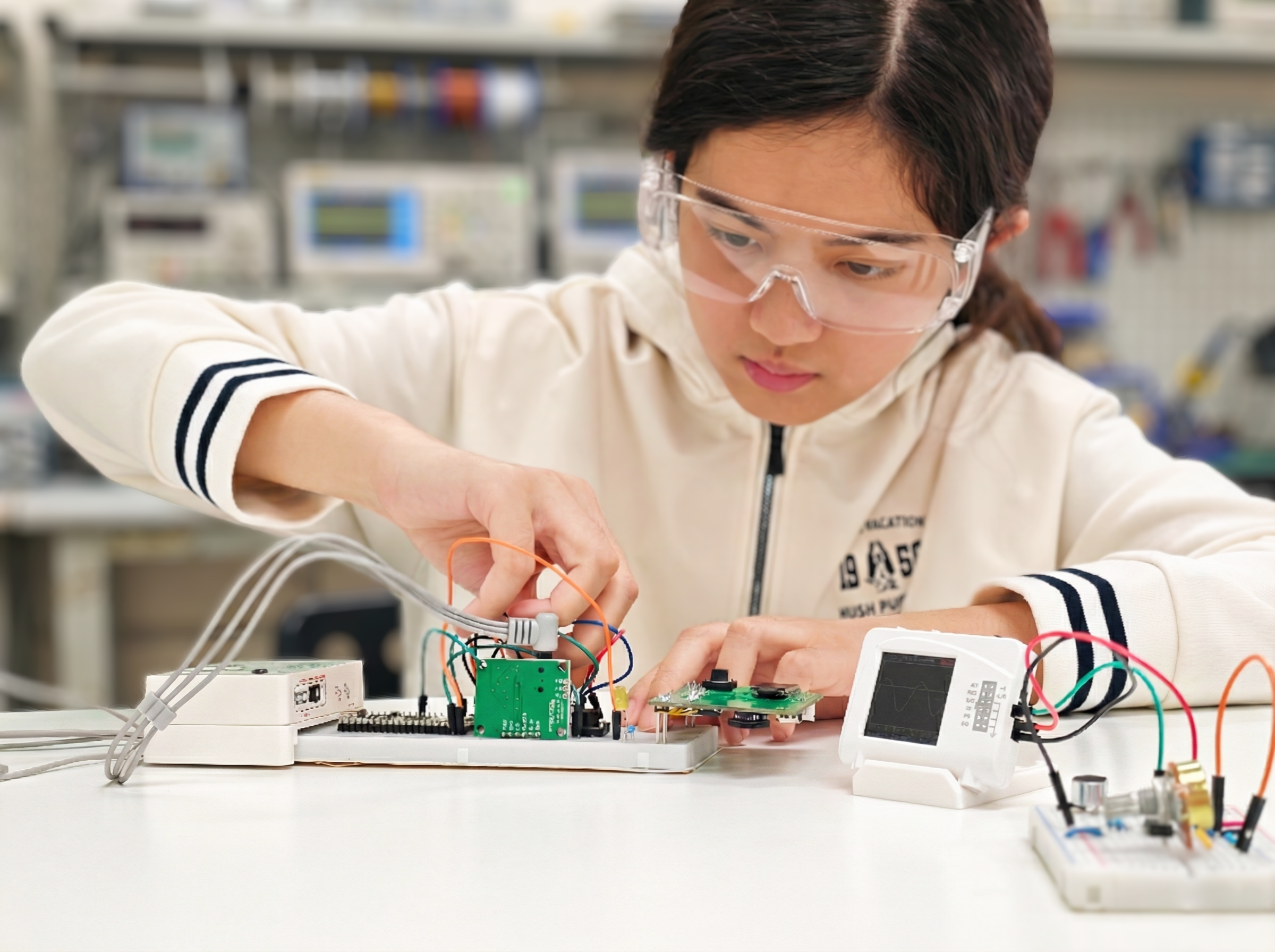
EIM electronics learning hardware and project setup
REAL HARDWARE. CONNECTED LEARNING.
From a circuit on paper
to a system on your desk.

Build circuits.
Explore signals.
Program real hardware.

WHAT YOU WILL BUILD

Understand the Hardware.
Then Make It Work.

First learn how electronic systems behave and are built. Then use embedded software to turn the same hardware into working applications.

Circuit analysis, analog electronics, breadboard design and measurement
01 — HARDWARE

Analyze, Build, and Design.

Work with real circuits to understand power, analog behavior, signals, components, and measurement.

Circuit Analysis Analog Design Measurement Signal Behavior
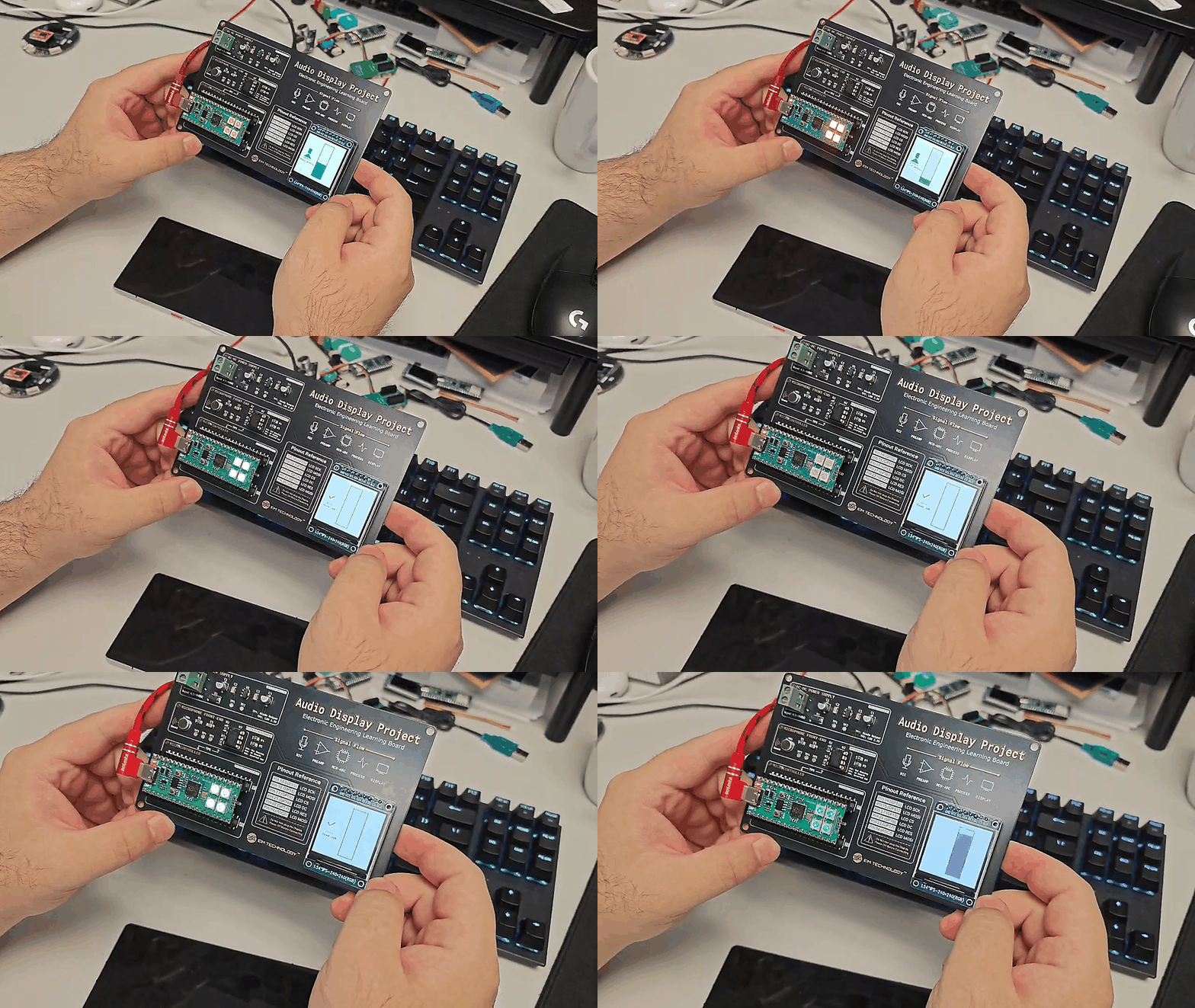
Embedded microcontroller development on an integrated electronics platform
02 — EMBEDDED DEVELOPMENT

Program the System You Understand.

Use microcontrollers and embedded software to acquire signals, process data, control hardware, and build interactive applications.

Microcontrollers Signal Acquisition Display & Control Embedded Applications
ONE HARDWARE PLATFORM

One System.
Multiple Applications.

Understand and build the hardware first, then use the same integrated platform to create different embedded applications.

Audio Oscilloscope
Spectrum Analyzer
Particle Sandbox
Breathing Trainer
WHAT YOU GET

Everything You Need to Start.

One complete learning system with real hardware, structured curriculum, projects, and guided resources.

Fundamental EE Starter

CA$249 FE11 Kit
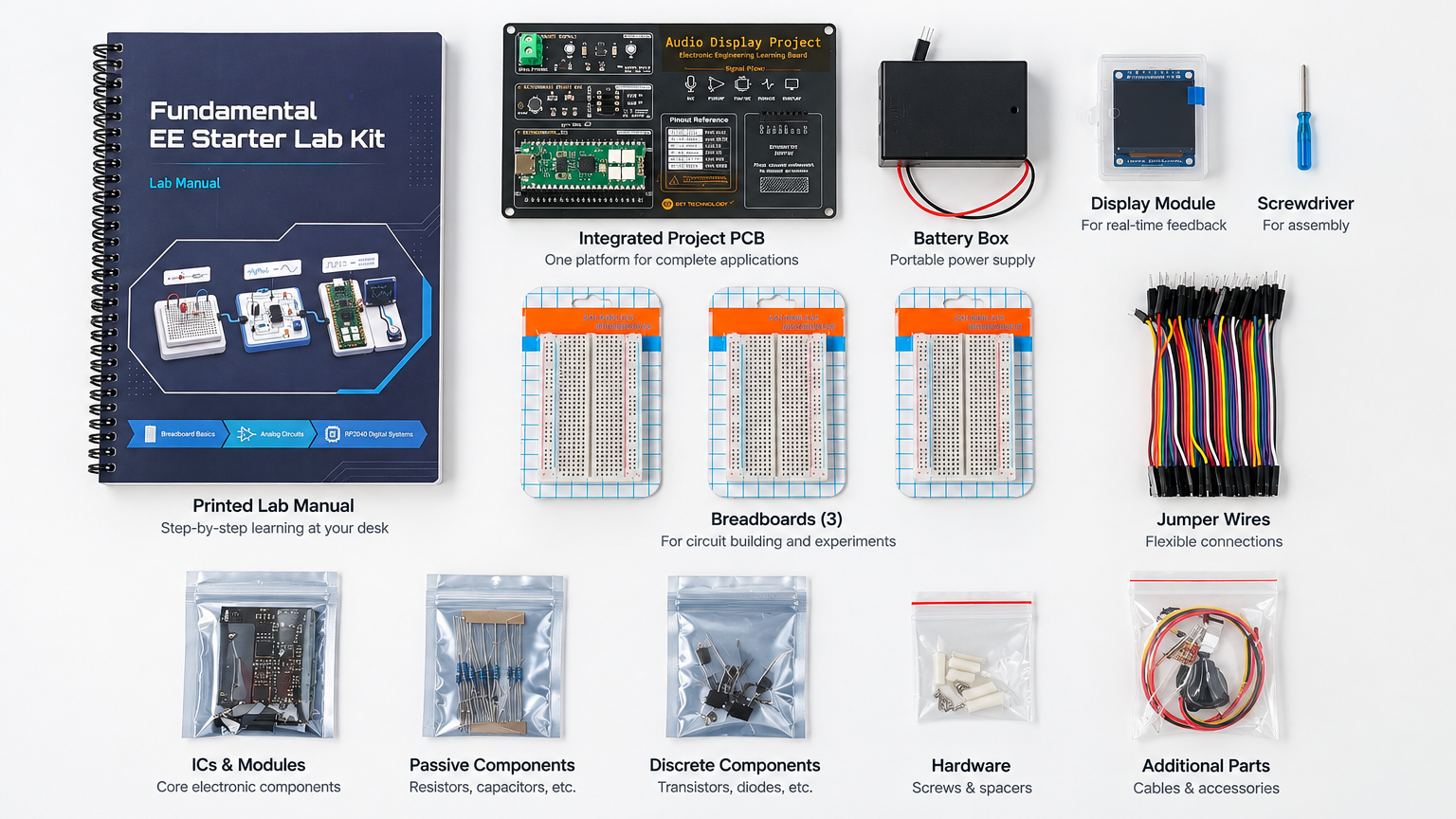
Engineering Hardware Boards, breadboards, components, display, power, and accessories.
Integrated Project PCB One platform for electronics and embedded applications.
Printed Lab Manual A structured physical reference for hands-on learning.
Projects + LMS Guided digital resources, applications, and technical support.

FE11 Kit

Learning kit · CA$249

Loading…

Lab-on-the-Go

Optional instruments · Sold separately

Loading…

Pair FE11 with Lab-on-the-Go for deeper, hands-on exploration of electronics.

Fundamental EE Starter kit contents
See the Full Kit Unboxing & hardware walkthrough
See what’s happening in your circuits. Measure voltages, view waveforms, and test signals with Lab-on-the-Go.
Explore Lab-on-the-Go ↗
HOW IT WORKS

Learn It.
Build It.
Make It Work.

A structured engineering process that connects principles, real hardware, measurement, and embedded development.

From understanding a circuit to making a complete system work.
01
PRINCIPLE

Learn the Principle.

Build the foundation behind circuits, signals, analog electronics, and embedded systems.

02
BUILD

Build the Circuit.

Turn each concept into real hardware using components, modules, breadboards, and PCBs.

03
MEASURE

Measure & Understand.

Observe real signals, compare theory with actual behavior, and learn how engineers diagnose a circuit.

04
INTEGRATE

Program & Integrate.

Bring hardware and embedded software together to create complete working applications.

WHY THE SYSTEM MATTERS

Why This Actually Works.

Engineering isn’t learned in isolated pieces. Understanding grows when the pieces begin to connect.

FRAGMENTED LEARNING

The pieces are there.
The connections aren’t.

Concepts, labs, programming, and projects are often learned separately—without showing how they operate as one engineering system.

Theory
Circuits
Programming
Projects
Learned separately
THE EIM APPROACH

Everything connects.

Each stage builds on the last, so the learner sees how principles become circuits, measurements, code, and real applications.

Principles
Circuits
Measurement
Embedded Development
Applications
THE RESULT System-Level Thinking

Understand not only each part, but how the entire electronic system works together.

The difference isn’t simply how much you learn. It’s whether the knowledge connects.

Your next step in engineering
starts with hands-on experience.

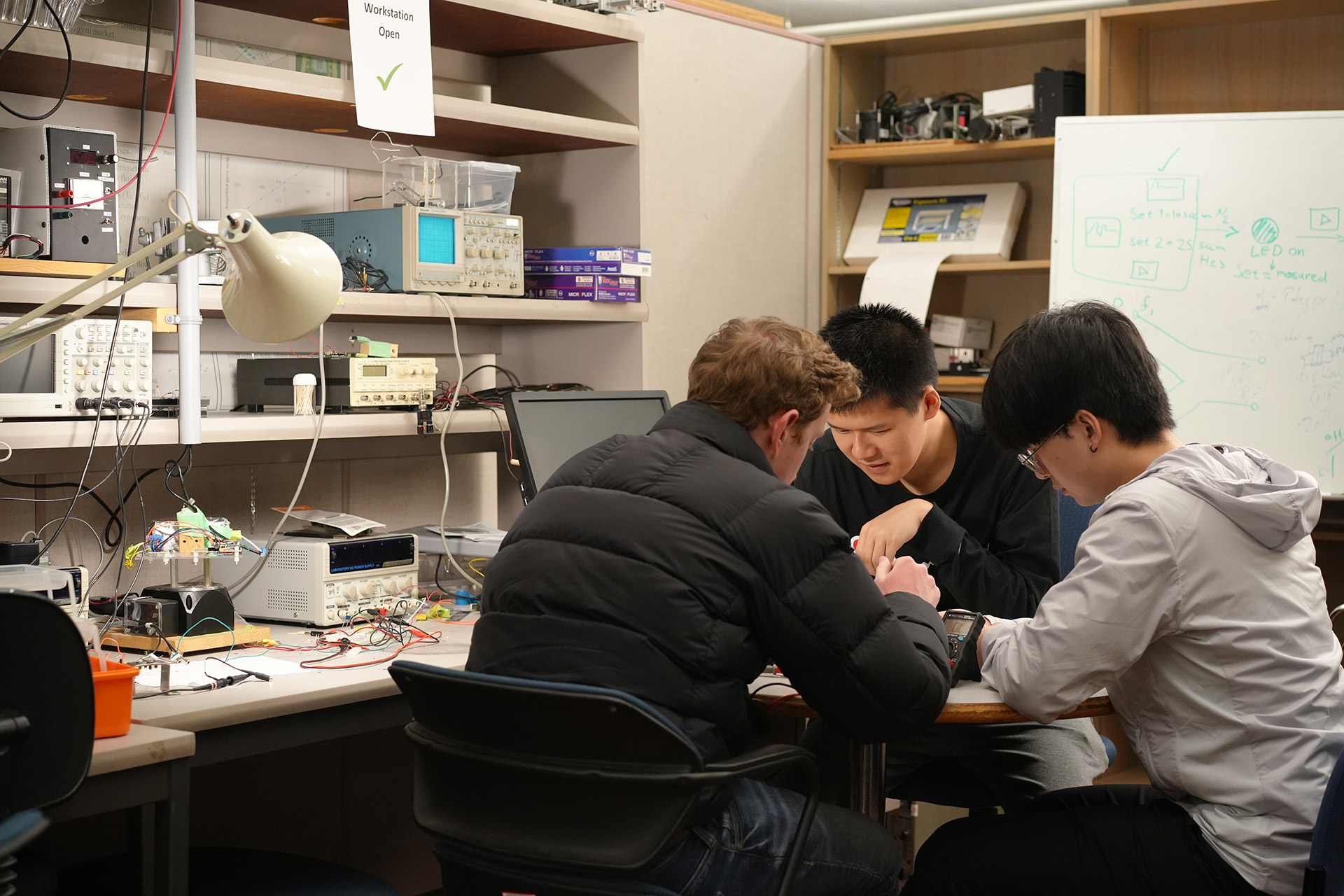
EIM hardware in university labs, STEM programs, and engineering workshops.

Hands-on electronics learning in a STEM program
Build solid foundations in electronics.
EIM hardware in a university engineering lab
Better prepared for professional career.
Hands-on electronics experimentation with EIM equipment
Self-learn efficiently with tangible projects.
LEARNER EXPERIENCES

From the People
Who Used It.

Different learners come to Fundamental EE Starter (FE11) with different backgrounds. Here is what they noticed after putting the system to work.

SECONDARY EDUCATION · SURREY, BC
★ ★ ★ ★ ★

“More engineering depth than the kits I normally see.”

I teach shop and technology at a secondary school in Surrey. I’ve used quite a few classroom STEM and electronics kits, and many are good at getting students to a finished activity quickly. What I gave this five stars for is the extra layer underneath that students are not only connecting parts, but working with actual circuits, measurement, analog behavior, and then microcontrollers. There is simply more engineering to unpack here. I could see myself using individual parts of it for demonstrations as well as longer student work.
Secondary School Shop Teacher Surrey, British Columbia Review unit provided by EIM for evaluation.
UNIVERSITY ENGINEERING · VANCOUVER, BC
★ ★ ★ ★ ★

“The complete signal chain made the demo much clearer.”

I used the system for an op-amp and microphone demonstration with my class. Previously, when introducing amplifier circuits, we would usually show the circuit itself and look at the input and output signals. Here I could demonstrate a much more complete chain from microphone input, analog amplification and conditioning, measurement, and then the embedded side. Students could see where the amplifier actually sits inside a working system. That hardware-software connection also gives them useful intuition before they encounter more embedded work later.
Engineering Professor Simon Fraser University Review unit provided by EIM for classroom evaluation.
STEM EDUCATOR · INDEPENDENT LEARNER
★ ★ ★ ★ ★

“A very good entry into real hardware however some trial and error is expected.”

I teach physics and bought this kit because I wanted a better practical understanding of electronics myself. For my background the material was manageable, but I would expect someone with absolutely no technical foundation to need some trial and error, and probably AI or other help when they get stuck. I don’t necessarily see that as a negative though it is worthy noted. Also, deeper testing and measurement requires your own lab equipment or Lab-on-the-Go. I didn’t have an electronics lab at home, so I ended up buying Lab-on-the-Go afterward.
Physics Teacher Independent electronics learner
Reviews reflect individual experiences. Some evaluation units were provided by EIM as disclosed above.

Start with FE11.
See where it can take you.

Build your foundation now. Explore more advanced systems when you’re ready.

  1. FE11
    Foundation Available now

    Fundamental EE Starter

    Connect circuits, analog electronics, and microcontrollers through hands-on experiments and projects.

  2. FE22
    Digital & Embedded Launching soon

    Go deeper into hardware.

    Explore MCU and FPGA development, digital interfaces, and hardware-software integration.

  3. FE33
    EE Systems Coming soon

    Bring systems together.

    Combine analog circuits, digital hardware, embedded programming, and measurement.

QUESTIONS BEFORE YOU START

Everything You May
Want to Know.

A few practical details about the Fundamental EE Starter (FE11), getting started, and continuing your engineering path.

FE11 stands for Fundamental EE Starter. It is designed to help learners build engineering intuition through circuits, signals, measurement, analog electronics, microcontrollers, and project-based work. If you want to understand how electronic systems actually behave, connect theory with real hardware, and build a strong foundation before moving into more advanced electronics and computer engineering, FE11 is a strong place to start.

Prior electronics experience is not essential, but FE11 is best suited to learners who are ready to work through real engineering concepts, build circuits, make measurements, and understand why a system works. Experience with math, physics, coding, robotics, or other STEM subjects can be helpful. More importantly, you should be looking for a structured way to build genuine engineering intuition rather than simply follow project instructions.

No. FE11 can be used as its own structured learning system. Lab-on-the-Go is an optional measurement platform for learners who want dedicated oscilloscope, signal generation, power-supply, and multimeter capability for deeper measurement, experimentation, and troubleshooting.

The embedded portion of FE11 uses the RP2040 platform and MicroPython. The goal is not simply to learn programming. You use software as part of a broader engineering system — acquiring signals, processing information, controlling hardware, and building applications on top of circuits you already understand.

The email account used for your purchase will normally receive an EIM activation email within two business days. After creating your password, you can access the corresponding LMS materials, project resources, and digital learning content.

Yes. Lab submissions are optional, but you can submit your results through the corresponding assignment area in the LMS if you would like feedback from the EIM engineering team. Submission is not required to continue through the learning materials.

FE11 is self-paced. The time required depends on your technical background, how deeply you explore the concepts, and how much time you spend experimenting beyond the guided activities. The system is designed to support steady, structured progress rather than force every learner into the same schedule.

FE11 is designed as the foundation of the broader EIM engineering path. Once you have built core intuition around circuits, signals, measurement, analog electronics, and microcontrollers, it becomes a strong starting point for deeper work in digital hardware, embedded systems, FPGA development, signal engineering, measurement, and complete system integration.

Additional product, shipping, and support details are available during checkout and through EIM support.

BECOME A PIONEER

Subscribe our monthly newsletter to gain access to exclusive hardware deep-dives and priority testing for new EIM innovations.

One high-value briefing per month. No spam, just pure engineering. Unsubscribe anytime.